2026-10-13 Tue
■ #6378. ハドリアヌスの長城と英語史 [hadrians_wall][roman_britain][tabihel][tabihel_scotland][helwa][history][scots]
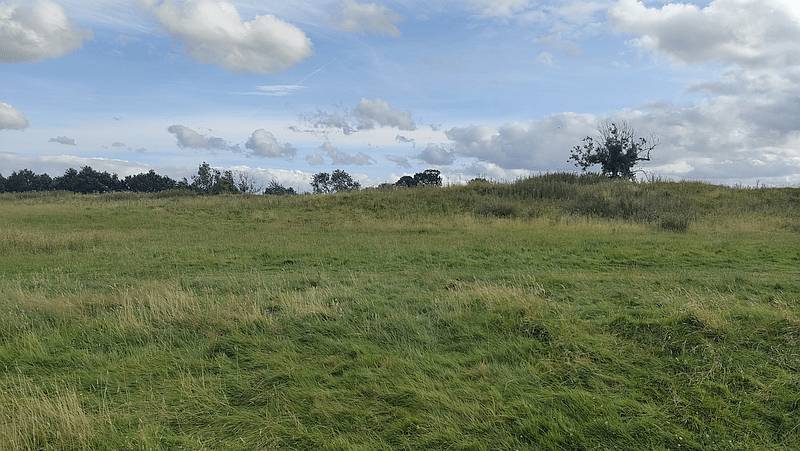
1900年前の壁は,英語をイングランドに閉じ込めることになる壁だったのだろうか? 今では何もない草原に立って,そんなことを考えてみた.
「旅hel」 (tabihel) シリーズのスコットランド編より.この8月,イングランドからスコットランドへと北上するドライブの途中で(cf. 「#6322. スコットランドの入り口,駆け落ち婚の名所 Gretna Green のトイレ」 ([2026-08-18-1])),Hadrian's Wall (ハドリアヌスの長城)の跡地の1つに立ち寄った.たどり着く直前の最後のストレッチは,ひなびた田舎道である.1マイルほど真っ直ぐに続く道には車も人影もなく,時速100キロ以上で走れてしまうほどだった.着いたところは,何もない丘陵地.ここが壁の跡地の1つだという.夕方だったので visitor centre はすでに閉まっていた.すれ違ったのは,少数のハイカーのみ.ビデオを回し,写真を撮った.上の写真には壁の痕跡すら見えない.かつて壁があったはずの平原が広がっているだけだ.このひなびた何もない感じが哀愁を誘う.
ハドリアヌスの長城は,ローマ皇帝 Hadrian の命により,122年頃から建設が始まった防壁である.ブリテン島の東の Tyne 川河口付近から西の Solway 湾まで,島を横断するように約120キロにわたって築かれた.ローマ軍のブリテン島北方への進出は,おおむねこのラインで止まったことになる(その後,一時はさらに北に Antonine Wall が築かれたが,長くは維持されなかった).ローマン・ブリテン (roman_britain) の概略については「#3786. ローマン・ブリテンの略年表と地図」 ([2019-09-08-1]) を参照されたい.
このことは,後の英語史との関係でも興味深い.長城は現在のイングランドとスコットランドの国境線にほど近いところを走っており,南側の影響力が,この地点より北側へは及びにくかったことは,その後の1800年の歴史が証明している.ここから北はピクト人の地であり,後のスコットランドの領域である.5世紀以降に大陸から渡ってきたアングロサクソン人の言語,すなわち英語は,やがてこの線を越えて北へも入り込みはした.しかし,そこで発達したのは,結局のところ English ではなく Scots だった.Scots と English の関係については「#6216. Scots は English とは別の言語なのか,あるいは1方言か」 ([2026-05-04-1]) や「#6205. Scots の歴史に注目すべき理由」 ([2026-04-23-1]) で取り上げた通りである.
もちろん,ローマ人が去ってから英語がブリテン島にやってくるまでには時間差があり,長城そのものが英語の北進を物理的に阻んだわけではない.それでも,約1900年前の侵略の北限と,現在のブリテン島における English と Scots の分布とが,おおよそ重なり合って見えるのは興味深い.地理の制約,政治の境界,そして言語の境界が,長い時間をかけて同じあたりに落ち着いてきたかのようだ.
何もない平原だが,ここがかつて国境だったのか.いや,今でも何らかの境なのだな,と思いながら平原を眺めた.
このテーマについては,3年前に helwa (helwa) でも語っていたことを思い出した.「【英語史の輪 #36】ハドリアヌスの長城と英語史」(2023年10月3日配信)もあわせてどうぞ.
2026-10-12 Mon
■ #6377. 『ケルズの書』とともに味わいたい至宝 --- Tara Brooch と Ardagh Chalice [dublin][tabihel][ireland][christianity][bchel][oe][latin][anglo-saxon][history][tabihel_dublin]
ダブリンの英語史に関連する場所を訪ねて歩く「旅hel」 (tabihel) シリーズ.「#6373. アイルランドの至宝『ケルズの書』を訪ねて --- The Book of Kells」 ([2026-10-08-1]) に続き,先月ダブリンで訪ねてきた至宝を取り上げたい.ダブリン中心部の Kildare Street に面したアイルランド国立博物館(考古学館)の至宝といえば,Tara Brooch と Ardagh Chalice の2つが挙げられる.
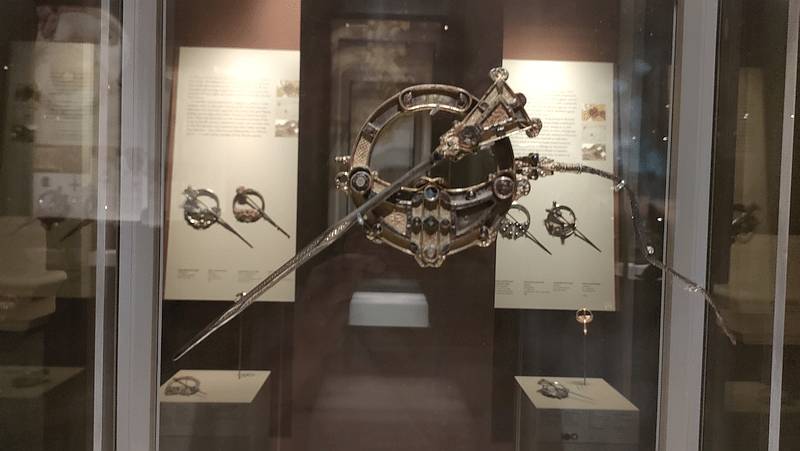
まずは Tara Brooch.外套を留めるための装飾ブローチで,紀元700年前後の作とされる.19世紀半ばに Meath 州の海岸近くで発見されたもので,実はアイルランド上王の座として名高い Tara の丘とは直接の関係はない.由緒ありげな名前を付けて売り出そうという動機で命名されたものだという.銀をベースに,金線細工,琥珀,ガラスで飾られた小さな円環のなかに,渦巻文様,組紐模様,動物文様がぎっしりと詰め込まれている.身につけたときには見えないはずの裏面にまで精緻な装飾が施されており,オシャレの極致だ.
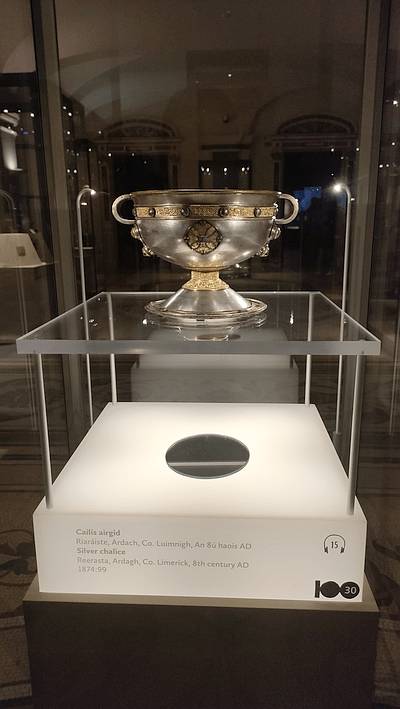
続いて Ardagh Chalice.8世紀の作とされるミサ用の聖杯で,19世紀後半に Limerick 州 Ardagh 近郊の環状砦跡から発見された.銀の器に金線細工,七宝の装飾が配され,鉢の周りにはラテン語が刻まれている.簡素で端正な器形と,細部の贅を尽くした装飾との対比が見所だ.
2つの至宝は,時代的にも意匠的にも,『ケルズの書』と同じ文脈で鑑賞することができる.ケルト古来の渦巻文様,アングロサクソン的な組紐模様と動物文様,そして地中海世界のキリスト教的モチーフが各々の作品のなかで融合し完結しているのだ.いずれも,アイルランド・キリスト教が様々な文化の影響を受けて最も輝いていた,8世紀を中心とする時期の産物である.『ケルズの書』ではフォリオの上で展開されていた繊細な美意識が,金属細工にもそのまま息づいていることが分かる.
英語史にとって重要なのは,アイルランド・キリスト教の伝統がアイルランドに閉じていなかったことである.アイルランド系の修道士たちは Iona を拠点とし,さらにブリテン島北部の Lindisfarne へと進出した.Northumbria を中心とするブリテン島北部はこの島嶼キリスト教の流れを受け継ぎ,前回の記事でも触れた Lindisfarne Gospels に代表される古英語期のキリスト教文化を育んでいった.南から入った Augustine 以来のローマ系の伝道と並んで,この北からの流れが,アングロサクソン人のキリスト教化を支えたのである.
そして,アングロサクソンのキリスト教化はそのままラテン語の英語への流入を意味した.ラテン語はキリスト教という文化の乗り物だったのである.キリスト教とともに古英語に流れ込んだラテン借用語の数々,そしてラテン語のインスピレーションを受けつつも直接的な借用に頼らず本来語を駆使して新概念を表現した古英語の創造性については,目下 Baugh and Cable の超精読会で読み進めているところである.以下の記事などを参照.
・ 「#5686. B&C の第60節 "Latin Influence of the Second Period" の第1段落を対談精読実況生中継しました」 ([2024-11-20-1])
・ 「#5962. B&C の第62節 "The Earlier Influence of Christianity on the Vocabulary" (1) --- Taku さんとの超精読会」 ([2025-08-23-1]
・ 「#6262. B&C の第64節 "Influence of The Benedictine Reform on English" (1) --- Taku さんとの超精読会」 ([2026-06-19-1])
・ 「#6300. B&C の第65節 "The Application of Native Words to New Concepts" (1) --- Taku さんとの超精読会」 ([2026-07-27-1])
ブローチと聖杯を眺めながら,千数百年前の島嶼世界の芸術的熱量が,めぐりめぐって間接的に現代の英語の語彙にも刻み込まれているのを感じていた.
2026-10-08 Thu
■ #6373. アイルランドの至宝『ケルズの書』を訪ねて --- The Book of Kells [book_of_kells][dublin][tabihel][ireland][christianity][manuscript][history][latin][link][tabihel_dublin]
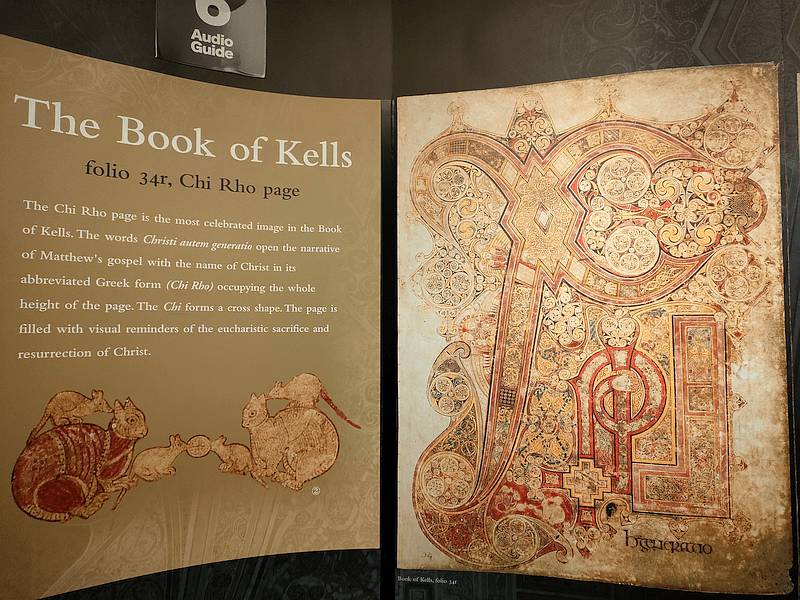
ダブリンの英語史に関連する場所を訪ねて歩く「旅hel」 (tabihel) シリーズ.今回は,アイルランドが誇る至宝 The Book of Kells 『ケルズの書』を訪れたので,これを取り上げたい.上に掲げた写真は,同書のなかでもとりわけ有名な「Chi Rho ページ」である(実物写本は写真撮影不可で,これは展示パネルを撮影したもの).
『ケルズの書』は,ラテン語で記された4福音書を収めた,西欧中世を代表する装飾写本である.紀元800年前後,アイオナ島の修道院で制作が始められたとされる.細密画の緻密さは尋常でなく,ケルト的な古代から伝わるtriskele(三脚ともえ紋)を含む繊細な意匠,アングロサクソン的な動物文様や組紐模様,ラテン的な動植物のモチーフや技術,ギリシア風の鍵模様,コプト的な点描の多用など,実に多様な芸術文化がひとつの写本のなかに織り込まれている.まさに,当時のヨーロッパの文化的交差点を凝縮したような写本だ.
この至宝を所蔵しているのが,Trinity College Dublin の Old Library である.大学はは,『ケルズの書』と,後述する壮麗な書庫・閲覧室 Long Room の2つを,大学最高の至宝として位置づけている.
先日,事前に予約をとったうえで,朝8時半,開館直後を狙って訪れた.5分前に入口に着くと,すでに驚くほどの訪問客が待機していた.入館してまず案内されるのは,『ケルズの書』の成立背景や意匠を解説する展示パネルの並ぶ一室で,上掲の写真はここで撮影したものである.オーディオガイドを聴きながらじっくりと時間をかけて学べる仕組みになっており,たいへん勉強になった.
展示室を抜け,1段高いフロアに上がると,いよいよ写本の実物との対面である.ガラスケースのなかに大切に仕舞われ,とあるフォリオが開かれている.写真撮影は禁止,周りから覗き込むだけだが,ため息が漏れた.細密画そのものの芸術的価値はもちろんだが,紀元800年前後,うら寂しいアイオナ島の修道院で,修道僧たちがこれほど緻密な作業に長い時間をかけて取り組んでいたのかと思うと,畏れ多い気持ちになる.こうしてブリテン諸島にて小さくコツコツと育まれていったキリスト教文化が,歴史を通じて拡大し,今ではこの写本が国を代表する至宝として公開され,世界中から人々を引き寄せている.文化の力を目の当たりにした.
2階へ上がると,今度は壮麗な Long Room が広がる.目下,大規模な改装中で,書棚の書籍は多く退避されていたが,この部屋の威容は十分に伝わった.こうした荘厳な雰囲気のなかで研究ができたら,さぞかし素晴らしいだろう.
さらに,別館パビリオンでは,『ケルズの書』と Long Room をさらに掘り下げて紹介するデジタル展示が用意されており,これもまた見応えがあった.ショップを通り抜けて外に出たとき,私はすっかり満足していた.
「#3680. 『ケルズの書』がオンラインに」 ([2019-05-25-1]) で紹介した,写本の精密画像を自由に閲覧できるオンラインサイトと並んで,今回聴きながら展示を見て回った Audio Guide --- the book of kells experience もお薦めしたい.
英語史の観点からは,島嶼キリスト教文化の同じような文脈で,一足先の紀元700年頃にイングランド北部の島で制作されたとされる Lindisfarne Gospels が,しばしば『ケルズの書』と比較される.Lindisfarne Gospels もラテン語で書かれているが,10世紀頃のものとされる古英語の行間注釈が書き込まれており,早い段階の Northumbria 方言を伝える貴重な資料となっている点で一線を画す.こちらの写本の高精細画像は,こちらから閲覧できるので,あわせて見比べてみるとおもしろいだろう.
2026-10-04 Sun
■ #6369. Derrigimlagh Bog --- 100年ほど前の技術的最先端を象徴するアイルランド西部の沼沢地 [tabihel][ireland][morse_code][history][tabihel_ireland]
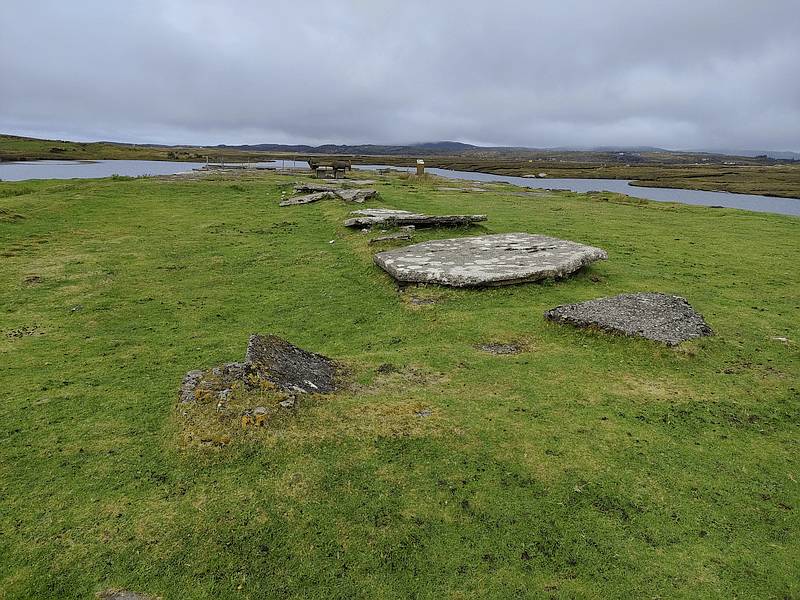
9月半ば,アイルランド西部 Connemara の奥,大西洋に面した Derrigimlagh Bog という湿地を訪れた.目に入るのは,泥炭色の水をたたえた小さな湖沼と,荒涼とした大地だけ.アイルランドの英語史ゆかりの地をめぐってきた「旅hel」 (tabihel) シリーズだが,今回は思い切って西の果てまで足を延ばしてみた.
何もないように見えるこの沼沢地こそ,20世紀初頭の技術史と英語史の双方にとって見逃せない場所である.1907年,ここに世界最大級の無線電信基地局が築かれ,大西洋を越えた初のモールス信号が発信された.築いたのは,イタリア人技術者 Guglielmo Marconi (1874--1937) である.現地の解説パネルによれば,彼はイタリアで生まれ育ったが,母 Annie Jameson はアイルランド人であり,Jameson ウィスキー一族の出身だという.親族が Dublin と Wexford に蒸留所を所有していたというから,Marconi はまさにイタリアとアイルランド,両国の血を引く科学者だったことになる.
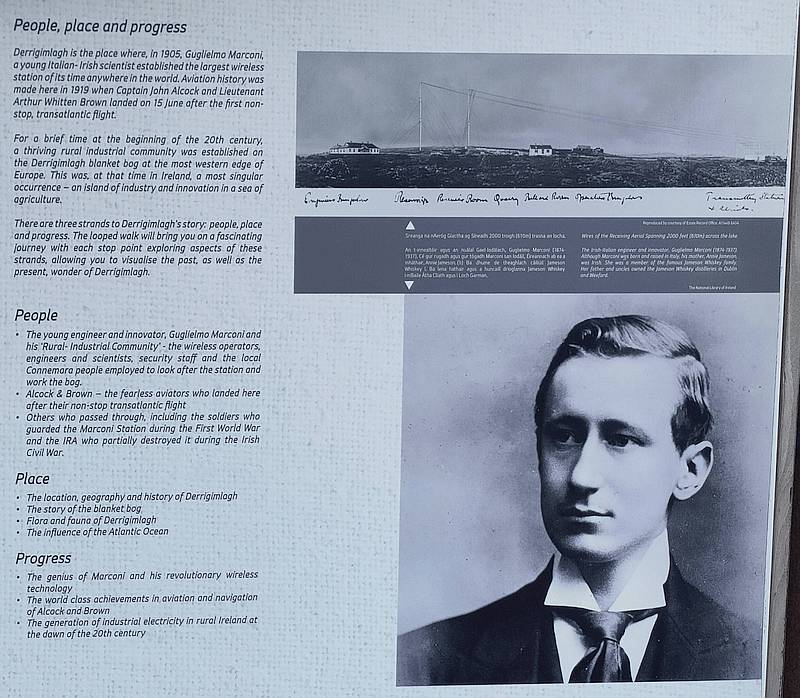
1905年に建設が始まったこの基地局は,当時世界最大の無線局だった.受信用アンテナは,湖を挟んで約610メートルにわたって張られていたという.これほどの設備を動かすには莫大な電力が要る.そのため湿地のただなかに発電所が建てられ,昼夜を分かたず轟音を響かせていた.技師の住居,貯水池,受信室,発電施設,労働者の社交場まで備え,人里離れた泥炭地に小さな産業集落が出現していたというわけだ.今では,発電所や労働者住宅の土台部分だけが,草を食む羊たちそばでひっそりと残るのみである.
この地はもう1つの歴史の舞台でもある.1919年6月15日,John Alcock と Arthur Whitten Brown が,カナダ東部 Newfoundland からの大西洋無着陸横断飛行を果たし,まさにこの Derrigimlagh の沼地に降り立ったのだ.上空から見た緑の湿地を平坦な野原と見誤っての着陸だったと伝えられている.
今日,この湿地には5キロほどの周遊トレイルが整備されており,Marconi の基地局跡と Alcock and Brown の着陸地点の双方をめぐることができる.幸い大きく崩れることのない空模様のもと,荒涼としたループを存分に楽しむことができた.
この荒涼たる湿地は,大西洋を挟み新旧大陸をつないだ,コミュニケーションと輸送・交通に関する2つの技術的快挙を象徴する歴史的に重要な場所だったのだ.そして,この事業に関わった人々の間で用いられていた言語も,その人々の仕事を通じて大西洋を渡った言語も,英語だった.英語史上にも銘記されるべき場所である.
2026-10-02 Fri
■ #6367. スコットランドの「運命の石」を見てきた --- The Stone of Scone [stone_of_scone][scotland][tabihel][tabihel_scotland][monarch][history]
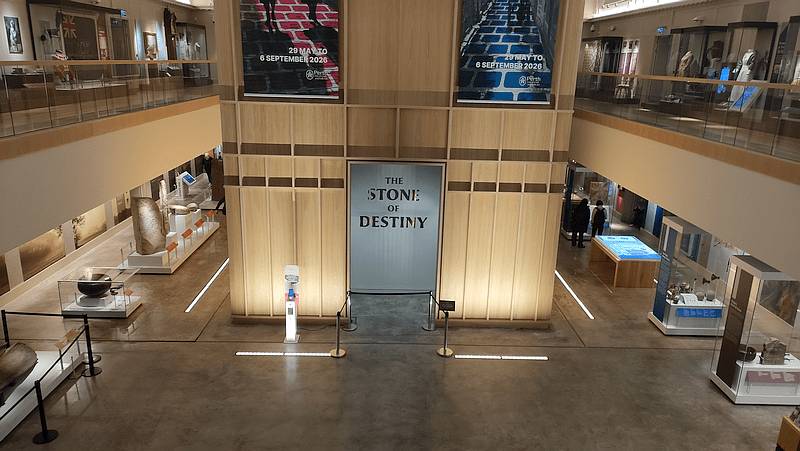
「旅hel」 (tabihel) シリーズのスコットランド編.8月に Perth に滞在した折,2024年に開館したばかりの Perth Museum を訪れた.素晴らしい博物館だったが,何といっても目玉は The Stone of Destiny, or the Stone of Scone,すなわち「運命の石」あるいは「スクーンの石」の実物展示である.石そのものは撮影禁止だったので,上に掲げたのは石が収められている展示室への入口の写真である.
Scone /skuːn/ は Perth 郊外の地名(お菓子の scone /skɑn, skəʊn/ とは発音が異なるので注意).以下,Encyclopaedia Britannica の "Stone of Scone" の項に拠りながら,この石の来歴を概観する (Ultimate Reference Suite. Chicago: Encyclopaedia Britannica, 2008.).
石はスコットランド・ゲール語で Lia Fail とも呼ばれる.重さ152キロ,66x41x28cm ほどの直方体をした淡黄色の砂岩で,ほぼ確実にスコットランド産とされる.唯一の装飾はラテン十字のみという,一見すると何の変哲もない石の塊である.
ところが,この石に付された伝説は壮大だ.ケルトの伝承によれば,この石は族長ヤコブがベテルで天使の幻を見たときに枕にしていたものだという.聖地からエジプト,シチリア,スペインを経て,紀元前700年頃にアイルランドに至り,歴代アイルランド王が戴冠した Tara の丘に据えられた.その後,スコットランドへ渡ったケルト系のスコット人がこれを持ち込み,840年頃に Kenneth MacAlpin が Scone の村へ運んだとされる.
史実として確かなのは,Scone において石が戴冠用の椅子の座に組み込まれ,スコットランド王の即位に用いられたことである.この石の上で戴冠した最後のスコットランド王は,1292年の John de Balliol だった.1296年,イングランド王 Edward I がスコットランドに侵攻し,他の神器とともにこの石をロンドンへ持ち去る.1307年には Westminster Abbey に,石がその下に収まるように設計された戴冠椅子 (Coronation Chair) が作られた.イングランド王がスコットランド王をも兼ねることを示す象徴であり,スコットランドにとっては屈辱の印である.
石には古来,予言を刻んだ金属片が付いていたとも伝えられる.Walter Scott による英訳は次の通り.
Unless the fates be faulty grown
And prophet's voice be vain
Where'er is found this sacred stone
The Scottish race shall reign.
1603年,Elizabeth I が世継ぎなく没すると,スコットランド王 James VI がイングランド王 James I として即位し,この石の上で戴冠した(「#3134. James VI 作の「主の祈り」」 ([2017-11-25-1]) を参照).愛国的なスコットランド人は,石のある地をスコットランド人が治めることになったのだから,この予言は成就した,と語った.
近現代にも物語は続く.1950年のクリスマスの朝,スコットランド民族主義者たち(グラスゴー大学の学生たちだった!)が石を Westminster Abbey から盗み出し,スコットランドへ持ち帰った.4か月後に回収されて Abbey に戻されたものの,1996年,英国政府はついに石をスコットランドへ返還した.その後 Edinburgh Castle での展示を経て,現在は Perth Museum に安住の地を得ている.
実物を前にした感想を率直に述べれば,それだけを見せられたら,ただの無骨な石である.しかし,その歴史的背景を知ると,あまりに重い.歴史の詰まった王位の象徴であり,王室の神器なのだから.厳重に管理されているとはいえ,博物館に足を運べば誰でも実物を見学できるというのが素晴らしい.
Perth は Edinburgh や Glasgow からも1時間ほどの閑静な町で,川や丘も美しい.スコットランドを訪れる際には,ぜひ足を延ばしていただきたい町である.
スコットランドとイングランドの関係史は,Scots と English の関係史とも表裏一体であり,英語史の観点からも重要なトピックである.
2026-10-01 Thu
■ #6366. Trim Castle --- アイルランド最大のアングロノルマンの城 [ireland][anglo-norman][tabihel][tabihel_ireland][history]
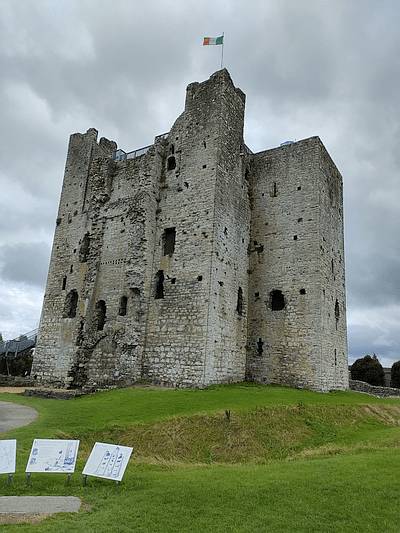
先日,Dublin から車で1時間ほど北西に走ったところにある Meath 県の町 Trim を訪れた.目当ては,町の中心を流れる Boyne 川のほとりにそびえる Trim Castle である.良いタイミングで城内見学ツアーに参加することができた.1時間ほどかけて城内をめぐり,中世の城での生活に思いを馳せた.
Trim Castle は,アイルランドにおける中世のアングロ・ノルマン様式の城のなかで最大の規模を誇る.建設に着手したのは Hugh de Lacy,そして息子の Walter de Lacy である.背景には,1171年のイングランド王 Henry II (在位1154--89年)によるアイルランド遠征があった.同年,Henry はアイルランド諸王の服属を受け入れるに至り,翌1172年には「アイルランド王」を名乗った.そして,遠征に従軍した Hugh de Lacy は,Meath 一帯の広大な領地を与えられ,この地に巨大な城の建設を始めたのだった.
当時この城の中で交わされていた言語は,もちろんアイルランド語ではない.では,(中)英語だったかといえば,そうでもない.de Lacy をはじめとするアングロ・ノルマン系の領主たちの母語は,アングロ・ノルマン訛りのフランス語 (Anglo-Norman French) だった.1世紀ほど遡る1066年のノルマン征服によってイングランドの支配層に定着したこのフランス語の1変種が,そのままアイルランドにも持ち込まれたことになる.つまり,実権を握るノルマン貴族たちが城の中で日々口にしていたのはフランス語であり,英語も被支配者の母語であるアイルランド語も,城のなかで皆無だったとは断言できないものの,あったとしても少数派の言語にすぎなかった.
もっとも,Henry II の遠征によってイングランドによるアイルランド支配が一気に確立されたわけでは決してない.その後何世紀にもわたり,ゲール系諸侯の抵抗と反乱,ノルマン系領主のゲール化,度重なる再征服の試みが繰り返され,統治は困難を極めた.この長く錯綜した歴史の詳細については,「#1715. Ireland における英語の歴史」 ([2014-01-06-1]) や「#2361. アイルランド歴史年表」 ([2015-10-14-1]) を参照されたい.
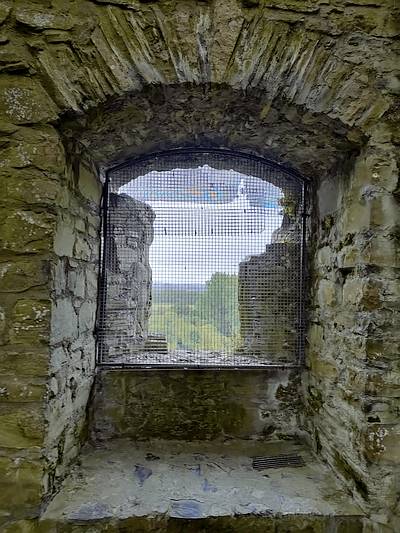
さて,Trim Castle にはもう1つ,意外な顔がある.アカデミー賞を受賞した映画 Braveheart (1995年)の撮影地として使われているのだ.物語の舞台は13世紀末のスコットランド独立戦争,イングランド王 Edward I とスコットランド軍との戦いだが,撮影は海を越えたこのアイルランドの城で行われたという.とりわけ印象的なのが,上掲の写真に写る窓である.映画内で Edward I が王太子の側近をこの窓から容赦なく突き落とす衝撃的な場面は,この窓を利用して撮影されたのだという.
12世紀後半のアングロ・ノルマン貴族が話していたフランス語,その後何世紀にもわたる英語とアイルランド語の複雑な力関係,そして20世紀末のハリウッド映画の舞台.Trim Castle は今も Boyne 川を見下ろしながら息している.
2026-09-27 Sun
■ #6362. B&C の第65節 "The Application of Native Words to New Concepts" (6) --- Taku さんとの超精読会 [bchel][oe][borrowing][semantic_change][christianity][lexicology][latin][loan_word][link][voicy][heldio][anglo-saxon][history][helmate][helwa]
息長く続いている,Baugh and Cable の名著 A History of the English Language, 6th ed. を helwa の Taku さんと読み進める超精読会.第65節も終盤です.「#1946. 英語史の古典的名著 Baugh and Cable を読む (65-6) with Taku さん --- helwa 北千住オフ会より」をお届けします.ナビゲーターは,今回も Taku さんこと金田拓さん(帝京科学大学)です.
今回扱うのは「悪魔」「十字架」「復活」「罪」「最後の審判」といった,キリスト教の教義に不可欠な語彙群です.diabolus はそのまま dēofol(devil)として借用されましたが,本来語の同義語 fēond(fiend)も並行して用いられました.十字架は rōd, trēow, gealga.復活は ārīsan(起き上がる)由来の ǣrist.罪を表す語にいたっては,synn のほか mān, firen, leahtor, wōh, scyld と,実に多彩な本来語が並びます.最後の審判は素朴に Doomsday.
借用語と本来語がこれほど豊かに並存していたことに驚かされます.そして本節は,重要な一般論で締めくくられます.他言語からの言語的影響は,取り込んだ借用語の数だけで測れるものなのか.むしろその影響が,言語自身の内なる創造性をどれだけ刺激し,本来語の資源をどれだけ引き出したかにこそ,真の意義があるのではないか.この節は,そんな問いを投げかけて終わります.今回精読した英文を以下に掲げましょう (Baugh and Cable, pp. 86--87) .
Latin diabolus was borrowed as dēofol (devil), but we find fēond (fiend) as a common synonym. Examples might be multiplied. Cross is rōd (rood), trēow (tree), gealga (gallows), and so forth; resurrection is ǣrist, from ārīsan (to arise); peccatum is synn (sin), while other words like mān, firen, leahtor, wōh, and scyld, meaning 'vice', 'crime', 'fault', and the like, are commonly substituted. The Judgment Day is Doomsday. Many of these words are translations of their Latin equivalents and their vitality is attested by the fact that in a great many cases they have continued in use down to the present day. It is important to recognize that the significance of a foreign influence is not to be measured simply by the foreign words introduced but is revealed also by the extent to which it stimulates the language to independent creative effort and causes it to make full use of its native resources.
この B&C 超精読シリーズの過去回は,「#5291. heldio の「英語史の古典的名著 Baugh and Cable を読む」シリーズが順調に進んでいます」 ([2023-10-22-1]) に過去回へのリンクがまとまっています.原書をお持ちの方は,ぜひ音声を副読本代わりに,今回の1節を味わっていただければと思います.
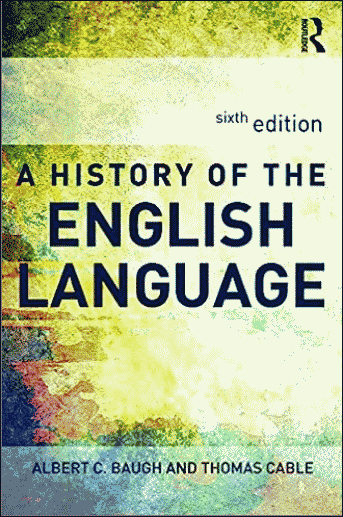
・ Baugh, Albert C. and Thomas Cable. A History of the English Language. 6th ed. London: Routledge, 2013.
2026-09-20 Sun
■ #6355. B&C の第65節 "The Application of Native Words to New Concepts" (5) --- Taku さんとの超精読会 [bchel][oe][borrowing][semantic_change][christianity][lexicology][latin][loan_word][link][voicy][heldio][anglo-saxon][history][helmate][helwa][loan_translation]
Baugh and Cable の名著 A History of the English Language, 6th ed. を,helwa の Taku さんこと金田拓さん(帝京科学大学)さんとともに1文(いな1語)ずつ読み進めていく「超」精読会.「#1939. 英語史の古典的名著 Baugh and Cable を読む (65-5) with Taku さん --- helwa 北千住オフ会より」です.
前回は「洗礼」「聖餐」「捧げ物」といった単語が,借用語に頼らず本来語の意味拡張によって表現されていたことを見ました.今回はその射程がさらに広がります.対象は「聖典」「福音」「三位一体」,そして神・キリスト・聖霊そのものを指す語彙です.Scriptures に対応する gewritu,evangelium に対応する godspell,Trinity に対応する þrines(3性).神という概念だけでも,scieppend(形づくる者),fruma(創始者),metod(測る者)という複数の本来語が並行して用いられていました.さらに fæder, dryhten, wealdend, þēoden, weard, hlæford といった,父・君主・支配者・守護者を意味する語群までもが,神やキリストを指す同義語として重ねて用いられています.
興味深いのは,godspell が現代英語に gospel としてそのまま生き残っている一方,gewritu は廃れ,ラテン系の Scripture(s) にその座を譲ったことです.同じように古英語において本来語で置き換えられた語彙のなかにも,その後の歴史を通じて生き残ってきたものと消えていったものがあります.この明暗にこそ,英語史の醍醐味が宿っています.今回精読した英文を以下に掲げます (Baugh and Cable, p. 86) .
The term Scriptures found its exact equivalent in the English word gewritu, and ēvangelium was rendered by godspell, originally meaning good tidings. Trinity (L. trinitas) was translated þrines (three-ness), the idea of God the Creator was expressed by scieppend (one who shapes or forms), fruma (creator, founder), or metod (measurer). Native words like fæder (father), dryhten (prince), wealdend (ruler), þēoden (prince), weard (ward, protector), and hlāford (lord) are frequent synonyms. Most of them are also applied to Christ, originally a Greek word and the most usual name for the Second Person of the Trinity, but Hǣlend (Savior) is also commonly employed. The Third Person (Spiritus Sanctus) was translated Hālig Gāst (Holy Ghost).
「対面/オンラインで議論に参加してみたい」という方は,ぜひ Voicy のプレミアムリスナー限定配信チャンネル「英語史の輪 (helwa)」の門を叩いてみてください.古英語話者たちの豊かな言語感覚を,皆さんもぜひ一緒に味わってみませんか.過去回は「#5291. heldio の「英語史の古典的名著 Baugh and Cable を読む」シリーズが順調に進んでいます」 ([2023-10-22-1]) にまとまっています.
・ Baugh, Albert C. and Thomas Cable. A History of the English Language. 6th ed. London: Routledge, 2013.
2026-09-16 Wed
■ #6351. 英語史でも著名な Jonathan Swift --- St Patrick's Cathedral のお墓を訪ねて [swift][tabihel][dublin][academy][prescriptive_grammar][shortening][prescriptivism][lmode][history][ireland][clipping][complaint_tradition][tabihel_dublin]
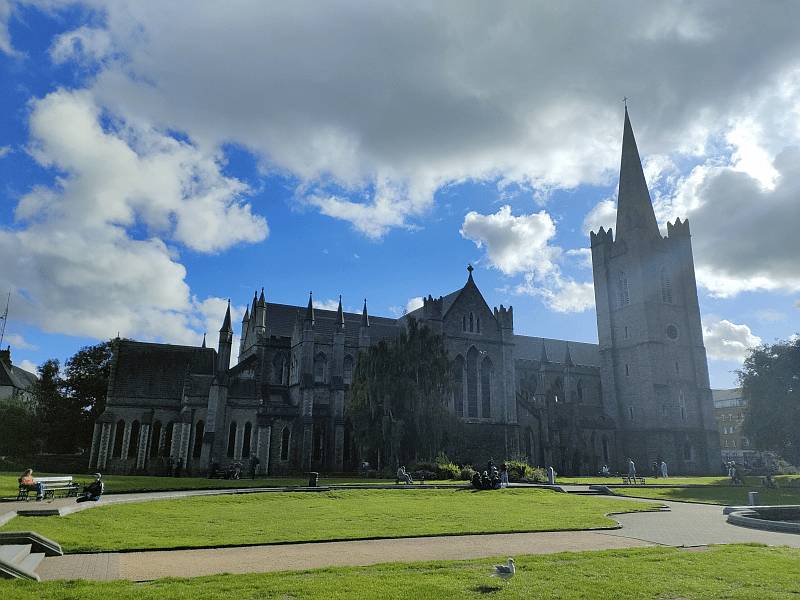
ダブリンにゆかりのある文人を取り上げる「旅hel」 (tabihel) シリーズ.今回は,文人,政治家,そして主席司祭でもあった Jonathan Swift (1667--1745) に注目する.Gulliver's Travels 『ガリバー旅行記』の著者として世界的に知られる人物だが,英語史上重要なのは,むしろ別の顔のほうである.
一雨さっと降ったあと,急に日差しが戻ってポカポカ陽気になった午後,ダブリンの St Patrick's Cathedral に隣接する公園のベンチに腰掛けながら,この建築物の威容を眺めていた.この大聖堂は,アイルランドを代表する "National" を冠された,アイルランド国教会のなかでも別格の位置づけを与えられている教会だ.
名前の由来である St Patrick は5世紀にアイルランドへキリスト教をもたらした聖人で,アイルランドで最も愛され,尊ばれている人物である.大聖堂そのものは,1190年に,彼の布教にゆかりのあるダブリンのこの地に建てられた.すでに800年以上の歴史を数える.
この大聖堂と結びつけられる著名人が,もう1人いる.Jonathan Swift である.1713年に,この大聖堂の主任司祭に就任した.イギリス政界に深く関わっていた Swift が聖職者としてこの座に収まることには反対の声もあったというが,最終的にはこの職を務め上げた.大聖堂のなかには彼の墓があり,彼との関係がいまだ謎に包まれたままの女性 Stella とともに眠っている.大聖堂内は半ば Swift 博物館のような様相を呈しており,オーディオガイド付きの展示となっていた.
Swift は英語史の観点からも位置づけられる人物だ.英語史的には,1712年に英語アカデミーの設立を提案した政治家としての顔が重要である.すでにイタリアやフランスでは早々と母語を統制するアカデミーが設立されていたのに対し,イギリスにはいまだ存在しなかった.Swift は A Proposal for Correcting, Improving and Ascertaining the English Tongue と題する提案書を著し,英語を統制する公的機関の設立を訴えた.これは17世紀以来くすぶり続けてきたイギリスにおけるアカデミー設立運動の,事実上最後にして最大の試みだったといってよい(「#134. 英語が民主的な言語と呼ばれる理由」 ([2009-09-08-1]),「#141. 18世紀の規範は理性か慣用か」 ([2009-09-15-1]) を参照).
だが,この提案は結局は通らなかった.政敵による反発に加え,提案の理解者だった Anne 女王が1714年に急逝し,後ろ盾を失ってしまったことが大きいとわれる(「#2759. Swift によるアカデミー設立案が通らなかった理由」 ([2016-11-15-1]),「#3602. アン女王と英語史」 ([2019-03-08-1]) を参照).結果として,英語はついに中央集権的なアカデミーをもたない言語となったのである.フランス語における l'Académie française のような「上から」の統制機関が存在しないまま,18世紀後半にかけては文人・知識人による「下から」の慣用重視の規範が形成されていくことになる.18世紀初頭の時点では,英語はまだ国際的にはフランス語の後塵を拝していたが,後に世界中に広がっていく英語が,ついぞ1つの機関に統制されることのない野放しの言語として育っていく分岐点が,まさにこの1712年にあったのだと思うと感慨深い.
なお,Swift には英語史上もう1つのおもしろい顔がある.大の「短縮語」嫌いで,clipping を非難する文章まで書いているのだ(「#1947. Swift の clipping 批判」 ([2014-08-26-1]) を参照).
大聖堂のすぐ裏手にはアイルランド最古の公開図書館 Marsh's Library (1701年)があり,そこへは Swift, Joyce, Stoker もかつて通ったという.私が図書館に訪れたとき,そこでも Swift 展が開かれていた.大聖堂と図書館を合わせて「Swift 博物館」をめぐった感がある.Gulliver's Travels の作者,大聖堂の主任司祭,という以外の顔として,英語史における Swift の存在感を,多くの方に知っていただきたい.
2026-09-13 Sun
■ #6348. B&C の第65節 "The Application of Native Words to New Concepts" (4) --- Taku さんとの超精読会 [bchel][oe][borrowing][semantic_change][christianity][lexicology][latin][loan_word][link][voicy][heldio][anglo-saxon][history][helmate][helwa][loan_translation]
キリスト教の中核をなす概念を,ラテン語からの借用に頼らず,本来語の意味を巧みに転用することで表現していく.そんな古英語期の言語的創意工夫を物語るテーマを,Baugh and Cable の名著 A History of the English Language, 6th ed. を通じて Taku さんと読み進める「超精読会」の最新回でお届けします.
今朝の heldio 最新回は,「#1932. 英語史の古典的名著 Baugh and Cable を読む (65-4) with Taku さん --- helwa 北千住オフ会より」です.今回もナビゲーターは,helwa/heldio ではお馴染みの Taku さんこと金田拓さん(帝京科学大学)が務めてくださいました.
今回は前回に引き続きキリスト教に関連する動詞や名詞が本来語で表現される例が挙げられています.具体的には「洗礼」「聖餐」「捧げ物」という,キリスト教の教義の核心に触れる単語群です.借用語ではなく,本来語の意味の拡張・応用によってどう表現されたかが読みどころです.
fullian(清める)から派生した fulluht(洗礼)は,fulluht-bæþ(洗礼盤)や fulluht-fæder(名付け親)など,数々の複合語を生み出しました.また,ゲルマン語本来の hūsl(聖餐)や lāc(捧げ物)が,キリスト教の儀式を指す語として転用されている点も要注目です.異教の語彙が新しい宗教的な意味の器として再利用される --- ここに,古英語話者たちの言語的な戦略が見て取れます.今回精読した英文を以下に掲げましょう (Baugh and Cable, p. 86) .
For baptize (L. baptizāre), the English adapted a native word fullian (to consecrate), while its derivative fulluht renders the noun baptism. The latter word enters into numerous compounds, such as fulluht-bæþ (font), fulwere (baptist), fulluht-fæder (baptizer), fulluht-hād (baptismal vow), fulluht-nama (Christian name), fulluht-stōw (baptistry), fulluht-tīd (baptism time), and others. Even so individual a feature of the Christian faith as the sacrament of the Lord's Supper was expressed by the Germanic word hūsl (modern housel), while lāc, the general word for sacrifice to the gods, was also sometimes applied to the Sacrifice to the Mass.
1文ずつ丁寧に読み解いていくこの営みは,地味に見えて,実は英語史のおもしろさの核心に触れる時間でもあります.過去回のアーカイブは「#5291. heldio の「英語史の古典的名著 Baugh and Cable を読む」シリーズが順調に進んでいます」 ([2023-10-22-1]) からたどれます.ご興味を持たれた方は,Voicy のプレミアムリスナー限定配信チャンネル「英語史の輪 (helwa)」へもぜひ.
・ Baugh, Albert C. and Thomas Cable. A History of the English Language. 6th ed. London: Routledge, 2013.
2026-09-03 Thu
■ #6338. 英語史上の Horatio Nelson --- ロンドンと今はなきダブリンの「ネルソンの柱」に思いを馳せて [dublin][ireland][london][nelson][tabihel][history][tabihel202608][tabihel_dublin][tabihel_london]
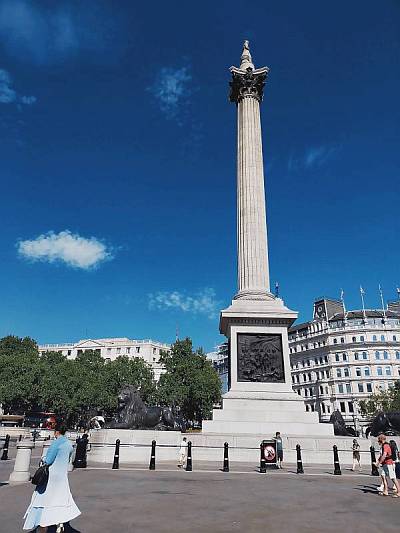
昨日の「#6337. 英語史上の Arthur Wellesley Wellington --- ダブリンの Wellington の生家と記念塔を眺めて」 ([2026-09-02-1]) に続き,本日もナポレオン戦争がらみの話題を1つ.イギリス軍のもう1人の英雄,ネルソン提督こと Horatio Nelson (1758--1805) を取り上げたい.Wellington が陸戦で勝利をイギリスにもたらした軍人として英語史上に象徴的に位置づけられるのだとすれば,海戦でいち早くイギリス軍に勢いをつけた Nelson もまた,同じように位置づけることができるだろう.
1805年のトラファルガーの戦 (Battle of Trafalgar) において Nelson はフランス・スペイン連合艦隊を打ち破り,自らは銃弾に倒れつつも,その後のイギリス海軍の優位を決定づけた.イギリスがヨーロッパの制海権を握ることになり,ナポレオンのイギリス侵攻の野望は打ち砕かれることになった.
先日,ロンドンのトラファルガー・スクエアに立つ「ネルソンの柱」 (Nelson's Column) を訪れた(上掲の写真).そして今,滞在中のダブリンの目抜き通り O'Connell Street には,高さ120メートルのランドマーク Spire がそびえ立っているのだが,実はこの塔には前身があった.かつて,そこにはもう1つの「ネルソンの柱」 (Nelson's Pillar) が建っていたのである.
ダブリンの「ネルソンの柱」は,1800年の連合法によってイギリスとアイルランドが合一した後の1809年,Nelson によるかの戦役の勝利を記念して建てられたものだった.ロンドンの「ネルソンの柱」(こちらは1840--43年に建設)よりも早く,ダブリンにこうした記念塔が建てられていたことになる.しかし,この柱は1966年,テロリストによって爆破され,姿を消してしまった.そこには,アイルランドの英雄ではなくイギリスの英雄を顕彰する柱だった,という影の事情が横たわっている.
ダブリンの柱が破壊された跡地には,長らく空白が残されていたが,2003年,特定の人物や国家を象徴しない,抽象的なステンレス製の尖塔,上述の Spire が新たに建てられた(下掲の写真).イギリスの英雄の記念柱から,誰のものでもない現代的なモニュメントへ.この置き換えそのものが,アイルランドとイギリスのあいだの複雑な歴史を雄弁に物語っているように思われる.
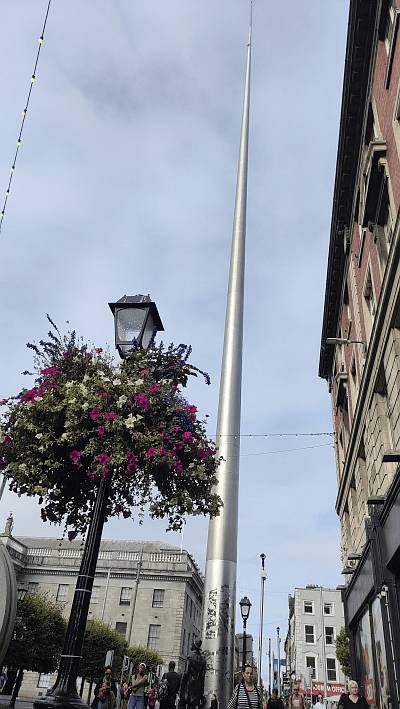
ロンドンでは今なお健在の「ネルソンの柱」と,ダブリンでは姿を消し,別のモニュメントに置き換えられた「ネルソンの柱」.同じ人物,同じ勝利を記念しながら,2つの都市でまったく異なる運命をたどったことになる.
2026-09-02 Wed
■ #6337. 英語史上の Arthur Wellesley Wellington --- ダブリンの Wellington の生家と記念塔を眺めて [dublin][ireland][wellington][tabihel][history][language_shift][tabihel_dublin]
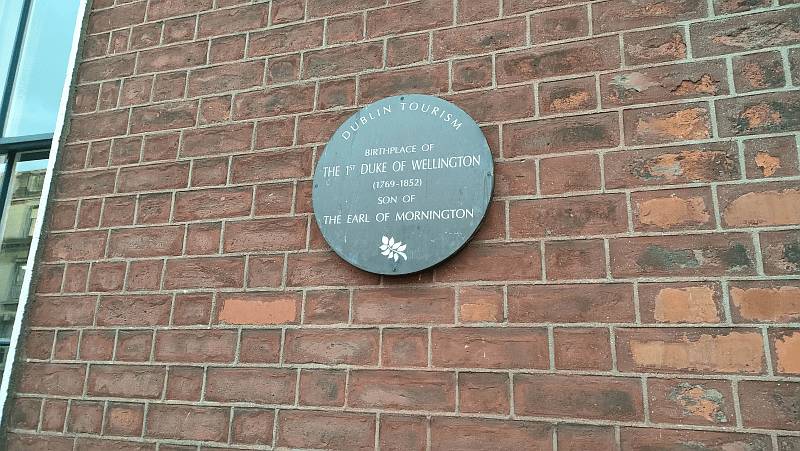
2週間ほど前の早朝,ダブリン市内をジョギングをしていたところ,思いがけず Arthur Wellesley, 1st Duke of Wellington (1769--1852) の生家とされる建物を見つけた.Merrion Street 沿い,何の変哲もない街並みの一角に,控えめなプレートが掲げられているだけだったので,危うく素通りするところだった.1769年,この家で生まれたとされている.
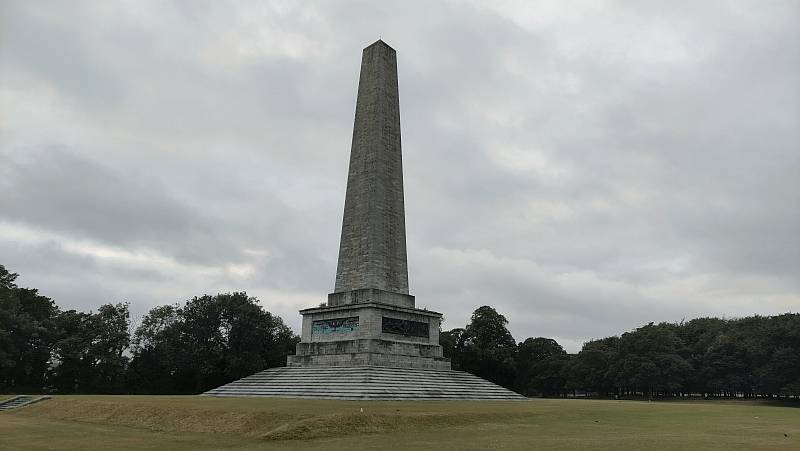
せっかくの発見である.翌日の早朝ジョギングでは,西の郊外に広がる公園 Phoenix Park まで足を延ばしてみることにした.ここには,遠くからでも見える背の高い(62メートル!)オベリスク型の記念塔 Wellington Monument がそびえ立っている.1815年,ナポレオン戦争のワーテルローの戦 (Battle of Waterloo) におけるイギリス軍の英雄を顕彰するために19世紀半ばに建てられたものだ.2日連続でダブリンゆかりの英雄の痕跡を追いかけるジョギングとなった.
英語史のなかに Wellington を位置づけようとすると,何が言えるだろうか.2点ほど考えてみた.まず,軍人としての顔だ.彼は上述の戦役においてイギリスを勝利に導いた.この勝利がなければ,19世紀以降のヨーロッパにおける覇権の行方は違ったものになっていたかもしれない.ナポレオン戦争での勝利によりイギリスが軍事的,政治的,経済的な覇権国としての地位を固めていき,イギリス帝国の絶頂期を準備したからこそ,英語という言語も世界的な優位性を確立させていくことができた.イギリスの勝利は,もちろん Wellington 1人のみによるものではないが,象徴的な意義をもつ軍人であることは確かだ.
もう1つは政治家としての顔である.後にイギリスの首相となった Wellington は,1829年に「カトリック解放」 (Catholic Emancipation) を実現した.カトリック教徒の公職就任を大幅に認める改革は,アイルランドにおけるカトリック教徒の社会的地位を押し上げ,結果として皮肉なことにアイルランド人たちがアイルランド語から(アイルランド)英語へと言語交替 (language_shift) していく社会的な条件を整えることになった.信仰の自由の拡大という政治的決断が,長期的には言語共同体の言語選択にまで影響を与えていたわけで,この一連の因果関係は決して単純ではないにせよ,たしかに存在していたろう.
朝のジョギング中の何気ない発見が,思いがけずイギリスの誇る軍人・政治家と英語史の関係を考えさせることになった.なお,ダブリン(アイルランドの首都)とイギリスの話題が交錯しているように思われるかもしれないが,当時は1800年の連合法 (Act of Union) を通じて,1つの国となっていたことに注意が必要である.ダブリンはロンドンに次ぐイギリス(帝国)第2の都市となっていた.
2026-08-01 Sat
■ #6305. B&C の第65節 "The Application of Native Words to New Concepts" (3) --- Taku さんとの超精読会 [bchel][oe][borrowing][semantic_change][christianity][lexicology][latin][loan_word][link][voicy][heldio][anglo-saxon][history][helmate][helwa]
Baugh and Cable の精読シリーズ,第65節を読み進め,議論を重ねています.helwa の仲間たちとともにテキストを念入りに読み解いた北千住オフ会での音声を,Voicy heldio にて公開しております.今回もナビゲーターとして全体を引っ張ってくださったのは,お馴染みの Taku さんこと金田拓さん(帝京科学大学)です.「#1889. 英語史の古典的名著 Baugh and Cable を読む (65-3) with Taku さん --- helwa 北千住オフ会より」をぜひお聴きください.
今回は,キリスト教的な「説教する」「祈る」といった宗教的行為を表わす動詞・名詞において,ラテン語からの直接の借用を避け,アングロサクソン人が元々持っていた本来語の意味を転用させたが扱われています.精読した本文の該当箇所は1文のみで,以下の通りです(Baugh and Cable, p. 86).
Instead of borrowing the Latin word praedicāre (to preach), the English expressed the idea with words of their own, such as lǣran (to teach) or bodian (to bring a message); to pray (L. precāre) was rendered by biddan (to ask) and other words of similar meaning, prayer by a word from the same root, gebed.
今回注目したのは1文のみですが,the English の定冠詞がもつ意味・意義に注目し,著者の英語史や言語変化に対する姿勢を読み解くというエキサイティングな議論が展開しました.改めてキリスト教の布教と用語の問題,それから読書会に立ち会われたヘルメイトからの質問などについても検討し,豊かな議論の時間を過ごすことができました.
これまでの B&C 超精読会のアーカイブは,体系的にまとめられており,いつでもさかのぼって学習することができます.「#5291. heldio の「英語史の古典的名著 Baugh and Cable を読む」シリーズが順調に進んでいます」 ([2023-10-22-1]) に全回へのリンクが整備されておりますので,未聴の回がある方はぜひご参照ください.原書を手元に用意し,音声を副読本のように活用することで,英語史の原典購読の醍醐味を味わっていただけるはずです(使用テキストは最新の第7版ではなく第6版となっております).また,このような精読の輪の中に加わり,一緒に学びを深めたいとお考えの方は,ぜひ Voicy のプレミアムリスナー限定配信チャンネル「英語史の輪 (helwa)」へお越しください.8月の helwa もちょうど本日からスタートです.刺激的で充実した学びの時間が待っています!
・ Baugh, Albert C. and Thomas Cable. A History of the English Language. 6th ed. London: Routledge, 2013.
2026-07-29 Wed
■ #6302. B&C の第65節 "The Application of Native Words to New Concepts" (2) --- Taku さんとの超精読会 [bchel][oe][borrowing][semantic_change][christianity][lexicology][latin][loan_word][link][voicy][heldio][anglo-saxon][history][helmate][helwa]
Baugh and Cable の第6版をじっくりと読み解いていく「超」精読シリーズの続編です.前日に引き続いて,helwa のオフ会で収録した熱気あふれる音声を Voicy heldio にて共有いたします.今回も解説の進行役を務めてくださっているのは,helwa/heldio でお馴染みの Taku さんこと金田拓さん(帝京科学大学)です.ぜひ「#1886. 英語史の古典的名著 Baugh and Cable を読む (65-2) with Taku さん --- helwa 北千住オフ会より」をお聴きいただければと思います.
今回の該当箇所では,ラテン語のキリスト教概念を導入するにあたり,英語がどのような本来語を用いてこれらを表現しようとしたのか,その具体例が多数挙げられています.外来語をそのまま取り入れるのではなく,すでにある自言語の語彙を組み合わせて翻訳借用したり,意味を拡張させたりする手法が観察されます.今回精読した英文3文を提示します(Baugh and Cable, p. 86).
Patriarch was rendered literally by hēahfæder (high father), prophet by wītega (wise one), martyr often by the native word þrōwere (one who suffers pain), and saint by hālga (holy one). Specific members of the church organization such as pope, bishop, and priest, or monk and abbot represented individuals for which the English had no equivalent and therefore borrowed the Latin terms; however, they did not borrow a general word for clergy but used a native expression, ðæt gāstlice folc (the spiritual folk). The word Easter is a Germanic word taken over from a pagan festival, likewise in the spring, in honor of Eostre, the goddess of dawn.
キリスト教宣教団にとって,イングランドの布教のためには,ラテン語の用語を使わずに,土着の人々の言語である古英語を最大限に活用する必要があったにちがいありません.精読会では,この観点を踏まえて突っ込んだ議論が繰り広げられました.皆さんにも一緒にお考えいただき,heldio のコメント欄よりご意見やご質問を寄せていただければと思います.
この B&C 精読会配信回のバックナンバーは,すべて整理されて保存されています.「#5291. heldio の「英語史の古典的名著 Baugh and Cable を読む」シリーズが順調に進んでいます」 ([2023-10-22-1]) に過去の配信回がリスト化されていますので,復習や聞き返しにご活用ください.テキストを片手に音声を聴き進めることで,英語史の理解が着実に深まっていきます(読書会では最新の第7版ではなく第6版を使用していますので,お持ちの版をご確認ください).
さらに,「この濃密な読書会の空間に直接参加してみたい」という方は,ぜひ Voicy のプレミアムリスナー限定チャンネル「英語史の輪 (helwa)」へのご参加をご検討ください.皆さんとともに英語史を深掘りする有意義な時間を共有できます.
・ Baugh, Albert C. and Thomas Cable. A History of the English Language. 6th ed. London: Routledge, 2013.
2026-07-27 Mon
■ #6300. B&C の第65節 "The Application of Native Words to New Concepts" (1) --- Taku さんとの超精読会 [bchel][oe][borrowing][semantic_change][christianity][lexicology][latin][loan_word][link][voicy][heldio][anglo-saxon][history][helmate][helwa]
英語史の名著,Baugh and Cable のテキスト(第6版)を,helwa のメンバーと「超」精読していくシリーズです.先日土曜日の午後に開催された豊かな読書会の音声を,そのまま Voicy heldio でお届けします.いつものように helwa/heldio の盛り上げ役の Taku さんこと金田拓さん(帝京科学大学)に読書会をリードしていただいています.「#1884. 英語史の古典的名著 Baugh and Cable を読む (65-1) with Taku さん --- helwa 北千住オフ会より」をお聴きください.
今回は,"The Application of Native Words to New Concepts" と題する節を読み始めています.前節までにみてきたように,古英語期にはラテン語からの借用語が多く流れ込んできました.しかし,ラテン語の影響の大きさはは,そのような直接の借用語だけをみているだけでは,正確につかめません.ラテン語は,英語本来語にも目に見えにくい間接的な影響を少なからず与えているのです.精読対象となった英文を以下に掲げます(Baugh and Cable, pp. 85--86).最初5文をじっくり読んでいきます.
The words that Old English borrowed in this period are only a partial indication of the extent to which the introduction of Christianity affected the lives and thoughts of the English people. The English did not always adopt a foreign word to express a new concept. Often an old word was applied to a new thing and by a slight adaptation made to express a new meaning. The Anglo-Saxons, for example, did not borrow the Latin word deus because their own word God was a satisfactory equivalent. Likewise, heaven and hell express conceptions not unknown to Anglo-Saxon paganism and are consequently English words.
この B&C 超精読シリーズの過去回は,すべてアーカイヴに保存されており,いつでもお聴きいただけます.「#5291. heldio の「英語史の古典的名著 Baugh and Cable を読む」シリーズが順調に進んでいます」 ([2023-10-22-1]) にリンクがまとまっているので,ご参照ください.バックナンバーみ聴いた上で,この英語史の古典的テキストを一緒に読んでみたいという方は,ぜひ本書をお手元にご用意ください(最新版は第7版ですが,読書会では第6版を読み進めているので,ご注意ください).また,「超精読会に自分も加わりたい」という方は,ぜひ Voicy のプレミアムリスナー限定配信チャンネルである「英語史の輪 (helwa)」へお越しください.限りなく豊かな時間を過ごすことができます.
・ Baugh, Albert C. and Thomas Cable. A History of the English Language. 6th ed. London: Routledge, 2013.
2026-07-07 Tue
■ #6280. B&C の第64節 "Influence of The Benedictine Reform on English" (3) --- Taku さんとの超精読会 [bchel][oe][benedictine_reform][christianity][lexicology][borrowing][latin][loan_word][link][voicy][heldio][anglo-saxon][history][helmate][philology]
昨日に続き,英語史の古典的名著 Baugh and Cable (第6版)を helwa の熱心な仲間たちと1文ずつ解剖していく超精読会の実況録音シリーズです.Voicy heldio の配信と連動しながら,名著の行間から立ち上る歴史の息吹を再現する試みを続けています.
今朝の heldio 最新回では,第64節 "Influence of The Benedictine Reform on English" の締めくくりとなる後半部分 (p. 85) の精読をお届けしています.今回も,精読のリード役は,helwa/heldio コミュニティに欠かせないヘルメイトであり,同志である Taku さんこと金田拓さん(帝京科学大学)です.
昨日までに見てきたように,ベネディクト改革期に英語へ流入したラテン語借用語の多くは,本を通じて導入された書物的・学術的な用語でした.本日のターゲットとなる英文では,これらの単語が当時の古英語の語彙体系においてどのような位置づけにあったのか,そして文献学的な視点から借用時期をどのように特定・推定すべきなのか,というテーマが議論されます.ラテン語形のまま用いられており完全に同化しなかった単語のリストを眺めながら,文献上の沈黙をどのように解釈すべきかという,文献学や歴史言語学の方法論に関する問題にまで踏み込んで議論しています.ぜひお付き合いください
It would be possible to extend these lists considerably by including words that were taken over in their foreign form and not assimilated. Such words as epactas, corporale, confessores, columba (dove), columne, cathedra, catacumbas, apostata, apocalipsin, acolitus, absolutionem, invitatorium, unguentum, cristalla, cometa, bissexte, bibliothece, basilica, adamans, and prologus show at once by their form their foreign character. Although many of them were later reintroduced into the language, they do not constitute an integral part of the vocabulary at this time. In general, the later borrowings of the Christian period come through books. An occasional word assigned to this later period may have been in use earlier, but there is nothing in the form to indicate it, and in the absence of any instance of its use in the literature before Alfred it is safer to put such borrowings in the latter part of the Old English period.
この B&C 超精読シリーズの過去回のリンク集へは,「#5291. heldio の「英語史の古典的名著 Baugh and Cable を読む」シリーズが順調に進んでいます」 ([2023-10-22-1]) からアクセスできます.ぜひ過去回も含めてお聴きになり,本書の精読を通じて,豊穣なる英語史の世界に足を踏み入れていただければ.
・ Baugh, Albert C. and Thomas Cable. A History of the English Language. 6th ed. London: Routledge, 2013.
2026-07-06 Mon
■ #6279. B&C の第64節 "Influence of The Benedictine Reform on English" (2) --- Taku さんとの超精読会 [bchel][oe][benedictine_reform][christianity][lexicology][borrowing][latin][loan_word][link][voicy][heldio][anglo-saxon][history][helmate][helwa]
前回の関連記事 ([2026-06-19-1]) に引き続き,Voicy heldio の収録会の形をとりながら,英語史の名著,Baugh and Cable のテキスト(第6版)を,helwa の志高き仲間たちとともに徹底的に精読していく会の記録をお届けします.この熱気あふれる読書会の音声をそのままお届けする heldio 配信シリーズは,コアなリスナーの皆さんの応援に支えられて,ゆっくりとではありますが順調に進んでいます.
今朝配信の heldio 最新回では,引き続き第64節の精読を進めています.本日のブログ記事はこの音声配信とリンクした内容となります.今回も,helwa/heldio のコミュニティを熱く盛り上げてくださっているヘルメイトであり,コアリスナーの Taku さんこと金田拓さん(帝京科学大学)に,精読をリードしていただきました.
前回の heldio 配信「#1846. 英語史の古典的名著 Baugh and Cable を読む (64-1) with Taku さん --- helwa 北千住オフ会より」では,ベネディクト改革がもたらした宗教関係のラテン借用語に焦点を当てました.今回はさらにその外側に広がる書物的・学術的な語彙へと突入します.古英語期の借用語といえば,キリスト教伝来に伴う初期の日常的・一般的なラテン借用語が想起されますが,ベネディクト改革期にラテン語から流入した語彙の性質はそれらとは一線を画しています.きわめて学術的な専門用語が目立つようになるのです.今回の精読のターゲットとなった英文を以下に掲げます (p. 85) .植物名や医学用語,動物の名称など,当時の知識階級が本を通じて導入した語彙の数々を味わいました.
But we miss the group of words relating to everyday life characteristic of the earlier period. Literary and learned words predominate. Of the former kind are accent, brief (the verb), decline (as a term of grammar), history, paper, pumice, quatern (a quire or gathering of leaves in a book), and term(inus), title. A great number of plant names are recorded in this period. Many of them are familiar only to readers of old herbals. Some of the better known include celandine, centaury, coriander, cucumber, ginger, hellebore, lovage, periwinkle, petersili (parsley), and verbena.9 A few names of trees might be added, such as cedar, cypress, fig, laurel, and magdala (almond).10 Medical terms, like cancer, circulādl (shingles), paralysis, scrofula, plaster, and words relating to the animal kingdom, like aspide (viper), camel, lamprey, scorpion, and tiger, belong apparently to the same category of learned and literary borrowings.
9 A number of interesting words of this class have not survived in modern usage, such as aprotane (wormwood), armelu (wild rue), caric (dry fig), elehtre (lupin), mānrūfie (horehound), nepte (catnip), pollegie (pennyroyal), and hymele (hop-plant).
10 Most of these words were apparently bookish at this time and had to be reintroduced later from French.
この B&C 超精読シリーズの過去の足跡については,すべてアーカイヴに網羅されており,いつでもバックナンバーにアクセス可能です.各回へのナビゲーションは,「#5291. heldio の「英語史の古典的名著 Baugh and Cable を読む」シリーズが順調に進んでいます」 ([2023-10-22-1]) をご覧ください.この超精読シリーズを通じて知的好奇心をくすぐられた方は,ぜひ本書をお手元にご用意の上,この音声を道しるべに精読体験を味わっていただければ幸いです.さらに,「ただ聴くだけでなく,自分も対面やオンラインの現場に飛び込んでリアルタイムに議論の輪に加わりたい!」という熱量をお持ちの方は,ぜひ Voicy のプレミアムリスナー限定配信チャンネルである「英語史の輪 (helwa)」へのご参加をご検討ください.月額800円,初月無料のサブスクです.
・ Baugh, Albert C. and Thomas Cable. A History of the English Language. 6th ed. London: Routledge, 2013.
2026-06-19 Fri
■ #6262. B&C の第64節 "Influence of The Benedictine Reform on English" (1) --- Taku さんとの超精読会 [bchel][oe][benedictine_reform][christianity][lexicology][borrowing][latin][loan_word][link][voicy][heldio][anglo-saxon][history][helmate]
昨日に引き続き,英語史の名著,Baugh and Cable のテキスト(第6版)を,helwa の志高き仲間たちと徹底的に腑に落としていく「超精読会」の記録です.この熱気あふれる現場の音声をそのままお届けする Voicy heldio の配信シリーズも,おかげさまで息長く続いています.
今朝配信の heldio 最新回では,新しい節の冒頭を精読する回をお届けしています.「#1846. 英語史の古典的名著 Baugh and Cable を読む (64-1) with Taku さん --- helwa 北千住オフ会より」 です.本日のブログ記事はこの最新音源と密接にリンクした誌上実況中継となります.
今回も,helwa/heldio のコミュニティを熱く盛り上げてくださっている重要ヘルメイトであり,コアリスナーの Taku さんことhttps://www.ntu.ac.jp/research/kyoin/kodomo/gakoukyouiku/kaneta_t.html">金田拓さん(帝京科学大学)に,水先案内人として精読をリードしていただきました.
さて,今回からはいよいよ "Influence of The Benedictine Reform on English" と題された新セクションへ突入します.前回まで追ってきた「ベネディクト改革」という歴史的うねりが,実際の英語の語彙にどのような変化をもたらしたのか,具体的な借用語 (loan_word) のリストとともに検証していくことになります.今回の精読のターゲットとなった英文を以下に掲げます(Baugh and Cable, pp. 84--85).第64節の冒頭から,およそ30分弱をかけて計6文の細部を解剖していきました.
The influence of Latin upon the English language rose and fell with the fortunes of the church and the state of learning so intimately connected with it. As a result of the renewed literary activity just described, a new series of Latin importations took place. These differed somewhat from the earlier Christian borrowings in being words of a less popular kind and expressing more often ideas of a scientific and learned character. They are especially frequent in the works of Ælfric and reflect not only the theological and pedagogical nature of his writings but also his classical tastes and attainments. His literary activity and his vocabulary are equally representative of the movement. As in the earlier Christian borrowings, a considerable number of words have to do with religious matters: alb, Antichrist, antiphoner, apostle, canticle, cantor, cell, chrism, cloister, collect, creed, dalmatic, demon, dirge, font, idol, nocturn, prime, prophet, sabbath, synagogue, troper.
この B&C 超精読シリーズの過去の足跡については,すべてアーカイヴに網羅されており,いつでもバックナンバーにアクセス可能です.各回へのナビゲーションは,「#5291. heldio の「英語史の古典的名著 Baugh and Cable を読む」シリーズが順調に進んでいます」 ([2023-10-22-1]) をハブとしてご利用ください.英語史のロマンに知的好奇心をくすぐられた方は,ぜひ本書をお手元にご用意の上,この音声を道しるべに深い読書体験を味わっていただければ幸いです.さらに,「ただ聴くだけでなく,自分も対面やオンラインの現場に飛び込んでリアルタイムに議論の輪に加わりたい!」という熱量をお持ちの方は,ぜひ Voicy のプレミアムリスナー限定配信チャンネルである「英語史の輪 (helwa)」へのご参加をご検討ください.知的なお祭りをともに楽しめる仲間を,いつでもお待ちしております.
・ Baugh, Albert C. and Thomas Cable. A History of the English Language. 6th ed. London: Routledge, 2013.
2026-06-18 Thu
■ #6261. B&C の第63節 "The Benedictine Reform" (7) --- Taku さんとの超精読会 [bchel][oe][benedictine_reform][christianity][link][voicy][heldio][anglo-saxon][history][helmate]
英語史を学ぶ者にとってのバイブルとも言える Baugh and Cable の名著(第6版)を,helwa の志高きメンバーとともに1文ずつ(いな,1語ずつ)じっくりと読み解いていく「超精読会」を,半定期的なペースで重ねています.この濃密な読書会の空気感をそのままお届けする Voicy heldio の音声配信シリーズも,気づけば継続中です.開始から3年近くが経過しましたが,歩みは着実に進んでおり,現在は第63節の後半戦に突入しています.
今朝の heldio にて,その最新の配信回を公開いたしました.「#1845. 英語史の古典的名著 Baugh and Cable を読む (63-7) with Taku さん --- helwa 北千住オフ会より」です.本日のブログ記事はこの音声配信とがっちり連動する形でのアップデートとなります.
今回も,heldio/helwa コミュニティを牽引するヘルメイトでありコアリスナーの Taku さんこと金田拓さん(帝京科学大学)に,ナビゲーターとして精読を力強くリードしていただきました.現場に集まった数名のギャラリーとともに,テキストの奥底に潜む歴史的背景を掘り起こすような,いつもながらのディープな読みを堪能する時間となりました.
今回の読書会でターゲットとした英文を以下に提示します(Baugh and Cable, pp. 83--84) .第63節の幕引きに近い箇所から,およそ40分もの時間をかけて計6文を緻密に読み解いていきました.10世紀後半のベネディクト改革の英語史上の意義を堪能してください!
One of the objects of special concern in this work of rehabilitation was the improvement of education---the establishment of schools and the encouragement of learning among the monks and the clergy. The results were distinctly gratifying. By the close of the century the monasteries were once more centers of literary activity. Works in English for the popularizing of knowledge were prepared by men who thus continued the example of King Alfred, and manuscripts both in Latin and the vernacular were copied and preserved. It is significant that the four great codices in which the bulk of Old English poetry is preserved date from this period. We doubtless owe their existence to the reform movement.
この B&C 読書会のこれまでの軌跡については,すべてアーカイヴ化されており,いつでも過去回へアクセスが可能です.各配信回へのナビゲーションリンクは,過去の記事「#5291. heldio の「英語史の古典的名著 Baugh and Cable を読む」シリーズが順調に進んでいます」 ([2023-10-22-1]) にまとまっていますので,ぜひそちらをご参照ください.知的好奇心を刺激された方は,ぜひご自身でも本書を入手され,この超精読会の音声をガイドブック代わりにお聴きいただければ幸いです.また「聴くだけでなく,対面やオンラインの現場でリアルタイムに議論に加わりたい!」という熱意をお持ちの方は,ぜひ Voicy のプレミアムリスナー限定配信チャンネルである「英語史の輪 (helwa)」の門を叩いてみてください.皆さんのご参加を心よりお待ちしております.
・ Baugh, Albert C. and Thomas Cable. A History of the English Language. 6th ed. London: Routledge, 2013.
2026-05-08 Fri
■ #6220. 歴代スコットランド君主と統治年代の一覧 [timeline][history][monarch][scotland][scots][scots_engish]
「#6218. イラスト入りスコットランド史の本」 ([2026-05-06-1]) にてスコットランド史を再学習中である.スコッツ語の外面史においても欠かせない情報として,歴代スコットランド(女)王とその統治年代を一覧しよう.出展は Encyclopaedia Britannica である.
Malcolm II 以前の王については年代を含め不確かなことも多く,伝統的な一覧に基づいていることに注意されたい.
| 843--858 | Kenneth I MacAlpin | |
| 858--862 | Donald I | |
| 862--877 | Constantine I | |
| 877--878 | Aed (Aodh) | |
| 878--889 | Eochaid (Eocha) and Giric (Ciric) | * Eochaid が未成年で,Giric が後見人だった可能性がある |
| 889--900 | Donald II | |
| 900--943 | Constantine II | |
| 943--954 | Malcolm I | |
| 954--962 | Indulf | |
| 962--966 | Dub | |
| 966--971 | Culen | |
| 971--995 | Kenneth II | |
| 995--997 | Constantine III | |
| 997--1005 | Kenneth III | |
| 1005--34 | Malcolm II | |
| 1034--40 | Duncan I | |
| 1040--57 | Macbeth | |
| 1057--58 | Lulach | |
| 1058--93 | Malcolm III Canmore | |
| 1093--94 | Donald Bane (Donalbane) | |
| 1093--94 | Duncan II | |
| 1094--97 | Donald Bane (restored) | |
| 1097--1107 | Edgar | |
| 1107--24 | Alexander I | |
| 1124--53 | David I | |
| 1153--65 | Malcolm IV | |
| 1165--1214 | William I the Lion | |
| 1214--49 | Alexander II | |
| 1249--86 | Alexander III | |
| 1286--90 | Margaret, Maid of Norway | |
| 1290--92 | Interregnum | |
| 1292--96 | John de Balliol | |
| 1296--1306 | Interregnum | |
| 1306--29 | Robert I the Bruce | |
| 1329--71 | David II | |
| House of Stewart (Stuart) | * 16世紀に <w> を欠くフランス語の影響でスペリングが変わった | |
| 1371--90 | Robert II | |
| 1390--1406 | Robert III | |
| 1406--37 | James I | |
| 1437--60 | James II | |
| 1460--88 | James III | |
| 1488--1513 | James IV | |
| 1513--42 | James V | |
| 1542--67 | Mary, Queen of Scots | |
| 1567--1625 | James VI | * = James I of England;以後,England と同じ歩み |
関連して,以下も参照.
・ 「#2547. 歴代イングランド君主と統治年代の一覧」 ([2016-04-17-1])
・ 「#3394. 歴代イングランド君主と配偶者の一覧」 ([2018-08-12-1])
・ 「#2620. アングロサクソン王朝の系図」 ([2016-06-29-1])
・ 「#6206. Scots の時代区分」 ([2026-04-24-1])
Powered by WinChalow1.0rc4 based on chalow