2026-09-21 Mon
■ #6356. 9月26日(土)の朝カル講座「"through" を探って中英語原文の世界へ」 [asacul][notice][kdee][etymology][hel_education][helkatsu][me][me_text][kochushoho][through][hee][spelling][me_dialect][metathesis][doublet]
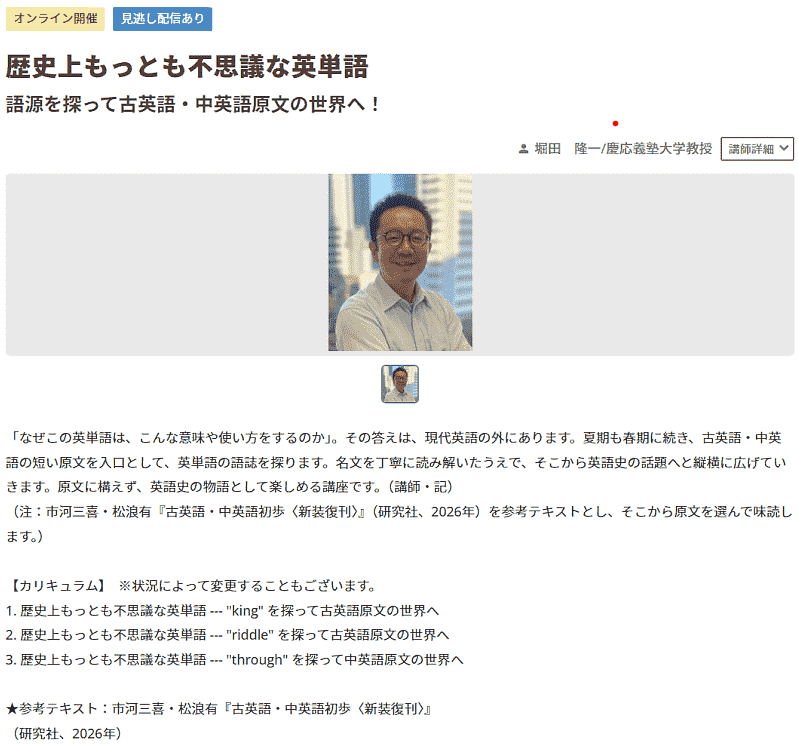
今週末,9月26日(土) 15:30--17:00に,朝日カルチャーセンター新宿教室にてオンライン講座が開かれます.昨年度より継続しているシリーズ「歴史上もっとも不思議な英単語」の夏期第3回(通算第18回)となり,夏期クールの締めくくりの回です.今回は「through を探って中英語原文の世界へ」と題して,中英語期の綴字事情を象徴するこの1語に迫ります.
現代英語の前置詞・副詞 through (#FF5E;を通り抜けて)は,誰もが知る基本語です.ところが後期中英語期の綴字を丹念に集めていくと,驚くべき事実に突き当たります.私が確認した限りで516通りもの異なる綴字が存在するのです.「#53. 後期中英語期の through の綴りは515通り」 ([2009-06-20-1]) で紹介して以来,折に触れて話題にしてきた「515通りの through」ですが,2025年に516通り目の綴字(þurrh)が見つかったことは,「#5738. 516番目の through を見つけました」 ([2025-01-11-1]) で報告した通りです.今回の講座では,この驚異の数字を入口に,中英語期の写字生たちの綴字事情を探ります.through が音位転換 (metathesis) の代表選手とされていることや,<-ough> という綴字を共有しながら発音がまるで異なる though, enough, cough, plough などの仲間たちにも触れる予定です.
第2のポイントは,through の語源的な仲間たちです.実は through と thorough は同一語源から分かれた2重語 (doublet) の関係にあり,動詞 thrill (原義は「(穴を)貫く」)とも語根を共有します.『英語語源辞典』の各項目を突き合わせながら,この語族のつながりを確認します.
さらに,語源はまったく異なるものの,through に負けず劣らず異綴字・異形の乱立という運命をたどった単語として borough を取り上げます.-borough, -burg, -burgh, -bury と,地名接尾辞として地域ごとに異なる形を今に残す borough 系との対比を通じて,through の綴字の乱立が中英語期という一時期に集中して噴出し,やがて1つに収束した時間軸の産物であるのに対し,borough の異形は複数の地域方言の違いをそのまま反映して現在まで並存する空間軸の産物であることを見ていきます.
第3のポイントは,こうした綴字の乱立がなぜ生じたのかという歴史的背景です.1066年のノルマン征服により,英語は公的な書き言葉の座をフランス語に奪われ,長らく話し言葉の世界に押し込められました.13世紀以降,英語が再び書かれるようになったとき,書き手たちは規範となる標準綴字をもたぬまま,各自の「訛った」方言の発音に即して思い思いに綴ったのです.講座では,ノルマン征服から英語の復権に至る略史を年表とともにたどりながら,なぜこれほど自由奔放な綴字が許されたのか,当時の言語事情を探ります.
講義の後半には,市河三喜・松浪有(著)『古英語・中英語初歩〈新装復刊〉』(研究社,2026年)の II. The Ormulum より,"Dedication" の冒頭部分を中英語原文で読んでみます.綴字潔癖症ぶりを見せる書き手 Orm の,一風変わった綴字の癖にもぜひ注目してください.講義資料で原文や文法解説をサポートしますので,中英語原文に触れたことがない方でも安心してご参加いただけます.
講座の詳細とお申込みは,朝カルのこちらの公式ページをご覧ください.なお,今回で夏期クールは最終回となりますが,10月24日(土)からは,秋期クール(全3回)として「歴史上もっとも不思議な英単語」シリーズが継続します.初回は「will を探って中英語原文の世界へ」です.
また,10月10日(土)には,単発の朝カル講座,拙著『なぜさんたんげん』出版記念の特別講座「英語学習の伏線回収の鍵は「英語史」だった!」も開講する予定です.皆様のご受講をお待ちしています.
(以下,後記:2026/09/23(Wed))
今回の講座については Voicy heldio でも案内を放送しています.ぜひ「#1942. 8月22日(土)の朝カル講座は through の516通りの魅力その他をすべて語ります」をお聴きください.
・ 市河 三喜,松浪 有 『古英語・中英語初歩〈新装復刊〉』 研究社,2026年.
・ 唐澤 一友・小塚 良孝・堀田 隆一(著),福田 一貴・小河 舜(校閲協力) 『英語語源ハンドブック』 研究社,2025年.
・ 寺澤 芳雄(編集主幹) 『英語語源辞典』新装版 研究社,2024年.
2026-09-07 Mon
■ #6342. 2026度の朝カルシリーズ講座の夏期の第2回(8月回)「riddle を探って古英語原文の世界へ」のまとめ [asacul][notice][kdee][hee][etymology][hel_education][helkatsu][oe][oe_text][anglo-saxon][riddle][kochushoho][alliteration][oe_poetry][metanalysis][trish][rune][ruthwell_cross][alliteration]
8月22日(土)に,朝日カルチャーセンター新宿教室にて今年度の夏期第2回(シリーズ通算第17回)となるオンライン講座を開講しました.テーマは「riddle を探って古英語原文の世界へ」です.「歴史上もっとも不思議な英単語」シリーズの一環として,現代英語で「なぞなぞ,謎」を意味する riddle を手がかりに,英語の読み書き文化の起源と古英語の詩の世界を受講者の皆さんと探訪しました.参考テキストには,引き続き市河三喜・松浪有(著)『古英語・中英語初歩〈新装復刊〉』(研究社,2026年)を活用しました.
講座の前半では,まず riddle と read の語源的な深いつながりと語誌に迫りました.両語は同根であり,印欧祖語の *ar(ə)- (合 わせる,整える)に遡ります.古英語の名詞 rǣdels は「助言,考慮,解釈,推測」など実に多義的でした.形態論の観点からは,本来語幹の一部だった末尾の -s が複数形語尾と勘違いされて脱落した「異分析」 (metanalysis) や,派生に伴う母音変化(3音節短化)の事例を確認しました.また,関連語として write (原義は「彫る,刻む」)や book (ブナの木 beech に由来),ゲルマン人の「彫る文字」であるルーン文字 (rune) やスコットランドの Ruthwell Cross の石碑銘文の話題を掲げ,かつてゲルマン人にとって文字を書く行為が物理的な「刻み込み」であり,読む行為が「意味を推測・解釈する」という精神的な営みであったことを浮き彫りにしました.
講座の後半では,古英詩の形式的特徴である2つの半行構造と「頭韻」 (alliteration) の規則について解説した上で,アングロサクソン人が愛好した「謎詩」 (riddle) というジャンルに焦点を当てました.具体的には『古英語・中英語初歩』の pp. 122--23 に収められている「本の虫,シミ」 (Bookworm, Riddle XLVII) の古英語原文を読解しました.「蛾が言葉を喰らったが,その言葉を飲み込んだところで少しも賢くはならなかった」という,書物の物質性と知恵の受容をめぐるアングロサクソン流のアイロニーとユーモアが効いた作品です.
次回,夏期クールの最終回(第3回)は,9月26日(土)に「through を探って中英語原文の世界へ」と題して開講されます.かつて516通り以上の綴字が存在したこの単語を軸に,中英語の原文を覗いてみます.
また,10月10日(土)には特別講座「英語学習の伏線回収の鍵は「英語史」だった! --- 『なぜさんたんげん』出版記念」も予定されています.こちらの特別講座の詳細・お申し込みは朝カルの公式ページよりどうぞ.
・ 市河 三喜,松浪 有 『古英語・中英語初歩〈新装復刊〉』 研究社,2026年.
・ 唐澤 一友・小塚 良孝・堀田 隆一(著),福田 一貴・小河 舜(校閲協力) 『英語語源ハンドブック』 研究社,2025年.
・ 寺澤 芳雄(編集主幹) 『英語語源辞典』新装版 研究社,2024年.
・ 堀田 隆一 『英語史で解く 英文法の謎 --- なぜ「3単現の s」をつけるのか』 NHK出版〈NHK出版新書〉,2026年.
2026-08-15 Sat
■ #6319. 8月22日(土)の朝カル講座「"riddle" を探って古英語原文の世界へ」 [asacul][notice][kdee][etymology][hel_education][helkatsu][oe][oe_text][anglo-saxon][riddle][kochushoho][alliteration][oe_poetry][hee]
来週末の8月22日(土) 15:30--17:00 に,朝日カルチャーセンター新宿教室にてオンライン講座が開講されます.昨年度より継続しているシリーズ「歴史上もっとも不思議な英単語」の夏期第2回(通算第17回)となります.今回は「riddle を探って古英語原文の世界へ」と題して,「謎」を意味する単語に迫ります.
現代英語の riddle は「謎,なぞなぞ」を意味する単語ですが,英語史・語源学の観点から紐解くと,アングロサクソン人の「読み書き文化」の原点につながる,文字通り謎に満ちた世界が広がっています.今回の講座では,主に3つの切り口からこの単語を解読していきます.
第1のポイントは,riddle と read の語源的関係です.riddle は,動詞 read に接尾辞が付加された派生語にすぎません.古英語の rǣdan (to read) は本来「解釈する;助言する」などを意味していました.つまり,古代人にとって「読む」とは,与えられた暗号や謎を「解読する」行為そのものだったのです.さらに視野を広げて,write (原義は「引っ掻く」),book (ブナの木),rune (秘密・囁き)などの語源もあわせて紹介します.これらの単語の語源をつなぎ合わせていくと,ゲルマン民族が文字や書物,そして読み書き文化をどのように受容し発展させてきたのか,その文化的背景が見えてきます.
第2のポイントとして,(次の第3のポイントを見据えて)古英詩 (Old English poetry) の世界と頭韻 (alliteration) の役割,そしてルーン文字の文化を覗いてみます.先日,私自身が現地で実物を見てきたスコットランド Dumfriesshire の Ruthwell Cross は,古英詩 The Dream of the Rood の断片がルーン文字で刻まれた,8世紀初頭のものと考えられている有名な石碑です.その訪問体験談や写真を紹介しつつ,アングロサクソン人の詩的言語生活の一端を感じてみます.古英詩は現代詩のような脚韻 (rhyme) ではなく,音節頭の子音を揃える頭韻によってリズムを取っていました.この頭韻が,単なる音の装飾にとどまらず,詩の構造や記憶,さらには解読の鍵としていかに決定的な役割を果たしていたかを解説します.
第3のポイントは,古英語文学における「謎詩」 (Riddles) という独特のジャンルの鑑賞です.古英語期には,事物や自然現象が自ら「私は誰でしょう?」と語りかける詩が数多く残されました.今回の講座では,市河三喜・松浪有(著)『古英語・中英語初歩〈新装復刊〉』(研究社,2026年)の IX. RIDDLES より,(3) Bookworm (Riddle XLVII) を古英語原文で解読してみます.「本を食う虫」を描いた短い詩ですが,頭韻の配置に注意しながら丁寧に読んでいきます.あわせて,かつては「竜;蛇」を指していた worm の意味変化についても取り上げます.
講義資料で原文や文法解説をしっかりサポートしますので,テキストをお持ちでなくても問題ありません.古英語原文に触れたことがない方でも安心してご参加いただけます.
講座の詳細とお申込みは,朝カルのこちらの公式ページをご覧ください.なお,次回(夏期第3回)の日程と内容は次の通りです.
・ 夏期第3回(2026年9月26日):歴史上もっとも不思議な英単語 --- "through" を探って中英語原文の世界へ
皆様のご受講をお待ちしています.
(以下,後記:2026/08/19(Wed))
今回の講座については Voicy heldio でも案内を放送しています.ぜひ「#1907. 8月22日(土)の朝カル講座は riddle を深掘り」をお聴きください.
・ 市河 三喜,松浪 有 『古英語・中英語初歩〈新装復刊〉』 研究社,2026年.
・ 唐澤 一友・小塚 良孝・堀田 隆一(著),福田 一貴・小河 舜(校閲協力) 『英語語源ハンドブック』 研究社,2025年.
・ 寺澤 芳雄(編集主幹) 『英語語源辞典』新装版 研究社,2024年.
2026-08-11 Tue
■ #6315. 2026度の朝カルシリーズ講座の夏期の初回(7月回)「king を探って古英語原文の世界へ」のまとめ [asacul][notice][hel_education][oe][oe_text][anglo-saxon_chronicle][kochushoho][haplology][phonemicisation][phoneme][kenning][synonym][alfred][viking][etymology][kdee][hee][beowulf][anglo-saxon]
7月25日(土)に,朝日カルチャーセンター新宿教室にて今年度の夏期第1回(シリーズ通算第16回)となるオンライン講座を開きました.夏期クールのテーマも引き続き「歴史上もっとも不思議な英単語」ですが,今回は「king を探って古英語原文の世界へ」と題し,国家の世襲的君主を表わす基本語 king の起源と発達に迫りました.参考テキストには今期も市河三喜・松浪有(著)『古英語・中英語初歩〈新装復刊〉』(研究社,2026年)を活用し,今回は古英語のテキストから「王」が登場する箇所を読み解きました.
講座でまず注目したのは,king の語源的背景と仲間となる単語群です.古英語の cyning は「一族,血族」を意味する cynn (現代英語 kin)に,所属・由来を表わす接尾辞 -ing が付いたもので,原義は「一族の者」でした.さらに遡ると印欧語根 *gen(ə)- (生む,生じさせる)に行き着き, generous, gender, nature など膨大な語彙ネットワークと繋がっています.また,古英語の詩にあふれる「ケニング」 (kenning) と呼ばれる隠喩的複合語を取り上げ,古英詩『ベオウルフ』にみられる bēagġyfa (指環を与える者)や goldwine (黄金の友)といった「王」の多彩な表現を紹介しました.
音変化や語彙体系の観点からも興味深い事実を確認しました.語形面では,古英語 cyning から cyng への変化に見られる重音省略 (haplology) や,中英語から近代英語にかけての /kɪŋg/ から /kɪŋ/ への変化,すなわち軟口蓋鼻音の音素化 (phonemicisation) に触れました.また,形容詞における kingly (本来語),royal/regal (フランス借用語),monarchic(al) (ギリシア借用語)という語彙の3層構造にも触れ,なぜ king や queen という基本語がフランス語に置き換えられずに生き残ったのかという問題についても考察しました.
講座の後半では,『古英語・中英語初歩』の pp. 94--98 に収められている『アングロサクソン年代記』 (anglo-saxon_chronicle) より,896年のアルフレッド大王 (King Alfred) に関する記述の一部を読解しました.デーン人(ヴァイキング)の侵略に対抗するため,大王自ら従来の倍の大きさを誇る長船(ロングシップ)の建造を命じたエピソードです.アングロサクソン王国を死守した英雄としてのアルフレッド王の戦いの準備について,古英語の原文を通じて受講者の皆さんと味わいました.
夏期クールの第2回は,8月22日(土)に「riddle を探って古英語原文の世界へ」と題して開講されます.古英語のなぞなぞ文化とこの単語の語誌に迫る予定です.ぜひ朝カルのこちらの公式ページよりお申込みください.
・ 市河 三喜,松浪 有 『古英語・中英語初歩〈新装復刊〉』 研究社,2026年.
・ 寺澤 芳雄(編集主幹) 『英語語源辞典』新装版 研究社,2024年.
・ 唐澤 一友・小塚 良孝・堀田 隆一(著),福田 一貴・小河 舜(校閲協力) 『英語語源ハンドブック』 研究社,2025年.
2026-07-26 Sun
■ #6299. 2026度の朝カルシリーズ講座の第3回(6月回)「ghost を探って古英語原文の世界へ」のまとめ [asacul][notice][hel_education][oe][oe_text][riddle][semantic_change][lexicology][synonym][spelling][gh][flemish][caxton][kochushoho][gvs][ghost_word][etymology]
1ヶ月ほど前のことになりますが,6月27日(土)に,朝日カルチャーセンター新宿教室にて今年度の春期第3回(シリーズ通算第15回)となるオンライン講座を開きました.シリーズ全体のテーマは「歴史上もっとも不思議な英単語」です.今回は「ghost を探って古英語原文の世界へ」と題し,現代英語で「幽霊」を意味するお馴染みの単語 ghost の波乱に満ちた歴史を深掘りしました.参考テキストには,今期継続して活用している市河三喜・松浪有(著)『古英語・中英語初歩〈新装復刊〉』(研究社,2026年)を用い,古英語の原文のなかに生きる ghost の姿を味わいました.
今回の講座で大きく取り上げたのは,ghost の意味変化と名義変化です.現代でこそ「幽霊,死者の霊」という意味が主ですが,古英語の gāst は本来広く「生命の根源;魂,霊魂」全般を指す語でした.しかし,抽象的な「魂」の意味領域を本来語の soul やフランス借用語の spirit に譲り渡した結果,ghost は「恐ろしい死者の霊」という限られたニッチに押し込められることになりました.これに伴い,キリスト教の「聖霊」を意味する名称も,かつての Holy Ghost から,現代語訳聖書で一般的な Holy Spirit へと移り変わったのです.
発音と綴字の観点からも,ghost はきわめて興味深い変化を示してきました.発音面では,古英語の長母音 /ɑː/ (gāst)が,中英語を経て大母音推移をくぐり抜け,現代の2重母音 /oʊ/ に至るという規則的な発展を遂げています.
一方,不規則でミステリアスなのが綴字に見られる <gh> です.15世紀,イギリス近代印刷の父 William Caxton がフランドル地方から印刷術を導入した際,オランダ・フラマン系の印刷工たちが,自言語の gheest の綴字習慣を英語の gost に持ち込んだとされています.まさに「タイポグラフィーの幽霊」といえます.また,講義では文献学者 Walter W. Skeat による「幽霊語」 (ghost_word) の話題や,辞書盗用を防ぐ「mountweazel 語」などの脱線話にも触れました.
講座の後半では,『古英語・中英語初歩』の p. 120 に収められている古英語のなぞなぞ詩 The Riddles の第1詩「嵐」に目を通しました(時間不足で詳しく解説できませんでしたが).自然の猛威を描く力強い詩行のなかに,"flǣsc ond gǣstas" 「肉体と霊魂」という形で ghost の複数形が登場します.現代の「幽霊」とは異なり,肉体と対をなす「生きている魂」として機能していた古英語本来の用法を,受講者の皆さんと直接確認しました.
さて,朝カル講座は夏期クール(7月--9月)へと入っています.第1回は昨日7月25日に「king を探って古英語原文の世界へ」と題して開講されました.8月以降の回についてご関心のある方は,ぜひ朝カルのこちらの公式ページよりお申込みいただければ.
・ 市河 三喜,松浪 有 『古英語・中英語初歩〈新装復刊〉』 研究社,2026年.
・ 寺澤 芳雄(編集主幹) 『英語語源辞典』新装版 研究社,2024年.
2026-07-19 Sun
■ #6292. 7月25日(土)の朝カル講座「king を探って古英語原文の世界へ」 [asacul][notice][kdee][hee][etymology][hel_education][helkatsu][heldio][oe][kochushoho][anglo-saxon_chronicle][alfred][viking][suffix][indo-european][word_family][link][voicy][kdee][hee][kenning][beowulf][haplology][phonemicisation][lexicology][lexical_stratification][etymology]
7月25日(土) 15:30--17:00 に,今年度4回目となる朝日カルチャーセンター新宿教室でのオンライン講座が開かれます.昨年度より継続しているシリーズ「歴史上もっとも不思議な英単語」としては通算第16回目の講義となります.今回は「king を探って古英語原文の世界へ」と題して,この大物単語に迫ります.
現代英語の king は一見すると素朴な日常語ですが,英語史・語源学の観点からその歴史を紐解くと,実にダイナミックで奥深い世界が広がっています.今回の講座では,主に3つの切り口からこの「王」を意味する単語を解読していきます.
第1のポイントは,印欧語根 *gen(e)- から生み出される広大な語彙の世界です.実は king は,kin (親族)や kind (種類;親切な)などと共通の大きな語根に遡る派生語です.いつものように『英語語源辞典』 や『英語語源ハンドブック』 などの記述を突き合わせながら,印欧語根にまで遡る壮大な単語の家族のつながりを眺めていきます.接尾辞 -ing の歴史についても深掘りします.この辺りは『英語語源辞典』読み方講座に近い内容となります.
第2のポイントは,古英語期に花開いた「王」の隠喩的複合語,いわゆるケニング (kenning) の世界です.古英語の英雄詩『ベオウルフ』 (beowulf) などを覗くと,王を単に cyning ("king" の古英語形)と呼ぶだけでなく,「指輪をくれる者」 (bēagġyfa) や「黄金の友」 (goldwine) といった詩的な数々の類義語で表現していました.文学的に爛熟した多彩な語彙の魅力を味わいます.
第3のポイントは,king 周辺の語彙論と同単語の語形変化です.なぜ king と queen はノルマン征服以降の大量のフランス借用語の波に置き換えられずに生き残ることができたのか,という問題にも触れます.また,かつての古英語の綴字 <c> から中英語の <k> への変化や,軟口蓋鼻音の音素化といった,綴字と発音のダイナミックな変化についても解説します.
講義の後半には,市河三喜・松浪有(著)『古英語・中英語初歩〈新装復刊〉』(研究社,2026年)に所収の古英語散文的スト『アングロサクソン年代記』より,アルフレッド大王 (King Alfred) がデーン人(ヴァイキング)との戦いに備えているシーンの短い抜粋部分を読んでみます.丁寧に解説していきますので,古英語初心者の方でも心配要りません.また,上掲書をお持ちでなくても講義資料で関連箇所を引用しますのでご安心ください.
講座の詳細とお申込みは,朝カルのこちらの公式ページをご覧ください.なお,次回以降の日程と内容は次の通りです.
・ 夏期第2回(2026年8月22日):歴史上もっとも不思議な英単語 --- "riddle" を探って古英語原文の世界へ
・ 夏期第3回(2026年9月26日):歴史上もっとも不思議な英単語 --- "through" を探って中英語原文の世界へ
いずれの講座につきましても,多くの方の受講をお待ちしております.
・ 市河 三喜,松浪 有 『古英語・中英語初歩〈新装復刊〉』 研究社,2026年.
・ 唐澤 一友・小塚 良孝・堀田 隆一(著),福田 一貴・小河 舜(校閲協力) 『英語語源ハンドブック』 研究社,2025年.
・ 寺澤 芳雄(編集主幹) 『英語語源辞典』新装版 研究社,2024年.
2026-06-27 Sat
■ #6270. 『古英語・中英語初歩』より古英語 Early Britain の1節を heldio で精読・解説する講義シリーズ全12回が完結 [notice][kochushoho][kenkyusha][oe][hel_education][literature][popular_passage][pchron][oe_text][pictish][voicy][heldio][asacul]
3ヶ月ほど前の記事「#6177. 『古英語・中英語初歩〈新装復刊〉』関連シリーズを heldio で配信しています」 ([2026-03-26-1]) でご案内した Voicy 「英語の語源が身につくラジオ (heldio)」での古英語入門講義シリーズが,先日12回をもって完結しました.本日は hellog 読者の皆さんへ,シリーズ完結の報告を兼ねて,アーカイヴに残っている配信回をいつでも復習していただけるよう,リンクを一覧としてまとめました.
本講義シリーズは,今年2月の刊行以来お薦めし続けている市河三喜・松浪有(著)『古英語・中英語初歩〈新装復刊〉』(研究社)の古英語テキストパートより,歴史的・文献学的にきわめて重要な記述である Early Britain (pp. 86--89) から抜粋された1節を対象とし,じっくりと精読・解説を加えてきたものです.
音声配信という特性を最大限に活かし,紙面だけでは捉えきれない古英語原文の読み上げにも力を注いでお届けしてきました.不規則で複雑に見える文法体系や現代とは一見異なる語彙の解説はもちろん,歴史的な背景を踏まえつつ,語源の話題を随所に盛り込むなど,可能な限り現代英語の知識に引き付けながら分かりやすく解きほぐしてきました.このような音声による本格的な古英語入門講義が一般に広く公開される機会はほとんどないため,貴重なアーカイヴ資料としてぜひ何度もお聴きいただき,古い時代の英語の世界を立体的に味わっていただければと思います.
シリーズ全12回(+最初の導入回)の配信タイトルと各リンクは以下の通りです
・ 「#1751. 『古英語・中英語初歩』より古英語 Early Britain の1節を音読する」 (2026/03/16)
・ 「#1755. 『古英語・中英語初歩』より古英語 Early Britain の1節を精読する (1)」 (2026/03/20)
・ 「#1758. 『古英語・中英語初歩』より古英語 Early Britain の1節を精読する (2)」 (2026/03/23)
・ 「#1761. 『古英語・中英語初歩』より古英語 Early Britain の1節を精読する (3)」 (2026/03/26)
・ 「#1764. 『古英語・中英語初歩』より古英語 Early Britain の1節を精読する (4)」 (2026/03/29)
・ 「#1767. 『古英語・中英語初歩』より古英語 Early Britain の1節を精読する (5)」 (2026/04/01)
・ 「#1771. 『古英語・中英語初歩』より古英語 Early Britain の1節を精読する (6)」 (2026/04/05)
・ 「#1774. 『古英語・中英語初歩』より古英語 Early Britain の1節を精読する (7)」 (2026/04/08)
・ 「#1777. 『古英語・中英語初歩』より古英語 Early Britain の1節を精読する (8)」 (2026/04/11)
・ 「#1787. 『古英語・中英語初歩』より古英語 Early Britain の1節を精読する (9)」 (2026/04/21)
・ 「#1799. 『古英語・中英語初歩』より古英語 Early Britain の1節を精読する (10)」 (2026/05/03)
・ 「#1813. 『古英語・中英語初歩』より古英語 Early Britain の1節を精読する (11)」 (2026/05/17)
・ 「#1851. 『古英語・中英語初歩』より古英語 Early Britain の1節を精読する (12)」 (2026/06/24)
講義の精読対象となった古英語の原文テキスト,詳細な文法注釈,そして現代英語訳については,ぜひ本書『古英語・中英語初歩〈新装復刊〉』の該当箇所 (pp. 86--89) を直接開いて確認しながらお聴きいただければと思います.もし現時点で本書をまだ入手されていないという方は,当面の間は本ブログの過去記事「#2909. Peterborough Chronicle の Early Britain の記述」 ([2017-04-14-1]) をあわせて参照していただければ原文の一端を追うことができます.しかし,講義内でもたびたび言及している詳しい語彙解説やグロッサリーの利便性は,やはり本書の紙面を通じてしか十分にアクセスすることができないため,知的好奇心に従って学びを深めたいと思われた方は,ぜひこの機会に本書をご自身の本棚に迎え入れてください.
また,このたび完結を迎えた Early Britain シリーズに先立ち,heldio にて本書の冒頭に位置する重要な基礎パート「綴りと発音」をじっくりと解説した全4回の先行シリーズについても,ここで改めてご紹介し,合わせて宣伝しておきます.古英語を本格的に読み進める上での堅牢な基礎知識を養うための講義となっており,解説対象となった中身は研究社の本書に関する公式HPの試し読みコーナーでも手軽に閲覧することができます.本書がお手元にない段階からでも十分に理解を深められるように工夫しましたので,こちらもぜひアーカイヴよりチェックしてみてください.
・ 「#1710. 『古英語・中英語初歩』試し読み部分の解説シリーズ (1) --- 古英語の母音」
・ 「#1713. 『古英語・中英語初歩』試し読み部分の解説シリーズ (2) --- 古英語の子音(前編)」
・ 「#1716. 『古英語・中英語初歩』試し読み部分の解説シリーズ (3) --- 古英語の子音(後編)」
・ 「#1722. 『古英語・中英語初歩』試し読み部分の解説シリーズ (4) --- 古英語の強勢」
このように hellog や heldio では,復刊された名著を道標としながら,古い時代の英語の姿を皆さんと共有していくための活動を今後も展開して行ければと考えています.ぜひ『古英語・中英語初歩〈新装復刊〉』に息づく原文の世界にご注目ください.
なお,月に一度オンライン開催している朝日カルチャーセンター新宿教室での講座でも,本書を参照しながら短めの古英語・中英語原文を丁寧に読む試みを続けており,7月からの夏期シリーズでも継続していきます.詳細・お申し込みはこちらのページよりどうぞ.
・ 市河 三喜,松浪 有 『古英語・中英語初歩〈新装復刊〉』 研究社,2026年.
2026-06-20 Sat
■ #6263. 6月27日(土)の朝カル講座「ghost を探って古英語原文の世界へ」 [asacul][notice][kdee][hee][etymology][hel_education][helkatsu][heldio][me][oe][kochushoho][pchron][adverb][preposition][link][voicy]
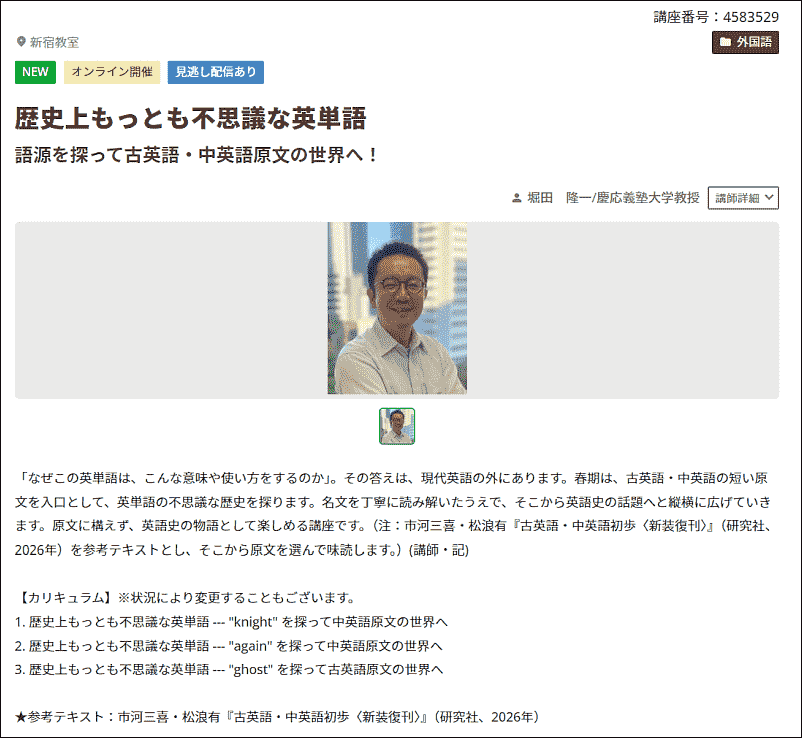
1週間後の6月27日(土) 15:30--17:00 に,今年度の3回目となる朝日カルチャーセンター新宿教室でのオンライン講座が開かれます.昨年度より継続しているシリーズ「歴史上もっとも不思議な英単語」の通算第15弾ということで,今回は「ghost を探って古英語原文の世界へ」と題して,皆が気になる単語 ghost を深掘りしていきます.
現代英語の ghost の最も普通の語義は「幽霊」ですね.この世ではしばしば恐れられている,あの不思議な存在です.しかし,本来は広く「精霊」 (spirit) を表わし,あらゆるものに生命を吹き込むパワーを表わしていましたが,歴史の過程で意味の縮小が起こったことになります.キリスト教の「聖霊」は the Holy Spirit と言いますが,古くは the Holy Ghost と言われたのも,この経緯と関係しています.
また,発音や綴字の観点からも興味深い事実があります.古英語や中英語では gast のような綴字が普通でした.母音として ā という長母音をもっていたのです.ところが現代では /oʊ/ という2重母音になっていますね.また,後期中英語以降,どこからともなく綴字に <h> の文字が紛れ込み,現代では ghost となっていますね.講座では,<gh> という綴字の様々な謎にも触れていきたいと思っています.その他,動詞としての ghost,「幽霊語」 (ghost_word) の話題,もちろん ghost の語源自体にも触れていきます.
講座の後半には,本シリーズの「古い英語の原文で味わう」趣旨に沿って,市河三喜・松浪有(著)『古英語・中英語初歩〈新装復刊〉』(研究社,2026年)より古英語のなかに実際に現われる "ghost" を覗いてみます.丁寧に解説しますので,古英語初心者の方も心配無用です.また,上掲書をお持ちでなくても講座資料として配付しますのでご安心ください.
講座の詳細とお申込みは,朝カルのこちらの公式ページをご覧ください.
なお,この先の夏期クールのテーマと日程をお伝えしておきます.夏期もシリーズを継続していきます.そちらの詳細・お申し込みはこちらのページよりどうぞ.
・ 夏期第1回(2026年7月25日):歴史上もっとも不思議な英単語 --- "king" を探って古英語原文の世界へ
・ 夏期第2回(2026年8月22日):歴史上もっとも不思議な英単語 --- "riddle" を探って古英語原文の世界へ
・ 夏期第3回(2026年9月26日):歴史上もっとも不思議な英単語 --- "through" を探って中英語原文の世界へ
いずれの講座につきましても,多くの方の受講をお待ちしております.
(以下,後記:2026/06/22(Mon))
今回の講座については Voicy heldio でも案内を放送しています.ぜひ「#1849. 6月27日(土)の朝カル講座は ghost を深掘り」をお聴きください.
・ 市河 三喜,松浪 有 『古英語・中英語初歩〈新装復刊〉』 研究社,2026年.
・ 寺澤 芳雄(編集主幹) 『英語語源辞典』新装版 研究社,2024年.
2026-06-17 Wed
■ #6260. 2026度の朝カルシリーズ講座の第2回(5月回)「again を探って中英語原文の世界へ」のまとめ [asacul][notice][hel_education][notice][pchron][eme][kochushoho][me_text]
去る5月23日(土)に,朝日カルチャーセンター新宿教室にて今年度の第2回となるオンライン講座を開きました.春期クール全体のタイトルは「歴史上もっとも不思議な英単語 語源を探って古英語・中英語原文の世界へ!」です.今回は,「again を探って中英語原文の世界へ」と題して,平凡ながらも豊かな歴史と含蓄をもつ単語 again に迫りました.具体的な中英語原文を抜き出し,文脈を押さえながら読み解くことで,この基本語の理解を深めようという趣旨です.参考としたテキストは前回に続き市河三喜・松浪有(著)『古英語・中英語初歩〈新装復刊〉』(研究社,2026年)です.
今回の講座でまず注目したのは,現代英語の again と前置詞 against の関係です.本来は同一語であり,両方とも副詞・前置詞として用いられていましたが,中英語期に副詞を示す属格語尾 -es が付与され,さらに1300年頃から謎の -t が添加されることで against が誕生しました.この -t の添加には,最上級語尾 -st との類推説(betwixt,amongst,amidst など)や異分析説が指摘されています.近代英語期に入ると,again が副詞,against が前置詞という棲み分けが生じるに至ったドラマも詳しく扱いました.
語源としては,古英語の ongēan (接頭辞 on- + -ȝeȝn)に遡り,原義は「まっすぐに,真正面に」でした.現代の g の綴字と発音は古ノルド語の影響を受けた北部方言に由来するもので,中英語期の南部方言では onyen のように y が優勢でした.かつては gainsay (否定する)などのように接頭辞としても活躍していましたが,現代ではその多くが衰退してしまっている点も興味深いところです.
講座の終盤では,初期中英語の第1級の史料でもある『ピーターバラ年代記』 (pchron) の1137年の記述より,中世イングランドの拷問シーンの原文を味読しました.その直前の部分に "agænes him hēolden" 「王に敵対して(城を)保持した」という表現が見え,今回注目した単語の前置詞用法が現われています.古英語の屈折体系が崩壊しつつある時期の英語の雰囲気がつかめたかと思います.
次回の講座は,6月27日(土)に「ghost を探って古英語原文の世界へ」と題して開かれます.次回も引き続き『古英語・中英語初歩〈新装復刊〉』より古英語のテキストを参照しながら,魅力的な言葉の歴史をひもといていきます.ご関心のある方は,ぜひ朝カルのこちらの公式ページよりお申込みください.
・ 市河 三喜,松浪 有 『古英語・中英語初歩〈新装復刊〉』 研究社,2026年.
・ 寺澤 芳雄(編集主幹) 『英語語源辞典』新装版 研究社,2024年.
・ 唐澤 一友・小塚 良孝・堀田 隆一(著),福田 一貴・小河 舜(校閲協力) 『英語語源ハンドブック』 研究社,2025年.
2026-05-16 Sat
■ #6228. 「again を探って中英語原文の世界へ」 --- 今年度の朝カル英語史シリーズ第2回 [asacul][notice][kdee][hee][etymology][hel_education][helkatsu][heldio][me][oe][kochushoho][pchron][adverb][preposition][link][voicy]
1週間後の5月23日(土) 15:30--17:00 に,今年度の2回目となる朝日カルチャーセンター新宿教室でのオンライン講座が開かれます.昨年度より継続しているシリーズ「歴史上もっとも不思議な英単語」の通算第14弾ということで,今回は「again を探って中英語原文の世界へ」と題して,日常的な副詞 again とその双子の兄弟である前置詞 against に注目します.
講座では,『英語語源辞典』や『英語語源ハンドブック』を参照しつつ,この単語の語源や意味・形態上の発達を追いかけ,副詞 again と前置詞 against とで棲み分けがなされるようになった背景に迫ります.本来は接頭辞にすぎなかった形態素が,独立した単語となっていくという興味深い歴史をもっているのです.関連して,古英語の前置詞全体についても概観する予定です.
この単語の発音やスペリングの変化・変異にも注目します.異形が非常に多く,古英語や中英語の辞書ではどの形が見出し語に上がっているのかを予想するのが困難なほどです.
また,この春期クールでは,2月25日に研究社より刊行された伝説的入門書,市河三喜・松浪有(著)『古英語・中英語初歩〈新装復刊〉』(研究社,2026年)を参考テキストとして活用します.今回はこの入門書に収載されている初期中英語のテキスト Peterborough Chronicle より,again を含む,中世の拷問をおどろおどろしく描写する箇所を少々読んでみたいと思います.
中英語の原文が初めてという方も心配は要りません.上記参考テキストについても,講座で読む部分については配付資料内で引用しますので,受講に必須ではありませんが,テキストには現代英語訳や辞書も付属していますので,あれば学びが深まると思います.
講座の詳細とお申込みは,朝カルのこちらの公式ページをご覧ください.See you again!
(以下,後記:2026/05/18(Mon))
今回の講座については Voicy heldio でも案内を放送しています.ぜひ「#1814. 5月23日(土)の朝カル講座は again に注目」をお聴きください.
・ 市河 三喜,松浪 有 『古英語・中英語初歩〈新装復刊〉』 研究社,2026年.
・ 寺澤 芳雄(編集主幹) 『英語語源辞典』新装版 研究社,2024年.
・ 唐澤 一友・小塚 良孝・堀田 隆一(著),福田 一貴・小河 舜(校閲協力) 『英語語源ハンドブック』 研究社,2025年.
2026-05-10 Sun
■ #6222. 2026度の朝カルシリーズ講座の初回(4月回)「knight を探って中英語原文の世界へ」のまとめ [asacul][notice][hel_education][notice][chaucer][me][semantic_change][silent_letter][kochushoho][popular_passage]
去る4月25日(土)に,朝日カルチャーセンター新宿教室にて今年度の初回となるオンライン講座を開きました.春期クール全体のタイトルは「歴史上もっとも不思議な英単語 語源を探って古英語・中英語原文の世界へ!」です.初回となる今回は,「knight を探って中英語原文の世界へ」と題して西洋中世を理解するうえで重要な文化語 knight に迫りました.主に中英語原文から,この単語を含む具体的な箇所を抜き出して,文脈を押さえながら読みことで,knight の理解を深めようという趣旨です.参考としたテキストは,市河三喜・松浪有(著)『古英語・中英語初歩〈新装復刊〉』(研究社,2026年)です.
今回の講座でまず注目したのは,knight という語の現代での語感です.「騎士」や「勲爵士」といった高潔なイメージを纏っていますね.しかし,古英語期までさかのぼれば,その原義は単なる「少年」 (boy) や「召使い」 (servant) にすぎませんでした.この意味変化の背景には,「従者」たちが軍事的な功績を立て,社会的な地位を獲得していくという姿が映し出されています.knight がたどってきた意味上の「出世」についても,詳しく扱いました.
講座の中盤では,実際に中英語の原文を味読しました.Chaucer の The Canterbury Tales の冒頭に登場する騎士の描写 "A KNYGHT ther was, and that a worthy man" をはじめとして,いくつかの原文を紹介しました.語源辞典で単語を引くだけでは味わえない,原文の文脈に照らして初めて感じられる knight に迫ることができたと思います.
さらに,この単語の綴字と発音の関係についても深掘りしました.現代の knight に含まれる黙字 <k> や <gh> は,かつてはしっかりと発音されていました.古英語期の綴字は cniht であり,[knɪçt] のように発音されていたのです.17世紀頃に語頭の [k] が脱落し,語中の喉を鳴らすような [ç] 音も消失しましたが,綴字だけが取り残された結果,現在の不規則な姿となりました.講座では,歴史上確認される knight の綴字が63種類にも及ぶことを紹介し,標準化以前の英語の多様性を視覚的に提示しました.
次回の講座は,5月23日(土)に「again を探って中英語原文の世界へ」と題して,knight とは趣が異なりますが,やはり興味深い単語に迫ります.次回も『古英語・中英語初歩〈新装復刊〉』を参照します.ご関心のある方は,ぜひ朝カルのこちらの公式ページよりお申込みいただければ.
・ 市河 三喜,松浪 有 『古英語・中英語初歩〈新装復刊〉』 研究社,2026年.
・ 寺澤 芳雄(編集主幹) 『英語語源辞典』新装版 研究社,2024年.
・ 唐澤 一友・小塚 良孝・堀田 隆一(著),福田 一貴・小河 舜(校閲協力) 『英語語源ハンドブック』 研究社,2025年.
2026-04-22 Wed
■ #6204. 「いのほた言語学チャンネル」最新回で『英語史新聞』第13号と『古英語・中英語初歩〈新装復刊〉』をご紹介 [inohota][hel_herald][khelf][kochushoho][kenkyusha][notice]
4月19日に配信された「いのほた言語学チャンネル」の回は,「#413. ニッチな英語史を人が集まるマーケットをにした男」です.内容としては,khelf(慶應英語史フォーラム)による『英語史新聞』第13号発行のお知らせ,およびその1面記事で大々的に取り上げている新刊の『古英語・中英語初歩〈新装復刊〉』(研究社,2026年)のご紹介となっています.
さて,今回の動画でご紹介した『英語史新聞』第13号は,実に9ヶ月ぶりの発行となりました.khelf のゼミ生たちが編集から企画まで主体的に関わって作り上げた力作です.
第1面では,2026年2月に研究社より新装復刊された名著,市河三喜・松浪有(著)『古英語・中英語初歩〈新装復刊〉』を紹介しています.この本は90年以上前に書かれた原稿を下敷きにしており,途中で大きな改編がなされながらも,日本における古英語・中英語の入門書の先駆けとも言える存在です.最近の語学書のような手取り足取りの親切さはありませんが,自ら辞書(グロッサリー)を引いて読み解くという,質実剛健な独学自習のスタイルが貫かれています.この媚びない潔さが,若い世代の読者にはかえって新鮮に映り,没入感を生むという可能性があります.
第2面以降も,現役の学生たちによるフレッシュな記事が満載です.
・ foot の複数形がなぜ feet になるのかという素朴な疑問への歴史的アプローチ
・ 聖書翻訳の比較から見える言葉の意味の変遷
・ 福元広二先生(法政大学)へのインタビュー(英語研究者のキャリアパス紹介)
・ 英語の始まりは何年か,という問いに迫るクイズとその回答・解説
古英語や中英語という一見ニッチな分野であっても,そこには現代の英語を理解するためのヒントが驚くほど詰まっています.ぜひ直接『英語史新聞』第13号をお読みください.
今回の「#413. ニッチな英語史を人が集まるマーケットをにした男」という標題については,井上逸兵さんが,『古英語・中英語初歩〈新装復刊〉』を激推ししている私のことをこのように評してくださっているということなのですが,実際上はマーケットになっているのかは分かりません.ただ,新聞作りに関わった学生たちの熱意や,伝説的入門書を復刊させた出版社のご尽力,そして何より日々ブログや動画をチェックして英語史分野に関心を寄せてくださる読者の皆さんの支持があってこそ,この分野が息づいているのだとは感じています.関心をお持ちの方が少ないながらもいらっしゃれば,一緒に楽しんで行ければよいな,というつもりで「hel活」している次第です.
ぜひ『英語史新聞』第13号にアクセスし,英語史の奥深い世界に触れてみてください.そして,関心を持たれた方はぜひ『古英語・中英語初歩〈新装復刊〉』(研究社,2026年)で英語史や古英語・中英語への第一歩を踏み出していただければ幸いです.
・ 市河 三喜,松浪 有 『古英語・中英語初歩〈新装復刊〉』 研究社,2026年.
2026-04-18 Sat
■ #6200. 今年度の朝カル英語史シリーズが始まります --- 『古英語・中英語初歩〈新装復刊〉』も参照します [asacul][notice][kdee][etymology][hel_education][helkatsu][link][voicy][heldio][me][oe][kochushoho]
新年度が始まりました.今年度も「英語史をお茶の間に」広げていく活動「hel活」 (helkatsu) を精力的に展開してまいります.hellog 読者の皆様も,ぜひそれぞれの現場でhel活を推進していただければ幸いです.
昨年に引き続き,今年度の私のhel活の柱の1つとなるのが,恒例の朝日カルチャーセンター新宿教室でのオンライン講座です.シリーズ全体のタイトルは昨年のものを継承し「歴史上もっとも不思議な英単語」のままですが,少なくともこの春期クールについては「語源を探って古英語・中英語原文の世界へ!」という副題を添えて,少々装いを新たにスタートします.
昨年度は,1つの単語を掘り下げることで英語史のパノラマを展望するというスタイルでした.今期もその精神は受け継ぎつつ,そこに「原文の味読」という付加価値を加えたいと考えています.具体的には,去る2月25日に研究社より刊行された伝説的入門書,市河三喜・松浪有(著)『古英語・中英語初歩〈新装復刊〉』(研究社,2026年)を参考テキストとして活用します.
春期クールの公式の案内文は以下の通りです.
「なぜこの英単語は,こんな意味や使い方をするのか」.その答えは,現代英語の外にあります.春期は,古英語・中英語の短い原文を入口として,英単語の不思議な歴史を探ります.名名文を丁寧に読み解いたうえで,そこから英語史の話題へと縦横に広げていきます.原文に構えず,英語史の物語として楽しめる講座です.(注:市河三喜・松浪有『古英語・中英語初歩〈新装復刊〉』(研究社,2026年)を参考テキストとし,そこから原文を選んで味読します.)
本講座の最大の特徴は,単なる語源解説にとどまらず,その語が実際に過去の文献でどのように息づいていたのかを,実際のテキストを通じて体験していただく点にあります.もちろん,これまで通り『英語語源辞典』や『英語語源ハンドブック』も頻繁に参照しながら,語源の深淵に迫っていきます.
春期クールは毎月1回,土曜日の 15:30--17:00 に開講されます.オンライン限定の講義ですので,全国どこからでもご参加いただけますし,2週間の見逃し配信もございます.予定されているラインナップは以下の通りです.
1. 4月25日(土):knight を探って中英語原文の世界へ
2. 5月23日(土):again を探って中英語原文の世界へ
3. 6月27日(土):ghost を探って古英語原文の世界へ
1週間後に開講される第1回は,中世騎士道でおなじみの knight を取り上げます.元々は「少年」や「従者」を意味していたこの語が,いかにして高貴な身分を指すようになったのか,中英語の原文に触れながらその意味変化を辿ります.
第2回は,日常語の again です.何の変哲もないように見えるこの語には,副詞や前置詞としての用法にとどまらず,多くの話題が隠されています.中英語期のテキストではどのように綴られ,用いられていたのでしょうか.
第3回は,現代では「幽霊」を指す ghost です.古英語期には「精神」や「魂」を意味していたこの語の変遷を,当時の格調高い原文とともに味わいましょう.
古英語や中英語の原文と聞くと,難しそうに聞こえるかもしれませんが,心配は無用です.「英語史の物語」を楽しむための材料として,私がナビゲートします.講座の詳細とお申込みは,朝カルのこちらの公式ページをご覧ください.
本シリーズの開講に向けて,Voicy heldio でも案内を放送しています.ぜひ「#1778. 4月25日(土)『古中初歩』による新年度の朝カルシリーズが始まります」をお聴きください.新年度,皆様と一緒に,原文とともに英語史の森を散策していくことを楽しみにしています.
・ 市河 三喜,松浪 有 『古英語・中英語初歩〈新装復刊〉』 研究社,2026年.
・ 寺澤 芳雄(編集主幹) 『英語語源辞典』新装版 研究社,2024年.
・ 唐澤 一友・小塚 良孝・堀田 隆一(著),福田 一貴・小河 舜(校閲協力) 『英語語源ハンドブック』 研究社,2025年.
2026-04-15 Wed
■ #6197. リスナー投票による heldio 2026年第1四半期のランキング [voicy][heldio][notice][ranking][link][helkatsu][kochushoho][oe][khelf][karasawa][hel_education]
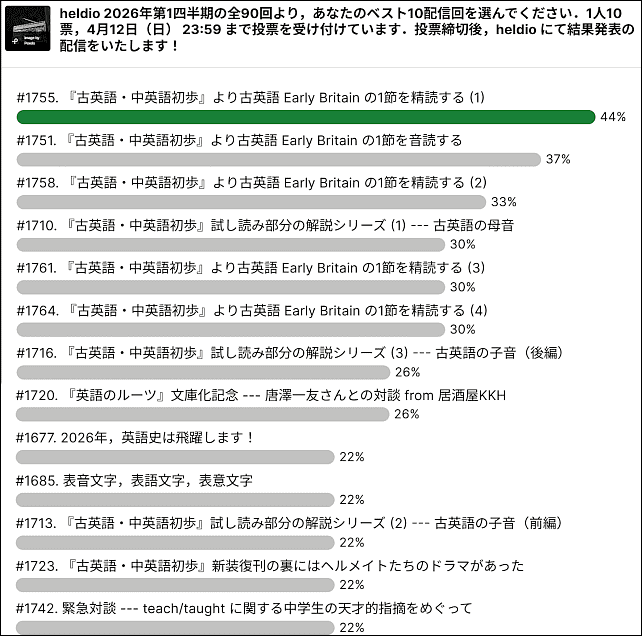
「#6188. heldio 2026年第1四半期のベスト回を決めるリスナー投票 --- 4月12日までオープン」 ([2026-04-06-1]) でご案内したとおり,2026年の第1四半期(1月--3月)における Voicy heldio のベスト配信回を決めるリスナー投票を実施しました.4月12日をもって締め切らせていただきましたが,年度初めのご多忙な時期にもかかわらず,多くのリスナーの皆さんに温かい1票(最大10票)を投じていただきました.ご協力いただき,ありがとうございました.
投票結果がまとまりましたので,ここに報告いたします.本日の heldio でも「 #1781. heldio 2026年第1四半期のリスナー投票の結果発表」として音声で解説していますので,あわせてお聴きください.
今回のランキングは,正直にいうと,たいへん驚きました.一言でまとめれば「『古英語・中英語初歩』祭り」でした.伝説の教科書の復刊という大きなニュースが,リスナーの皆さんの学習意欲と見事にシンクロした結果と言ってよいでしょうか.以下に上位(得票率19%以上)の配信回を掲載します.
【 第1位(44%)】
「#1755. 『古英語・中英語初歩』より古英語 Early Britain の1節を精読する (1)」
【 第2位(37%)】
「#1751. 『古英語・中英語初歩』より古英語 Early Britain の1節を音読する」
【 第3位(33%)】
「#1758. 『古英語・中英語初歩』より古英語 Early Britain の1節を精読する (2)」
【 第4位(30%)】
「#1710. 『古英語・中英語初歩』試し読み部分の解説シリーズ (1) --- 古英語の母音」
「#1761. 『古英語・中英語初歩』より古英語 Early Britain の1節を精読する (3)」
「#1764. 『古英語・中英語初歩』より古英語 Early Britain の1節を精読する (4)」
【 第7位(26%)】
「#1716. 『古英語・中英語初歩』試し読み部分の解説シリーズ (3) --- 古英語の子音(後編)」
「#1720. 『英語のルーツ』文庫化記念 --- 唐澤一友さんとの対談 from 居酒屋KKH」
【 第9位(22%)】
「#1677. 2026年,英語史は飛躍します!」
「#1685. 表音文字,表語文字,表意文字」
「#1713. 『古英語・中英語初歩』試し読み部分の解説シリーズ (2) --- 古英語の子音(前編)」
「#1723. 『古英語・中英語初歩』新装復刊の裏にはヘルメイトたちのドラマがあった」
「#1742. 緊急対談 --- teach/taught に関する中学生の天才的指摘をめぐって」
【 第14位(19%)】
「#1705. khelf 寺澤志帆さんとの対談 --- 「『英語語源辞典』でたどる英語綴字史」200回記念」
「#1706. 伝説の教科書『古英語・中英語初歩』(研究社)が新装復刊」
「#1717. 天野優未さんの『英語語源ハンドブック』『はじめての英語史』実況中継がおもしろすぎる」
「#1722. 『古英語・中英語初歩』試し読み部分の解説シリーズ (4) --- 古英語の強勢」
「#174. ten と -teen」6
「#1750. 川上さんの「英語のなぜ5分版」やってます通信 --- 第28弾」
2026年第1四半期の結果を振り返りますと,なんといっても目立つのは,2月25日に研究社より新装復刊された『古英語・中英語初歩』に関連する諸々の回でした.「精読シリーズ」を筆頭に,ベスト10の半分以上がこの伝説的な教科書に関連する内容でした.音声だけで古英語を精読するという,いささか「攻めた」企画ではありましたが,リスナーの皆さんが紙面を片手に熱心に食らいついてくださったことがうかがえます.特に,復刊の裏側にあるドラマを語った「#1723. 『古英語・中英語初歩』新装復刊の裏にはヘルメイトたちのドラマがあった」や,通常はニッチと思われるような古英語の母音と子音を各々解説したシリーズも高い支持を得ており,単なる知識の習得にとどまらない「hel活」を評価していただいたものとして,受け取らせていただきました.
対談回も豊作でした.第7位には唐澤一友さんとの居酒屋対談「#1720. 『英語のルーツ』文庫化記念 --- 唐澤一友さんとの対談 from 居酒屋KKH」がランクイン.お酒の席ならではの(?)リラックスした雰囲気の中での英語史トークが,皆さんの耳に心地よく響いたのであれば,たいへん嬉しいです.また,第9位の「#1742. 緊急対談 --- teach/taught に関する中学生の天才的指摘をめぐって」は,中学生の鋭い観察眼に始まり英語史の深淵へと連なる,ワクワクの止まらない対談回として評価されました.
khelf(慶應英語史フォーラム)メンバーも活躍しており,「#1705. khelf 寺澤志帆さんとの対談 --- 「『英語語源辞典』でたどる英語綴字史」200回記念」が上位に入りました.また,「#1717. 天野優未さんの『英語語源ハンドブック』『はじめての英語史』実況中継がおもしろすぎる」も注目を集め,英語史の熱が周囲に広がっていることを感じます.
四半期の幕開けを飾った元旦の「#1677. 2026年,英語史は飛躍します!」も,支持をいただきました.そこで宣言した通り,この3ヶ月間はまさに飛躍の準備期間、あるいは助走期間であったように思います.古英語の精読に多くのリスナーが挑戦し始めたことは,今後のhel活にも大きな意味をもつことになりそうです.パーソナリティとしては感謝しかありません.
最後に,今回のリスナー投票に関する,コアリスナー ykagata さん の note 記事をご紹介します.投票期間の最終日の4月12日に「「heldio 2026年第1四半期のベスト回を決めるリスナー投票」に投票した」と題する記事を公開されました.パーソナリティとしてたいへん参考になり,かつ嬉しい記事でした.ありがとうございます.
2026年も早くも4分の1が過ぎました.今回のリスナー投票の結果をよくよく分析し,第2四半期も,リスナーの皆さんとともに様々な英語史の景色を眺めていければと思っています.引き続き heldio をよろしくお願いします!
・ 市河 三喜,松浪 有 『古英語・中英語初歩〈新装復刊〉』 研究社,2026年.
・ 唐澤 一友 『英語のルーツ』 筑摩書房〈ちくま学芸文庫〉,2026年.
2026-03-26 Thu
■ #6177. 『古英語・中英語初歩〈新装復刊〉』関連シリーズを heldio で配信しています [notice][kochushoho][kenkyusha][asacul][oe][hel_education][literature][popular_passage][pchron][oe_text][pictish][voicy][heldio]
1月より推し続けている市河三喜・松浪有著『古英語・中英語初歩』(研究社)が新装復刊となってから,1ヶ月が経ちました.1月以来,hellog や Voicy heldio などで本書に関連する話題をいくつかお届けしてきましたが,本書の中身を直接参照し,古英語の入門講義となるシリーズも始めましたので,今回はそちらをご紹介します.
まず,本書の冒頭を飾る「綴りと発音」をじっくり読んで解説するシリーズを,heldio で4回にわたって配信してきました.解説した部分は研究社の公式HPの試し読みコーナーで閲覧できますので,本書をお持ちでない方も,ぜひそちらを閲覧しつつお聴きいただければと思います.
・ 「#1710. 『古英語・中英語初歩』試し読み部分の解説シリーズ (1) --- 古英語の母音」
・ 「#1713. 『古英語・中英語初歩』試し読み部分の解説シリーズ (2) --- 古英語の子音(前編)」
・ 「#1716. 『古英語・中英語初歩』試し読み部分の解説シリーズ (3) --- 古英語の子音(後編)」
・ 「#1722. 『古英語・中英語初歩』試し読み部分の解説シリーズ (4) --- 古英語の強勢」
新装復刊後には,古英語テキストパートの2つめのテキスト "Early Britain" を音読し,精読するシリーズも開始しました.今のところ,以下の配信回を heldio でお聴きになれます.本書をお持ちでない方は,当面は本ブログの「#2909. Peterborough Chronicle の Early Britain の記述」 ([2017-04-14-1]) をご参照ください.ただし,詳しい解説やグロッサリーは本書を通じてしかアクセスできませんので,ご関心を持たれた方は,ぜひ本書を入手していただければ.
・ 「#1751. 『古英語・中英語初歩』より古英語 Early Britain の1節を音読する」
・ 「#1755. 『古英語・中英語初歩』より古英語 Early Britain の1節を精読する (1)」
・ 「#1758. 『古英語・中英語初歩』より古英語 Early Britain の1節を精読する (2)」
・ 「#1761. 『古英語・中英語初歩』より古英語 Early Britain の1節を精読する (3)」
また,4月から月一で始まる朝日カルチャーセンター新宿教室でのオンライン講座「歴史上もっとも不思議な英単語 --- 語源を探って古英語・中英語原文の世界へ!」でも,本書より古英語や中英語の原文を参照していく予定です.ぜひ『古英語・中英語初歩〈新装復刊〉』にご注目ください.
・ 市河 三喜,松浪 有 『古英語・中英語初歩〈新装復刊〉』 研究社,2026年.
2026-03-18 Wed
■ #6169. 「英語史の塔」の話題がちらほら [tower_of_hel][hel_education][kochushoho][hee][kdee][hajimetenoeigoshi][kenkyusha][helkatsu][note][inohota][voicy][heldio][helkatsu][helwa][helmate]
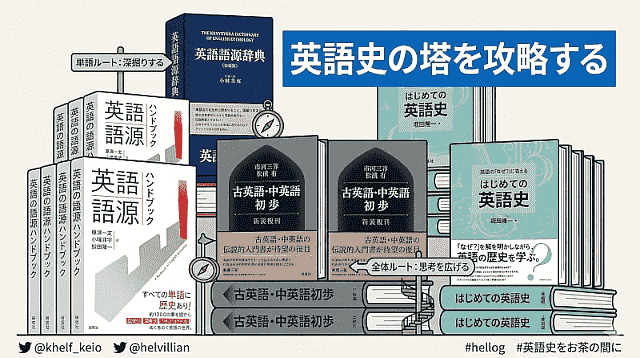
1ヶ月前の2月18日は「英語史の塔」が建った記念日です.私のhel活の歴史において,おおいに注目すべき出来事でした.この塔の建設の経緯は本ブログを含め様々な媒体で公開してきました.
この1ヶ月の間,「英語史の塔」がジワジワと知られるようになってきました.note 上で塔に反応くださる英語史ファンの方も現われており,元気づけられている次第です.「英語史の塔」が言及されているウェブ上の主要コンテンツを,いくつか挙げておきます.
・ 堀田による note 記事「「英語史の塔」が建設されました」(2月18日)
・ hellog 記事「#6150. 「英語史の塔」が建っています」 ([2026-02-27-1])
・ heldio 配信「#1736. この春は英語史を始めよう! --- 「英語史の塔」の登り方」(2月28日)
・ Grace さんによる note 記事「「英語史の塔」建設により見えるもの」(3月1日)
・ heldio 配信「#1735. 「英語史の塔」をご覧ください」(3月1日)
・ hellog 記事「#6153. 昨朝の朝日サンヤツ広告に『古英語・中英語初歩』と『英語語源ハンドブック』が掲載」 ([2026-03-02-1])
・ mozhi gengo さんによる note 記事「#332. 登ってみよう英語史の塔に」(3月4日)
・ YouTube 「いのほた言語学チャンネル」動画91年前の市河三喜の名著が新装復刊!【いのほた言語学チャンネル第407回】(3月9日)
・ 堀田による note 記事「「英語史の塔」の攻略の仕方」(3月9日)
この塔は見栄えがよいだけの代物ではありません.そこには,英語史の学び方の提案という意図が乗っています.塔としてご紹介している4冊,すなわち『はじめての英語史』『英語語源ハンドブック』『古英語・中英語初歩』『英語語源辞典』は,有機的に結びついており,どこから学び始めてもいずれは出会うべき運命の書籍です.どれからでも自由に学び始めることができますが,お薦めのルートはあります.それを,note 記事「「英語史の塔」の攻略の仕方」で公開していますので,ぜひお読みください.
昨年から今年にかけて英語史関連の書籍が複数冊出版されており,英語史を学び始めるのに最適なタイミングとなっています.この春,皆さんも英語史を学び始めてはいかがでしょうか.私も,本ブログや他のメディアを通じて英語史の学び始めをサポートし応援するコンテンツを多く挙げていく予定です.
・ 寺澤 芳雄(編集主幹) 『英語語源辞典』新装版 研究社,2024年.
・ 堀田 隆一 『英語の「なぜ?」に答えるはじめての英語史』 研究社,2016年.
・ 唐澤 一友・小塚 良孝・堀田 隆一(著),福田 一貴・小河 舜(校閲協力) 『英語語源ハンドブック』 研究社,2025年.
・ 市河 三喜,松浪 有 『古英語・中英語初歩〈新装復刊〉』 研究社,2026年.
2026-03-06 Fri
■ #6157. 古中英語30連発の振り返りとアナリティクス [twitter][kochushoho][kenkyusha][kochukoneta30][helkatsu][hel_ogiri]
1月26日から2月24日までの1ヶ月間,X(旧 Twitter)にて展開してきた「古中英語30連発」企画は,無事に完走しました.この企画は,2月25日の『古英語・中英語初歩』の新装復刊を記念し,古英語や中英語の魅力を1日1ネタずつ紹介していくという試みでした.本日は,この30日間の歩みを振り返り,どのような内容の投稿が皆さんに響いたのか,そのデータ分析の結果を共有したいと思います.
まず,全体的な傾向として驚かされたのは,想像以上の反響です.全30本の投稿で得られた「いいね」の総数は約1,480件,総インプレッション数は実に31万件を超えました.平均して1投稿あたり1万ビュー以上という数字は,英語史という,ともすればマイナーと思われがちな分野に対してでも,関心が集まり得ることを示しています.
分析の結果,特に反響が大きかったのは3つのカテゴリーに集約されます.第1は日英語を比較対照する内容の投稿です.今回,圧倒的な1位(440いいね)を記録した No.11 「英語の語彙は「3階建て」の構造」は,その典型です.英語語彙の3層構造は,本ブログでも繰り返し取り上げてきたテーマですが,日本語との比較対照がおもしろい話題でもあります.英語学習者の皆さんの単語暗記の悩みにストレートに刺さったということもあったかもしれません.
第2に,日常語の意外なルーツを扱ったカテゴリーです.No.8 の Wednesday や No.9 の Friday といった,誰もが知る曜日の名前に潜む神話や語源のドラマは,安定した支持を集めました.特に Wednesday の綴字に残る d の謎などは,日頃から綴字と発音の乖離に悩まされている英語学習者の皆さんの知的好奇心を刺激したようです.
第3は,「衝撃の事実」型です.No.3 の「古英語は現代の英語ネイティヴでも理解できないほどなのに,本当に「英語」と呼べるの?」という問いかけは,5万ビューを超える最大の拡散力を発揮しました.現代英語の感覚からは想像もつかない古英語の異質さと,それでも連綿と続いてきたという矛盾する事実は,英語史のダイナミズムを物語っているといえるでしょう.
また,いくつかの話題にかこつけて「英語史大喜利」も開催しましたが,そこではリプライや引用リポストが相次ぎ,活気のある交流が生まれました.例えば No.14 の「ちゃんぽん(混種語)」の小ネタをもとにした大喜利では,主に日本語からの事例ではありましたが,多くの秀逸な混種語が集まり,たいへん賑わいました.SNS という媒体は,単なる情報発信の場に留まらず,言語に対する鋭い観察眼を持つ読者の皆さんと対話できる貴重な空間であることを再認識した次第です.
今回の企画を通じて,英語史という分野がもつ「解決力」を改めて実感しました.歴史を知ることは,現代英語の「なぜ」を解き明かす鍵となるのです.30日間の投稿の詳細やリンクは,以下のテーブルにまとめてありますので,興味のある方はぜひ各投稿へ飛んでみてください.
最後に,連日の投稿企画にお付き合いいただいたフォロワーの皆様,そして企画の原動力となった『古英語・中英語初歩〈新装復刊〉』に関心を寄せていただいた皆様,ありがとうございました.引き続き様々な方法で英語史の楽しさを発信していきますので,お付き合いのほど,よろしくお願いいたします.
・ 市河 三喜,松浪 有 『古英語・中英語初歩〈新装復刊〉』 研究社,2026年.
[ 固定リンク | 印刷用ページ ]
2026-03-04 Wed
■ #6155. 「英語史の塔」の4冊と英語史の始め方 [tower_of_hel][hel_education][review][kochushoho][hee][kdee][hajimetenoeigoshi][kenkyusha][helkatsu]
「#6150. 「英語史の塔」が建っています」 ([2026-02-27-1]) にて「英語史の塔」 (tower_of_hel) が建った経緯について触れました.一見すると,研究社から出版されている英語史関連の既刊書・新刊書を積み上げただけの写真と思われたかもしれません.しかし,あの4冊の並びを眺めてみると,そこには英語史という分野に迫る上で,実に合理的な構造が隠されていることに気づきます.今回の記事では,その構造について解き明かしてみたいと思います.
英語史という広大な領域に足を踏み入れる際,その入口は決して一つではありません.学習者の関心や動機に応じて,大きく分けて2つのルートが存在します.
第1のルートは「全体から入る」アプローチです.このアプローチの土台となるのが,2016年に出版された拙著『英語の「なぜ?」に答えるはじめての英語史』です.本書では,英語史通史は第1章でさらっと概観するにとどめ,残りはトピック別に,すなわち音韻・綴字史,文法史,語彙史,英語社会史といった分野別の歴史を通じて,英語史的な「ものの見方」というレンズを提示することに主眼を置いています.目の前の英語を正誤で裁くのではなく,変化の結果として捉える思考のフレームワークを構築するための1冊と言えます.
第2のルートは「単語から入る」アプローチです.これに適しているのが,昨年6月に刊行された『英語語源ハンドブック』です.身近な語の語源にまつわるエピソードは,それ自体が独立しておもしろく,どこからでも読み始めることができます.1語1語の背景にあるドラマに触れるうちに,英語という言語がいかに多様な歴史を背負っているかを肌身で実感することになります.単語間の横のつながりにも気づく機会が多いでしょう
しかし,これら入口の本だけでは,まだ「塔」の全貌は見えてきません.そこからさらに一歩踏み込むための深化のプロセスが必要です.
英語史の全体像,英語史の見方という骨格を習得した学習者が次に進むべきは,体験としての英語史です.そこで力を発揮するのがこの2月25日に刊行された『古英語・中英語初歩〈新装復刊〉』です.概説を通じて得た知識を,実際の古英語や中英語の原文にぶつけてみる.音や形を自らの目で確かめる作業を通じて,歴史は抽象的な知識から,確かな手応えを伴う身体的な経験へと昇華されます.
一方で,単語と語源のおもしろさに目覚めた学習者が,その探究を縦に掘り下げたいと思ったときに必須となるのが,『英語語源辞典』新装版(2024年)です.『英語語源ハンドブック』で得た興味を,借用経路や形態変化の詳細,精緻な語形成の分析へとつなげていく.1語1語の背後に潜む数百年の時間を徹底的に掘り下げるこの作業は,まさに学問的な醍醐味に溢れています.
これら4冊の関係を整理すると,以下のようになります.
・ 全体ルート:思考のレンズを得る(『はじめての英語史』) → 原文で身体化する(『古英語・中英語初歩』)
・ 単語ルート:語源のおもしろさを知る(『英語語源ハンドブック』) → 1語1語を徹底的に深掘りする(『英語語源辞典』)
興味深いのは,どちらのルートから登り始めても,結局はもう一方のルートと交差する点にあります.単語を深く追えば必ず言語全体の歴史的背景に行き着きますし,全体を学べば必ず具体的な語の変化という事実に立ち返ることになります.英語史の学びは,平面的な移動ではなく,螺旋状に上昇していく循環構造です.本当に「塔」らしく見えてきたのではないでしょうか.
前回の記事で紹介した写真は,まさにこの立体的な学びの構造を可視化したものと捉えることができます.土台があり,横の広がりがあり,縦の高さと深さがある.これらが組み合わさって初めて,「英語史の塔」は安定して自立します.
どこからこの塔を登り始めるかは,読者の皆さん次第です.以下にまとめます.
1. まず英語史の全体像を俯瞰したいなら『はじめての英語史』から
2. 単語の語源や語彙のつながりに惹かれるなら『英語語源ハンドブック』から
3. 過去の英語の響きを直接聴きたいなら『古英語・中英語初歩』へ
4. 単語の語源を本格的に深掘りしたいなら『英語語源辞典』へ
英語史の入門者であれば1か2をお薦めしますが,すでに学びを始めている方は,心の赴くままにどこから始めても構いません.これら4冊は互いに補完し合い,行き来することで皆さんの「英語史」をより立体的なものにしてくれるはずです.
私は「英語史をお茶の間に」をモットーとしています.専門性の追求と親しみやすさは,決して矛盾するものではありません.「英語史の塔」の4冊は,その理想を具現化する1つの形です.塔は眺めるための飾りではなく,より遠く,より深くを見渡すための場所です.ぜひ,ご自身に合った登り方を見つけ,英語という言語の新しい景色を楽しんでいただければと思います.
全4冊へのアクセスは,研究社公式のこちらのHPが便利です.
・ 寺澤 芳雄(編集主幹) 『英語語源辞典』新装版 研究社,2024年.
・ 堀田 隆一 『英語の「なぜ?」に答えるはじめての英語史』 研究社,2016年.
・ 唐澤 一友・小塚 良孝・堀田 隆一(著),福田 一貴・小河 舜(校閲協力) 『英語語源ハンドブック』 研究社,2025年.
・ 市河 三喜,松浪 有 『古英語・中英語初歩〈新装復刊〉』 研究社,2026年.
2026-03-02 Mon
■ #6153. 昨朝の朝日サンヤツ広告に『古英語・中英語初歩』と『英語語源ハンドブック』が掲載 [tower_of_hel][hel_education][kochushoho][hee][kenkyusha][helkatsu]
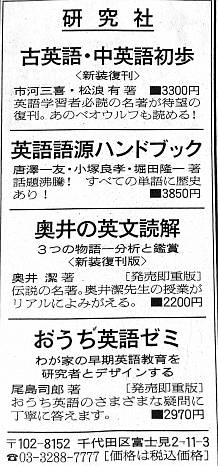
昨日3月1日(日)の朝日新聞朝刊サンヤツ広告に,研究社から出版されている4冊が掲載されました.最初の2冊は,ここしばらく私自身が推しに推してきた『古英語・中英語初歩〈新装復刊〉』と『英語語源ハンドブック』です.前者はつい先日,2月25日に刊行されたばかりの本,後者は昨年6月15日に刊行され3重版となっている本です.
今回この2冊が並んで掲載されたことには,「英語史をお茶の間に」届けようと日々hel活を展開している者として,感慨を覚えます.というのは,2冊は一見すると別々の目的をもつ本に見えるかもしれませんが,実は英語史という「塔」を登る上で,興味深い関係で結ばれているからです(cf. 「#6150. 「英語史の塔」が建っています」 ([2026-02-27-1])).
近々の記事で詳しく解き明かす予定ですが,英語史への入口には「全体から入るルート」と「単語から入るルート」の2つがあると考えています.『英語語源ハンドブック』は,身近な単語のエピソードから入る「単語ルート」の強力な案内人です.一方,『古英語・中英語初歩』は,英語史の骨格を学んだ者が次に進むべき「全体ルート」の深化プロセス,すなわち原文を通じた身体的経験を得られる1冊です.
この2冊は良い具合に交わります.『ハンドブック』で単語の語源に魅了されたのであれば,その語が生まれた時代にあって,どのような響きをもっていたのかを知りたくなるはずです.すると,自然と『初歩』の原文へと導かれていくでしょう.
逆に,『初歩』で古英語の格変化や中英語の綴字に悪戦苦闘している学習者が,個々の語の背景にあるドラマを知れば,その学習は彩り豊かなものへと変わります.
つまり,この2冊は,語源という「点」の知識を,文献という「面」の経験へと繋ぐ,あるいはその逆へと橋渡しする関係にあります.ミクロからマクロへ,そしてマクロからミクロへ.このクロスオーバーこそが,英語史の学びを立体的なものにしてくれるのです.
皆さんにおかれましては,以上の関係を意識しつつ,2冊の間をぜひ行き来してみてください.英語史のさらなる魅力に気づくことになるはずです.
・ 市河 三喜,松浪 有 『古英語・中英語初歩〈新装復刊〉』 研究社,2026年.
・ 唐澤 一友・小塚 良孝・堀田 隆一(著),福田 一貴・小河 舜(校閲協力) 『英語語源ハンドブック』 研究社,2025年.
2026-03-01 Sun
■ #6152. 「偽装複合語」で大喜利をしました [word_play][disguised_compound][lexicology][compound][etymology][notice][kochushoho][kenkyusha][kochukoneta30][hel_ogiri]
2月16日(月)に私の X アカウント @chariderryu にて,第3回英語史大喜利 (hel_ogiri) を開催しました.今回のお題は,おもしろい偽装複合語 (disguised_compound) を寄せてくださいというものでした.ちょうど『古英語・中英語初歩〈新装復刊〉』のカウントダウン企画「古中英語30連発」の No. 22 として「daisy 「ヒナギク」の語源が古英語の dæges ēage "day's eye" だと知っていましたか?」と投稿した直後に,今回の大喜利も開催しました.
大喜利開催の協力者でもある heldio/helwa リスナーの ari さんのユーモラスな入れ知恵により,今回の大喜利は,遊び心を込めて「ごん,お前だったのか」選手権と命名されました.ネタ披露のフォーミュラとして,次の「ごん構文」が X 上に飛び交いました.
・ Daisy 「ごん,お前… Day (日) の Eye (目) だったのか…」
過去2回の大喜利に比べ,かなり難易度の高いお題でしたが,英語語源の猛者たちが多くの良質な例を寄せてくださいました.いつものように私の独断と偏見で,おもしろかったもの,勉強になったものをいくつか掲載します.
・ Gospel 「ごん,お前… Good (良い) Spell (知らせ) だったのか…」
・ Curfew 「ごん,お前… Cover (消す) Fire (火) だったのか…」
・ But 「ごん,お前… By (そばに) Out (外に) だったのか…」
・ About 「ごん,お前… On (上に) By (そばに) Out (外に) だったのか…」
・ Kitchen 「ごん,お前… Cook (料理する) の -ina (場所) だったのか…」
・ Don 「ごん,お前… Do (する,置く) の On (上に) だったのか…」
・ Lapwing 「ごん,お前… Leap (跳ねる) Wink (ウィンク) だったのか…」
・ Answer 「ごん,お前… And (に対して) Swear (誓う) だったのか…」
・ Worship 「ごん,お前… Worth (価値) -ship (があること) だったのか…」
・ Chameleon 「ごん,お前… Khamaí (地を這う) Léōn (獅子) だったのか…」
・ Zebra 「ごん,お前… Equus (馬) Ferus (野生) だったのか…」
・ Giraffe 「ごん,お前… Zurnā (ラッパ) Pāy (足) だったのか…」
・ Pyjamas 「ごん,お前… Pāy (足) Jāma (服) だったのか…」
・ Philip 「フィリップ,お前… Philéō (好き) Híppos (馬) だったのか…」
・ Barn 「ごん,お前… Bere (大麦) Ærn (家屋) だったのか…」
そして,ari さんが,まさかの掟破りのフォーマットで11連発.
その bridal は eleven の決まりがあった.11時,neighbor の Marshal が alarm を鳴らすと,一匹の squirrel が vinegar と garlic 塗れの handkerchief を奪い去った.この dismal な光景こそが,求婚に対する彼女の明確な answer だった.
こんなにたくさん例が集まるとは! ぜひ英単語語源学習とボキャビルにご活用ください.
皆さんから寄せていただいたのは,大部分が英語からの例でしたが,以下は寄せていただいた日本語からの例です.日本語を主とすると大変なことになりそうですね.
・ 聖(ひじり) 「ごん,お前… 日 (ひ) 知り (しり) だったのか…」
・ 社(やしろ) 「ごん,お前… 屋 (や) 代 (しろ) だったのか…」
・ 仏(ほとけ) 「ごん,お前… 浮屠 (ふと=ブッダ) 家 (け) だったのか…」(諸説あり)
本記事と同じ趣旨で,2月27日の heldio にて「 #1734. 「偽装複合語大喜利」 --- 皆さんからの傑作選を発表」をお届けしました.ぜひそちらもお聴きください.
Powered by WinChalow1.0rc4 based on chalow