2026-10-14 Wed
■ #6379. B&C の第66節 "The Extent of the Influence" (1) --- Taku さんとの超精読会 [bchel][oe][vocabulary][lexicology][latin][loan_word][borrowing][link][voicy][heldio][helwa]
今回の超精読会は,450,100,350という3つの数字をめぐる読み解きから始まりました.Baugh and Cable の A History of the English Language, 6th ed. は,6回にわたって精読してきた第65節を終え,いよいよ第66節 "The Extent of the Influence" に入ります.キリスト教の伝来によるラテン語の影響は,結局のところ「どれほどの規模」だったのか.その総括にあたる節です.配信回は「#1963. 英語史の古典的名著 Baugh and Cable を読む (66-1) with Taku さん --- オンラインオフ会より」.今回も,Taku さんこと金田拓さん(帝京科学大学)と1文ずつ読み進めています.まずは今回精読した英文を掲げます (Baugh and Cable, p. 87) .
To be sure, the extent of a foreign influence is most readily seen in the number of words borrowed. As a result of the Christianizing of Britain, some 450 Latin words appear in English writings before the close of the Old English period. This number does not include derivatives or proper names, which in the case of biblical names are very numerous. But about 100 of these were purely learned or retained so much of their foreign character as hardly to be considered part of the English vocabulary. Of the 350 words that have a right to be so considered, some did not make their way into general use until later --- were, in fact, reintroduced later. On the other hand, a large number of them were fully accepted and thoroughly incorporated into the language. The real test of a foreign influence is the degree to which the words that it brought in were assimilated.
古英語期の終わりまでに英語の文献に現われたラテン借用語は,およそ450語.ここには派生語や固有名詞は含まれていません.聖書由来の人名などを数え入れれば膨大な数になるはずですが,それは除外されています.さらに,そのうち約100語は学術的な語にとどまるか,外来語としての性格をあまりに強く残していたため,英語の語彙の一部とは見なしがたいものです.残る350語こそが,英語の語彙として認めてよい語ということになります.
しかし,その350語も一枚岩ではありません.一般に広まるのが後の時代までずれ込み,実質的には中英語期以降に「再借用」されたものも含まれているからです.古英語期に一度入ったからといって,その語が現代まで途切れずに使われ続けてきたとは限らない.借用語の数を数えるという一見単純な作業が,実は語の借用のされ方の質を問う作業と切り離せないことがよく分かります.古英語のラテン借用語の数そのものについては,「#5564. 古英語のラテン語からの借用語はせいぜい数百語」 ([2024-07-21-1]) や「#3789. 古英語語彙におけるラテン借用語比率は1.75%」 ([2019-09-11-1]) もご参照ください.中英語期以降の怒濤の借用と比べれば,規模としてはつつましいものです.
そして段落の最後の1文で,B&C は議論の軸を数から質へと切り替えていきます.外国語の影響を測る本当の試金石は,持ち込まれた語がどの程度「同化」されたかにある,と.では,同化したとはどういう状態を指すのか.その具体的な中身は,次回の精読で明らかになります.
この B&C 超精読シリーズの過去回へのリンクは,「#5291. heldio の「英語史の古典的名著 Baugh and Cable を読む」シリーズが順調に進んでいます」 ([2023-10-22-1]) にまとまっています.新しい節の始まりは,途中から参加するのにちょうどよいタイミングです.原書を手元に,音声を副読本としてお付き合いいただければ.
・ Baugh, Albert C. and Thomas Cable. A History of the English Language. 6th ed. London: Routledge, 2013.
2026-10-12 Mon
■ #6377. 『ケルズの書』とともに味わいたい至宝 --- Tara Brooch と Ardagh Chalice [dublin][tabihel][ireland][christianity][bchel][oe][latin][anglo-saxon][history][tabihel_dublin]
ダブリンの英語史に関連する場所を訪ねて歩く「旅hel」 (tabihel) シリーズ.「#6373. アイルランドの至宝『ケルズの書』を訪ねて --- The Book of Kells」 ([2026-10-08-1]) に続き,先月ダブリンで訪ねてきた至宝を取り上げたい.ダブリン中心部の Kildare Street に面したアイルランド国立博物館(考古学館)の至宝といえば,Tara Brooch と Ardagh Chalice の2つが挙げられる.
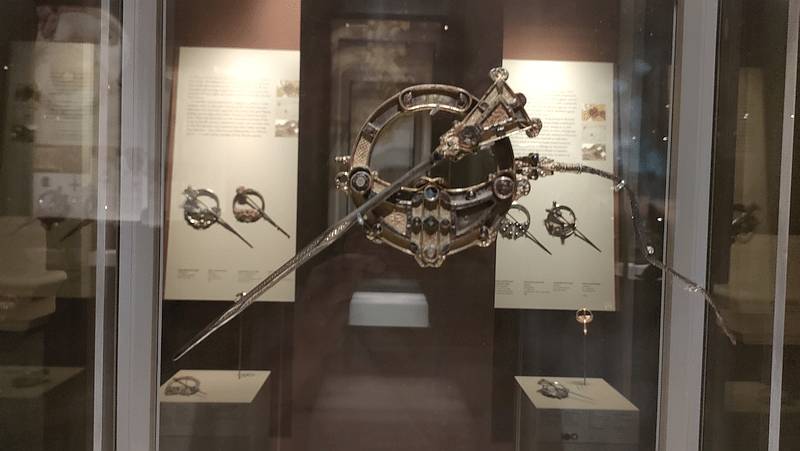
まずは Tara Brooch.外套を留めるための装飾ブローチで,紀元700年前後の作とされる.19世紀半ばに Meath 州の海岸近くで発見されたもので,実はアイルランド上王の座として名高い Tara の丘とは直接の関係はない.由緒ありげな名前を付けて売り出そうという動機で命名されたものだという.銀をベースに,金線細工,琥珀,ガラスで飾られた小さな円環のなかに,渦巻文様,組紐模様,動物文様がぎっしりと詰め込まれている.身につけたときには見えないはずの裏面にまで精緻な装飾が施されており,オシャレの極致だ.
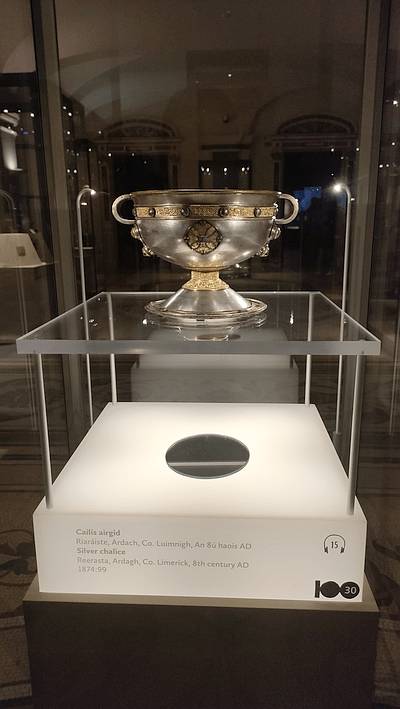
続いて Ardagh Chalice.8世紀の作とされるミサ用の聖杯で,19世紀後半に Limerick 州 Ardagh 近郊の環状砦跡から発見された.銀の器に金線細工,七宝の装飾が配され,鉢の周りにはラテン語が刻まれている.簡素で端正な器形と,細部の贅を尽くした装飾との対比が見所だ.
2つの至宝は,時代的にも意匠的にも,『ケルズの書』と同じ文脈で鑑賞することができる.ケルト古来の渦巻文様,アングロサクソン的な組紐模様と動物文様,そして地中海世界のキリスト教的モチーフが各々の作品のなかで融合し完結しているのだ.いずれも,アイルランド・キリスト教が様々な文化の影響を受けて最も輝いていた,8世紀を中心とする時期の産物である.『ケルズの書』ではフォリオの上で展開されていた繊細な美意識が,金属細工にもそのまま息づいていることが分かる.
英語史にとって重要なのは,アイルランド・キリスト教の伝統がアイルランドに閉じていなかったことである.アイルランド系の修道士たちは Iona を拠点とし,さらにブリテン島北部の Lindisfarne へと進出した.Northumbria を中心とするブリテン島北部はこの島嶼キリスト教の流れを受け継ぎ,前回の記事でも触れた Lindisfarne Gospels に代表される古英語期のキリスト教文化を育んでいった.南から入った Augustine 以来のローマ系の伝道と並んで,この北からの流れが,アングロサクソン人のキリスト教化を支えたのである.
そして,アングロサクソンのキリスト教化はそのままラテン語の英語への流入を意味した.ラテン語はキリスト教という文化の乗り物だったのである.キリスト教とともに古英語に流れ込んだラテン借用語の数々,そしてラテン語のインスピレーションを受けつつも直接的な借用に頼らず本来語を駆使して新概念を表現した古英語の創造性については,目下 Baugh and Cable の超精読会で読み進めているところである.以下の記事などを参照.
・ 「#5686. B&C の第60節 "Latin Influence of the Second Period" の第1段落を対談精読実況生中継しました」 ([2024-11-20-1])
・ 「#5962. B&C の第62節 "The Earlier Influence of Christianity on the Vocabulary" (1) --- Taku さんとの超精読会」 ([2025-08-23-1]
・ 「#6262. B&C の第64節 "Influence of The Benedictine Reform on English" (1) --- Taku さんとの超精読会」 ([2026-06-19-1])
・ 「#6300. B&C の第65節 "The Application of Native Words to New Concepts" (1) --- Taku さんとの超精読会」 ([2026-07-27-1])
ブローチと聖杯を眺めながら,千数百年前の島嶼世界の芸術的熱量が,めぐりめぐって間接的に現代の英語の語彙にも刻み込まれているのを感じていた.
2026-10-06 Tue
■ #6371. 少なく見積もって80通りの綴字 --- borough [spelling][scotland][england][onomastics][toponymy][anglo-saxon][oe][old_norse][tabihel][metathesis][i-mutation][through][med][oed][orthography][gh][tabihel_england]
イギリスには borough (要塞;市,町)のつく地名が多い.Scarborough, Peterborough,そしてロンドンの観光地にもなっている市場 Borough Market のなかでは独立した1語として用いられている.語源としては,ゲルマン祖語の強変化女性名詞 *burg-s に遡り,「避難する」を意味する動詞 *berg-an と語根を共有するとされる.そこから「砦,城」さらには,その周辺に広がる「市,町」へと語義が発展したのだろう.ゲルマン諸語に同根語がみつかり,古英語では burg, burh などの形で文証される.現代イギリス英語での発音は,単体では /ˈbʌrə/ となるが,地名要素の一部となる場合には /-brə/ と1音節になる.
ゲルマン諸語まで話しを広げず,英語内部の歴史に限っても,この語には異形・異綴字が非常に多い.各地で地名要素として埋め込まれることが多いので方言形が発達しやすく,また固有名詞の常として,とりわけ地元の人々の口にのぼる頻度が高いために省略形が生まれやすいのだ.歴史を通じて,多様な形で行なわれてきており,予想されるとおり中英語での綴字は百花繚乱である.
初期近代に入ると burrough の綴字がいったん優勢となったが,後にイングランドやアイルランドでは borough が標準化し,スコットランドでは burgh が定着した (ex. Edinburgh) .一方,スコットランドでは burgh に加えて,broch, brogh, brough のような1音節の形態も見られる.これは同根の古ノルド語の形態 borg の音位転換を経た形態で,スコットランドでは軟口蓋無声摩擦音を伴って /brox, brʌx/ などと発音される.スコットランド北東部の町 Fraserburgh を訪れたとき,地元ではその町が the Broch と呼ばれていることを知った.
古英語 burg/burh に話を戻そう.この語は古英語においては子音幹女性名詞であり,単数の属格・与格および複数の主格・対格にて,いわゆる i-mutation の効果が見られる.例えば地名として前置詞の後ろに現われやすい単数与格は byrig となる.y が出てくるとなれば,中英語では方言に従ってさらにこの母音が変異する.典型的には,イングランドの北部・東部では biri, 西部・南部では buri, 南東部では berie といった具合だ.結果として,現代でも各地の地名のなかに,こうした異形が分布していることになる.
さらに,異形から発達して独立した別の語となったとおぼしき burrow (ウサギの穴;隠れ場),やはり同根のフランス借用語 bourgh (市場町)も,この混乱に拍車をかける.
おかげで,Edinburgh や Peterborough を綴ろうとするとき,いつも悩むことになる.米国では Pittsburgh か Pittsburg かをめぐる綴字論争があったことも思い起こされる.
OED の borough/burgh と MED の burgh に列挙されている異綴字をざっと取り出してみたところ,以下の80種類の綴字が得られた.これはあくまで控えめな数字である.調べれば他の綴字も掘り出せるだろう.516通りの through と似た状況であることは,決して驚くことではない.
beri, berie, beri3, biri, bor3, bor3e, birie, borc-, bord-, boreg-, boret-, borewe, borgh, borghe, borh, borogh, borou, borough, boroughe, borowe, borowgh, borrough, borrowe, bort-, boru, boru3, borugh, borughe, borw, borw3, borwe, borwgh, bour3, bourg, bourgh, bourh, broch, brog-, brogh, brough, browch, browght, bruch, brugh, brughe, brught, bur3, bur3e, burc, burch, burcht, buregh, bureh, burehg, burewe, burg, burg-, burge, burgh, burghe, burh, buri, burie, burow, burowe, burrh, burrough, burrow, burrowe, burrowghe, burug, buru3, buruh, burw, burwe, burwgh, burwhe, bwrch, byrg, byrig
2026-09-29 Tue
■ #6364. Seamus Heaney の展示を訪ねて --- 古英語を学び Beowulf も訳したノーベル文学賞受賞詩人 [seamus_heaney][tabihel][dublin][beowulf][oe][ireland][oe_poetry][oe_literature][tabihel_dublin]
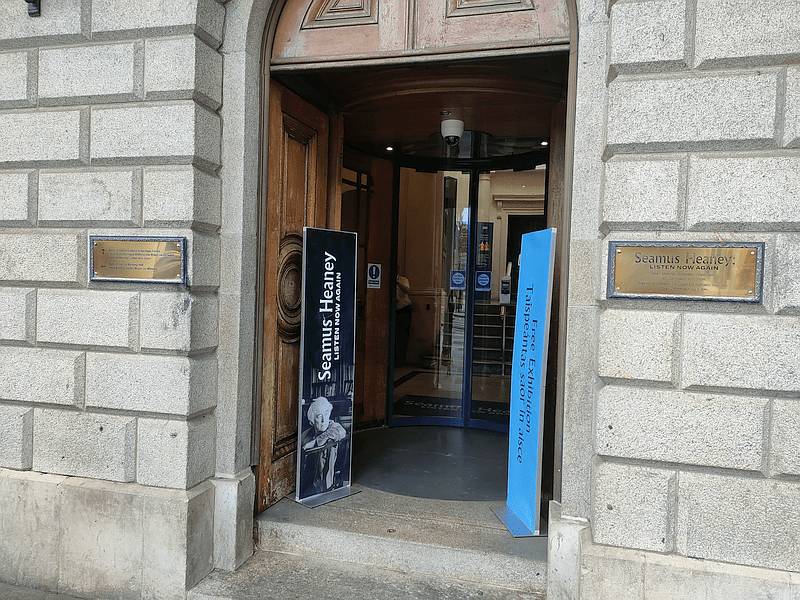
昨日の記事「#6363. 標準発音の整備を企図した Thomas Sheridan の辞書(1780年)」 ([2026-09-28-1]) に引き続き,ダブリンにゆかりのある文人を訪ねる「旅hel」 (tabihel) のダブリン編をお届けしたい.
先日,ダブリン中心部の Bank of Ireland の建物の一角で開かれている展示 "Listen Now Again" を訪れた.アイルランド国立図書館 (National Library of Ireland) が主催する,アイルランドの詩人 Seamus Heaney (1939--2013) の企画展である.銀行の重厚な円形ホールの一角に,詩人の肉声や手稿,写真が静かに並ぶという取り合わせがまず印象的だった.
会場には,詩の朗読の音源が随所に配置されており,訪れた者は文字どおり「今一度,聴く」ことを求められる.詩というのは不思議なもので,活字で読んでいたときとはまるで違うリズムと抑揚が耳に流れ込んでくる.
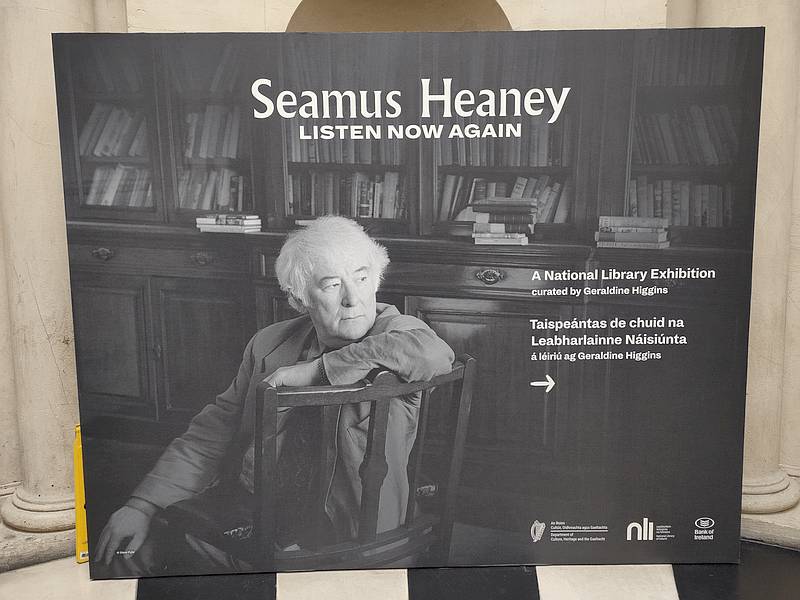
Heaney は北アイルランド Derry 州の農家に生まれ,Queen's University Belfast にて英語学・英文学を専攻した.彼は学生時代にアイルランド語,ラテン語,そしてなんと古英語を学んだ.学生時代にすでに学内誌に詩を発表しており,若くしてことばへの並外れた感覚を培っていたことがうかがえる.
この古英語への素地が,後に思わぬ形で結実する.Heaney は1999年,古英語の英雄叙事詩 Beowulf の新訳を世に問うた.学術的な逐語訳ではなく,現代詩人としての語感を存分に生かした翻訳で,発表されるや国際的なベストセラーとなるという,学術的翻訳としては異例の成功を収めた.Heaney 自身,この翻訳の序文で,Beowulf 中の動詞 þolian (耐え忍ぶ)に出会ったとき,故郷アルスターの祖母が日常的に用いていた方言語 thole を思い出し,そこに自分がこの古英語詩を訳す意義を見出したと述べている.方言に残る本来語の生命力が,1000年の時を超えて詩人と古英語テキストを結びつけたというわけで,英語史の観点からも,この上なく示唆に富むエピソードである.
Heaney は1995年にノーベル文学賞を受賞している.Beowulf の翻訳はその4年後の仕事であり,晩年に至るまで古英語という英語の原点に立ち返り続けた詩人であったことがよく分かる.
2026-09-27 Sun
■ #6362. B&C の第65節 "The Application of Native Words to New Concepts" (6) --- Taku さんとの超精読会 [bchel][oe][borrowing][semantic_change][christianity][lexicology][latin][loan_word][link][voicy][heldio][anglo-saxon][history][helmate][helwa]
息長く続いている,Baugh and Cable の名著 A History of the English Language, 6th ed. を helwa の Taku さんと読み進める超精読会.第65節も終盤です.「#1946. 英語史の古典的名著 Baugh and Cable を読む (65-6) with Taku さん --- helwa 北千住オフ会より」をお届けします.ナビゲーターは,今回も Taku さんこと金田拓さん(帝京科学大学)です.
今回扱うのは「悪魔」「十字架」「復活」「罪」「最後の審判」といった,キリスト教の教義に不可欠な語彙群です.diabolus はそのまま dēofol(devil)として借用されましたが,本来語の同義語 fēond(fiend)も並行して用いられました.十字架は rōd, trēow, gealga.復活は ārīsan(起き上がる)由来の ǣrist.罪を表す語にいたっては,synn のほか mān, firen, leahtor, wōh, scyld と,実に多彩な本来語が並びます.最後の審判は素朴に Doomsday.
借用語と本来語がこれほど豊かに並存していたことに驚かされます.そして本節は,重要な一般論で締めくくられます.他言語からの言語的影響は,取り込んだ借用語の数だけで測れるものなのか.むしろその影響が,言語自身の内なる創造性をどれだけ刺激し,本来語の資源をどれだけ引き出したかにこそ,真の意義があるのではないか.この節は,そんな問いを投げかけて終わります.今回精読した英文を以下に掲げましょう (Baugh and Cable, pp. 86--87) .
Latin diabolus was borrowed as dēofol (devil), but we find fēond (fiend) as a common synonym. Examples might be multiplied. Cross is rōd (rood), trēow (tree), gealga (gallows), and so forth; resurrection is ǣrist, from ārīsan (to arise); peccatum is synn (sin), while other words like mān, firen, leahtor, wōh, and scyld, meaning 'vice', 'crime', 'fault', and the like, are commonly substituted. The Judgment Day is Doomsday. Many of these words are translations of their Latin equivalents and their vitality is attested by the fact that in a great many cases they have continued in use down to the present day. It is important to recognize that the significance of a foreign influence is not to be measured simply by the foreign words introduced but is revealed also by the extent to which it stimulates the language to independent creative effort and causes it to make full use of its native resources.
この B&C 超精読シリーズの過去回は,「#5291. heldio の「英語史の古典的名著 Baugh and Cable を読む」シリーズが順調に進んでいます」 ([2023-10-22-1]) に過去回へのリンクがまとまっています.原書をお持ちの方は,ぜひ音声を副読本代わりに,今回の1節を味わっていただければと思います.
・ Baugh, Albert C. and Thomas Cable. A History of the English Language. 6th ed. London: Routledge, 2013.
2026-09-20 Sun
■ #6355. B&C の第65節 "The Application of Native Words to New Concepts" (5) --- Taku さんとの超精読会 [bchel][oe][borrowing][semantic_change][christianity][lexicology][latin][loan_word][link][voicy][heldio][anglo-saxon][history][helmate][helwa][loan_translation]
Baugh and Cable の名著 A History of the English Language, 6th ed. を,helwa の Taku さんこと金田拓さん(帝京科学大学)さんとともに1文(いな1語)ずつ読み進めていく「超」精読会.「#1939. 英語史の古典的名著 Baugh and Cable を読む (65-5) with Taku さん --- helwa 北千住オフ会より」です.
前回は「洗礼」「聖餐」「捧げ物」といった単語が,借用語に頼らず本来語の意味拡張によって表現されていたことを見ました.今回はその射程がさらに広がります.対象は「聖典」「福音」「三位一体」,そして神・キリスト・聖霊そのものを指す語彙です.Scriptures に対応する gewritu,evangelium に対応する godspell,Trinity に対応する þrines(3性).神という概念だけでも,scieppend(形づくる者),fruma(創始者),metod(測る者)という複数の本来語が並行して用いられていました.さらに fæder, dryhten, wealdend, þēoden, weard, hlæford といった,父・君主・支配者・守護者を意味する語群までもが,神やキリストを指す同義語として重ねて用いられています.
興味深いのは,godspell が現代英語に gospel としてそのまま生き残っている一方,gewritu は廃れ,ラテン系の Scripture(s) にその座を譲ったことです.同じように古英語において本来語で置き換えられた語彙のなかにも,その後の歴史を通じて生き残ってきたものと消えていったものがあります.この明暗にこそ,英語史の醍醐味が宿っています.今回精読した英文を以下に掲げます (Baugh and Cable, p. 86) .
The term Scriptures found its exact equivalent in the English word gewritu, and ēvangelium was rendered by godspell, originally meaning good tidings. Trinity (L. trinitas) was translated þrines (three-ness), the idea of God the Creator was expressed by scieppend (one who shapes or forms), fruma (creator, founder), or metod (measurer). Native words like fæder (father), dryhten (prince), wealdend (ruler), þēoden (prince), weard (ward, protector), and hlāford (lord) are frequent synonyms. Most of them are also applied to Christ, originally a Greek word and the most usual name for the Second Person of the Trinity, but Hǣlend (Savior) is also commonly employed. The Third Person (Spiritus Sanctus) was translated Hālig Gāst (Holy Ghost).
「対面/オンラインで議論に参加してみたい」という方は,ぜひ Voicy のプレミアムリスナー限定配信チャンネル「英語史の輪 (helwa)」の門を叩いてみてください.古英語話者たちの豊かな言語感覚を,皆さんもぜひ一緒に味わってみませんか.過去回は「#5291. heldio の「英語史の古典的名著 Baugh and Cable を読む」シリーズが順調に進んでいます」 ([2023-10-22-1]) にまとまっています.
・ Baugh, Albert C. and Thomas Cable. A History of the English Language. 6th ed. London: Routledge, 2013.
2026-09-13 Sun
■ #6348. B&C の第65節 "The Application of Native Words to New Concepts" (4) --- Taku さんとの超精読会 [bchel][oe][borrowing][semantic_change][christianity][lexicology][latin][loan_word][link][voicy][heldio][anglo-saxon][history][helmate][helwa][loan_translation]
キリスト教の中核をなす概念を,ラテン語からの借用に頼らず,本来語の意味を巧みに転用することで表現していく.そんな古英語期の言語的創意工夫を物語るテーマを,Baugh and Cable の名著 A History of the English Language, 6th ed. を通じて Taku さんと読み進める「超精読会」の最新回でお届けします.
今朝の heldio 最新回は,「#1932. 英語史の古典的名著 Baugh and Cable を読む (65-4) with Taku さん --- helwa 北千住オフ会より」です.今回もナビゲーターは,helwa/heldio ではお馴染みの Taku さんこと金田拓さん(帝京科学大学)が務めてくださいました.
今回は前回に引き続きキリスト教に関連する動詞や名詞が本来語で表現される例が挙げられています.具体的には「洗礼」「聖餐」「捧げ物」という,キリスト教の教義の核心に触れる単語群です.借用語ではなく,本来語の意味の拡張・応用によってどう表現されたかが読みどころです.
fullian(清める)から派生した fulluht(洗礼)は,fulluht-bæþ(洗礼盤)や fulluht-fæder(名付け親)など,数々の複合語を生み出しました.また,ゲルマン語本来の hūsl(聖餐)や lāc(捧げ物)が,キリスト教の儀式を指す語として転用されている点も要注目です.異教の語彙が新しい宗教的な意味の器として再利用される --- ここに,古英語話者たちの言語的な戦略が見て取れます.今回精読した英文を以下に掲げましょう (Baugh and Cable, p. 86) .
For baptize (L. baptizāre), the English adapted a native word fullian (to consecrate), while its derivative fulluht renders the noun baptism. The latter word enters into numerous compounds, such as fulluht-bæþ (font), fulwere (baptist), fulluht-fæder (baptizer), fulluht-hād (baptismal vow), fulluht-nama (Christian name), fulluht-stōw (baptistry), fulluht-tīd (baptism time), and others. Even so individual a feature of the Christian faith as the sacrament of the Lord's Supper was expressed by the Germanic word hūsl (modern housel), while lāc, the general word for sacrifice to the gods, was also sometimes applied to the Sacrifice to the Mass.
1文ずつ丁寧に読み解いていくこの営みは,地味に見えて,実は英語史のおもしろさの核心に触れる時間でもあります.過去回のアーカイブは「#5291. heldio の「英語史の古典的名著 Baugh and Cable を読む」シリーズが順調に進んでいます」 ([2023-10-22-1]) からたどれます.ご興味を持たれた方は,Voicy のプレミアムリスナー限定配信チャンネル「英語史の輪 (helwa)」へもぜひ.
・ Baugh, Albert C. and Thomas Cable. A History of the English Language. 6th ed. London: Routledge, 2013.
2026-09-07 Mon
■ #6342. 2026度の朝カルシリーズ講座の夏期の第2回(8月回)「riddle を探って古英語原文の世界へ」のまとめ [asacul][notice][kdee][hee][etymology][hel_education][helkatsu][oe][oe_text][anglo-saxon][riddle][kochushoho][alliteration][oe_poetry][metanalysis][trish][rune][ruthwell_cross][alliteration]
8月22日(土)に,朝日カルチャーセンター新宿教室にて今年度の夏期第2回(シリーズ通算第17回)となるオンライン講座を開講しました.テーマは「riddle を探って古英語原文の世界へ」です.「歴史上もっとも不思議な英単語」シリーズの一環として,現代英語で「なぞなぞ,謎」を意味する riddle を手がかりに,英語の読み書き文化の起源と古英語の詩の世界を受講者の皆さんと探訪しました.参考テキストには,引き続き市河三喜・松浪有(著)『古英語・中英語初歩〈新装復刊〉』(研究社,2026年)を活用しました.
講座の前半では,まず riddle と read の語源的な深いつながりと語誌に迫りました.両語は同根であり,印欧祖語の *ar(ə)- (合 わせる,整える)に遡ります.古英語の名詞 rǣdels は「助言,考慮,解釈,推測」など実に多義的でした.形態論の観点からは,本来語幹の一部だった末尾の -s が複数形語尾と勘違いされて脱落した「異分析」 (metanalysis) や,派生に伴う母音変化(3音節短化)の事例を確認しました.また,関連語として write (原義は「彫る,刻む」)や book (ブナの木 beech に由来),ゲルマン人の「彫る文字」であるルーン文字 (rune) やスコットランドの Ruthwell Cross の石碑銘文の話題を掲げ,かつてゲルマン人にとって文字を書く行為が物理的な「刻み込み」であり,読む行為が「意味を推測・解釈する」という精神的な営みであったことを浮き彫りにしました.
講座の後半では,古英詩の形式的特徴である2つの半行構造と「頭韻」 (alliteration) の規則について解説した上で,アングロサクソン人が愛好した「謎詩」 (riddle) というジャンルに焦点を当てました.具体的には『古英語・中英語初歩』の pp. 122--23 に収められている「本の虫,シミ」 (Bookworm, Riddle XLVII) の古英語原文を読解しました.「蛾が言葉を喰らったが,その言葉を飲み込んだところで少しも賢くはならなかった」という,書物の物質性と知恵の受容をめぐるアングロサクソン流のアイロニーとユーモアが効いた作品です.
次回,夏期クールの最終回(第3回)は,9月26日(土)に「through を探って中英語原文の世界へ」と題して開講されます.かつて516通り以上の綴字が存在したこの単語を軸に,中英語の原文を覗いてみます.
また,10月10日(土)には特別講座「英語学習の伏線回収の鍵は「英語史」だった! --- 『なぜさんたんげん』出版記念」も予定されています.こちらの特別講座の詳細・お申し込みは朝カルの公式ページよりどうぞ.
・ 市河 三喜,松浪 有 『古英語・中英語初歩〈新装復刊〉』 研究社,2026年.
・ 唐澤 一友・小塚 良孝・堀田 隆一(著),福田 一貴・小河 舜(校閲協力) 『英語語源ハンドブック』 研究社,2025年.
・ 寺澤 芳雄(編集主幹) 『英語語源辞典』新装版 研究社,2024年.
・ 堀田 隆一 『英語史で解く 英文法の謎 --- なぜ「3単現の s」をつけるのか』 NHK出版〈NHK出版新書〉,2026年.
2026-08-15 Sat
■ #6319. 8月22日(土)の朝カル講座「"riddle" を探って古英語原文の世界へ」 [asacul][notice][kdee][etymology][hel_education][helkatsu][oe][oe_text][anglo-saxon][riddle][kochushoho][alliteration][oe_poetry][hee]
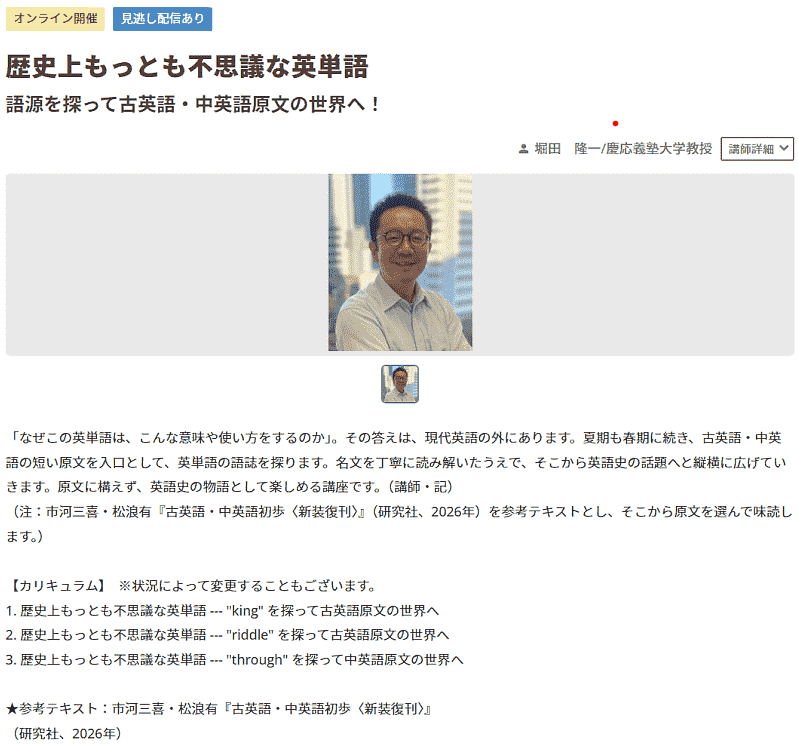
来週末の8月22日(土) 15:30--17:00 に,朝日カルチャーセンター新宿教室にてオンライン講座が開講されます.昨年度より継続しているシリーズ「歴史上もっとも不思議な英単語」の夏期第2回(通算第17回)となります.今回は「riddle を探って古英語原文の世界へ」と題して,「謎」を意味する単語に迫ります.
現代英語の riddle は「謎,なぞなぞ」を意味する単語ですが,英語史・語源学の観点から紐解くと,アングロサクソン人の「読み書き文化」の原点につながる,文字通り謎に満ちた世界が広がっています.今回の講座では,主に3つの切り口からこの単語を解読していきます.
第1のポイントは,riddle と read の語源的関係です.riddle は,動詞 read に接尾辞が付加された派生語にすぎません.古英語の rǣdan (to read) は本来「解釈する;助言する」などを意味していました.つまり,古代人にとって「読む」とは,与えられた暗号や謎を「解読する」行為そのものだったのです.さらに視野を広げて,write (原義は「引っ掻く」),book (ブナの木),rune (秘密・囁き)などの語源もあわせて紹介します.これらの単語の語源をつなぎ合わせていくと,ゲルマン民族が文字や書物,そして読み書き文化をどのように受容し発展させてきたのか,その文化的背景が見えてきます.
第2のポイントとして,(次の第3のポイントを見据えて)古英詩 (Old English poetry) の世界と頭韻 (alliteration) の役割,そしてルーン文字の文化を覗いてみます.先日,私自身が現地で実物を見てきたスコットランド Dumfriesshire の Ruthwell Cross は,古英詩 The Dream of the Rood の断片がルーン文字で刻まれた,8世紀初頭のものと考えられている有名な石碑です.その訪問体験談や写真を紹介しつつ,アングロサクソン人の詩的言語生活の一端を感じてみます.古英詩は現代詩のような脚韻 (rhyme) ではなく,音節頭の子音を揃える頭韻によってリズムを取っていました.この頭韻が,単なる音の装飾にとどまらず,詩の構造や記憶,さらには解読の鍵としていかに決定的な役割を果たしていたかを解説します.
第3のポイントは,古英語文学における「謎詩」 (Riddles) という独特のジャンルの鑑賞です.古英語期には,事物や自然現象が自ら「私は誰でしょう?」と語りかける詩が数多く残されました.今回の講座では,市河三喜・松浪有(著)『古英語・中英語初歩〈新装復刊〉』(研究社,2026年)の IX. RIDDLES より,(3) Bookworm (Riddle XLVII) を古英語原文で解読してみます.「本を食う虫」を描いた短い詩ですが,頭韻の配置に注意しながら丁寧に読んでいきます.あわせて,かつては「竜;蛇」を指していた worm の意味変化についても取り上げます.
講義資料で原文や文法解説をしっかりサポートしますので,テキストをお持ちでなくても問題ありません.古英語原文に触れたことがない方でも安心してご参加いただけます.
講座の詳細とお申込みは,朝カルのこちらの公式ページをご覧ください.なお,次回(夏期第3回)の日程と内容は次の通りです.
・ 夏期第3回(2026年9月26日):歴史上もっとも不思議な英単語 --- "through" を探って中英語原文の世界へ
皆様のご受講をお待ちしています.
(以下,後記:2026/08/19(Wed))
今回の講座については Voicy heldio でも案内を放送しています.ぜひ「#1907. 8月22日(土)の朝カル講座は riddle を深掘り」をお聴きください.
・ 市河 三喜,松浪 有 『古英語・中英語初歩〈新装復刊〉』 研究社,2026年.
・ 唐澤 一友・小塚 良孝・堀田 隆一(著),福田 一貴・小河 舜(校閲協力) 『英語語源ハンドブック』 研究社,2025年.
・ 寺澤 芳雄(編集主幹) 『英語語源辞典』新装版 研究社,2024年.
2026-08-11 Tue
■ #6315. 2026度の朝カルシリーズ講座の夏期の初回(7月回)「king を探って古英語原文の世界へ」のまとめ [asacul][notice][hel_education][oe][oe_text][anglo-saxon_chronicle][kochushoho][haplology][phonemicisation][phoneme][kenning][synonym][alfred][viking][etymology][kdee][hee][beowulf][anglo-saxon]
7月25日(土)に,朝日カルチャーセンター新宿教室にて今年度の夏期第1回(シリーズ通算第16回)となるオンライン講座を開きました.夏期クールのテーマも引き続き「歴史上もっとも不思議な英単語」ですが,今回は「king を探って古英語原文の世界へ」と題し,国家の世襲的君主を表わす基本語 king の起源と発達に迫りました.参考テキストには今期も市河三喜・松浪有(著)『古英語・中英語初歩〈新装復刊〉』(研究社,2026年)を活用し,今回は古英語のテキストから「王」が登場する箇所を読み解きました.
講座でまず注目したのは,king の語源的背景と仲間となる単語群です.古英語の cyning は「一族,血族」を意味する cynn (現代英語 kin)に,所属・由来を表わす接尾辞 -ing が付いたもので,原義は「一族の者」でした.さらに遡ると印欧語根 *gen(ə)- (生む,生じさせる)に行き着き, generous, gender, nature など膨大な語彙ネットワークと繋がっています.また,古英語の詩にあふれる「ケニング」 (kenning) と呼ばれる隠喩的複合語を取り上げ,古英詩『ベオウルフ』にみられる bēagġyfa (指環を与える者)や goldwine (黄金の友)といった「王」の多彩な表現を紹介しました.
音変化や語彙体系の観点からも興味深い事実を確認しました.語形面では,古英語 cyning から cyng への変化に見られる重音省略 (haplology) や,中英語から近代英語にかけての /kɪŋg/ から /kɪŋ/ への変化,すなわち軟口蓋鼻音の音素化 (phonemicisation) に触れました.また,形容詞における kingly (本来語),royal/regal (フランス借用語),monarchic(al) (ギリシア借用語)という語彙の3層構造にも触れ,なぜ king や queen という基本語がフランス語に置き換えられずに生き残ったのかという問題についても考察しました.
講座の後半では,『古英語・中英語初歩』の pp. 94--98 に収められている『アングロサクソン年代記』 (anglo-saxon_chronicle) より,896年のアルフレッド大王 (King Alfred) に関する記述の一部を読解しました.デーン人(ヴァイキング)の侵略に対抗するため,大王自ら従来の倍の大きさを誇る長船(ロングシップ)の建造を命じたエピソードです.アングロサクソン王国を死守した英雄としてのアルフレッド王の戦いの準備について,古英語の原文を通じて受講者の皆さんと味わいました.
夏期クールの第2回は,8月22日(土)に「riddle を探って古英語原文の世界へ」と題して開講されます.古英語のなぞなぞ文化とこの単語の語誌に迫る予定です.ぜひ朝カルのこちらの公式ページよりお申込みください.
・ 市河 三喜,松浪 有 『古英語・中英語初歩〈新装復刊〉』 研究社,2026年.
・ 寺澤 芳雄(編集主幹) 『英語語源辞典』新装版 研究社,2024年.
・ 唐澤 一友・小塚 良孝・堀田 隆一(著),福田 一貴・小河 舜(校閲協力) 『英語語源ハンドブック』 研究社,2025年.
2026-08-01 Sat
■ #6305. B&C の第65節 "The Application of Native Words to New Concepts" (3) --- Taku さんとの超精読会 [bchel][oe][borrowing][semantic_change][christianity][lexicology][latin][loan_word][link][voicy][heldio][anglo-saxon][history][helmate][helwa]
Baugh and Cable の精読シリーズ,第65節を読み進め,議論を重ねています.helwa の仲間たちとともにテキストを念入りに読み解いた北千住オフ会での音声を,Voicy heldio にて公開しております.今回もナビゲーターとして全体を引っ張ってくださったのは,お馴染みの Taku さんこと金田拓さん(帝京科学大学)です.「#1889. 英語史の古典的名著 Baugh and Cable を読む (65-3) with Taku さん --- helwa 北千住オフ会より」をぜひお聴きください.
今回は,キリスト教的な「説教する」「祈る」といった宗教的行為を表わす動詞・名詞において,ラテン語からの直接の借用を避け,アングロサクソン人が元々持っていた本来語の意味を転用させたが扱われています.精読した本文の該当箇所は1文のみで,以下の通りです(Baugh and Cable, p. 86).
Instead of borrowing the Latin word praedicāre (to preach), the English expressed the idea with words of their own, such as lǣran (to teach) or bodian (to bring a message); to pray (L. precāre) was rendered by biddan (to ask) and other words of similar meaning, prayer by a word from the same root, gebed.
今回注目したのは1文のみですが,the English の定冠詞がもつ意味・意義に注目し,著者の英語史や言語変化に対する姿勢を読み解くというエキサイティングな議論が展開しました.改めてキリスト教の布教と用語の問題,それから読書会に立ち会われたヘルメイトからの質問などについても検討し,豊かな議論の時間を過ごすことができました.
これまでの B&C 超精読会のアーカイブは,体系的にまとめられており,いつでもさかのぼって学習することができます.「#5291. heldio の「英語史の古典的名著 Baugh and Cable を読む」シリーズが順調に進んでいます」 ([2023-10-22-1]) に全回へのリンクが整備されておりますので,未聴の回がある方はぜひご参照ください.原書を手元に用意し,音声を副読本のように活用することで,英語史の原典購読の醍醐味を味わっていただけるはずです(使用テキストは最新の第7版ではなく第6版となっております).また,このような精読の輪の中に加わり,一緒に学びを深めたいとお考えの方は,ぜひ Voicy のプレミアムリスナー限定配信チャンネル「英語史の輪 (helwa)」へお越しください.8月の helwa もちょうど本日からスタートです.刺激的で充実した学びの時間が待っています!
・ Baugh, Albert C. and Thomas Cable. A History of the English Language. 6th ed. London: Routledge, 2013.
2026-07-29 Wed
■ #6302. B&C の第65節 "The Application of Native Words to New Concepts" (2) --- Taku さんとの超精読会 [bchel][oe][borrowing][semantic_change][christianity][lexicology][latin][loan_word][link][voicy][heldio][anglo-saxon][history][helmate][helwa]
Baugh and Cable の第6版をじっくりと読み解いていく「超」精読シリーズの続編です.前日に引き続いて,helwa のオフ会で収録した熱気あふれる音声を Voicy heldio にて共有いたします.今回も解説の進行役を務めてくださっているのは,helwa/heldio でお馴染みの Taku さんこと金田拓さん(帝京科学大学)です.ぜひ「#1886. 英語史の古典的名著 Baugh and Cable を読む (65-2) with Taku さん --- helwa 北千住オフ会より」をお聴きいただければと思います.
今回の該当箇所では,ラテン語のキリスト教概念を導入するにあたり,英語がどのような本来語を用いてこれらを表現しようとしたのか,その具体例が多数挙げられています.外来語をそのまま取り入れるのではなく,すでにある自言語の語彙を組み合わせて翻訳借用したり,意味を拡張させたりする手法が観察されます.今回精読した英文3文を提示します(Baugh and Cable, p. 86).
Patriarch was rendered literally by hēahfæder (high father), prophet by wītega (wise one), martyr often by the native word þrōwere (one who suffers pain), and saint by hālga (holy one). Specific members of the church organization such as pope, bishop, and priest, or monk and abbot represented individuals for which the English had no equivalent and therefore borrowed the Latin terms; however, they did not borrow a general word for clergy but used a native expression, ðæt gāstlice folc (the spiritual folk). The word Easter is a Germanic word taken over from a pagan festival, likewise in the spring, in honor of Eostre, the goddess of dawn.
キリスト教宣教団にとって,イングランドの布教のためには,ラテン語の用語を使わずに,土着の人々の言語である古英語を最大限に活用する必要があったにちがいありません.精読会では,この観点を踏まえて突っ込んだ議論が繰り広げられました.皆さんにも一緒にお考えいただき,heldio のコメント欄よりご意見やご質問を寄せていただければと思います.
この B&C 精読会配信回のバックナンバーは,すべて整理されて保存されています.「#5291. heldio の「英語史の古典的名著 Baugh and Cable を読む」シリーズが順調に進んでいます」 ([2023-10-22-1]) に過去の配信回がリスト化されていますので,復習や聞き返しにご活用ください.テキストを片手に音声を聴き進めることで,英語史の理解が着実に深まっていきます(読書会では最新の第7版ではなく第6版を使用していますので,お持ちの版をご確認ください).
さらに,「この濃密な読書会の空間に直接参加してみたい」という方は,ぜひ Voicy のプレミアムリスナー限定チャンネル「英語史の輪 (helwa)」へのご参加をご検討ください.皆さんとともに英語史を深掘りする有意義な時間を共有できます.
・ Baugh, Albert C. and Thomas Cable. A History of the English Language. 6th ed. London: Routledge, 2013.
2026-07-27 Mon
■ #6300. B&C の第65節 "The Application of Native Words to New Concepts" (1) --- Taku さんとの超精読会 [bchel][oe][borrowing][semantic_change][christianity][lexicology][latin][loan_word][link][voicy][heldio][anglo-saxon][history][helmate][helwa]
英語史の名著,Baugh and Cable のテキスト(第6版)を,helwa のメンバーと「超」精読していくシリーズです.先日土曜日の午後に開催された豊かな読書会の音声を,そのまま Voicy heldio でお届けします.いつものように helwa/heldio の盛り上げ役の Taku さんこと金田拓さん(帝京科学大学)に読書会をリードしていただいています.「#1884. 英語史の古典的名著 Baugh and Cable を読む (65-1) with Taku さん --- helwa 北千住オフ会より」をお聴きください.
今回は,"The Application of Native Words to New Concepts" と題する節を読み始めています.前節までにみてきたように,古英語期にはラテン語からの借用語が多く流れ込んできました.しかし,ラテン語の影響の大きさはは,そのような直接の借用語だけをみているだけでは,正確につかめません.ラテン語は,英語本来語にも目に見えにくい間接的な影響を少なからず与えているのです.精読対象となった英文を以下に掲げます(Baugh and Cable, pp. 85--86).最初5文をじっくり読んでいきます.
The words that Old English borrowed in this period are only a partial indication of the extent to which the introduction of Christianity affected the lives and thoughts of the English people. The English did not always adopt a foreign word to express a new concept. Often an old word was applied to a new thing and by a slight adaptation made to express a new meaning. The Anglo-Saxons, for example, did not borrow the Latin word deus because their own word God was a satisfactory equivalent. Likewise, heaven and hell express conceptions not unknown to Anglo-Saxon paganism and are consequently English words.
この B&C 超精読シリーズの過去回は,すべてアーカイヴに保存されており,いつでもお聴きいただけます.「#5291. heldio の「英語史の古典的名著 Baugh and Cable を読む」シリーズが順調に進んでいます」 ([2023-10-22-1]) にリンクがまとまっているので,ご参照ください.バックナンバーみ聴いた上で,この英語史の古典的テキストを一緒に読んでみたいという方は,ぜひ本書をお手元にご用意ください(最新版は第7版ですが,読書会では第6版を読み進めているので,ご注意ください).また,「超精読会に自分も加わりたい」という方は,ぜひ Voicy のプレミアムリスナー限定配信チャンネルである「英語史の輪 (helwa)」へお越しください.限りなく豊かな時間を過ごすことができます.
・ Baugh, Albert C. and Thomas Cable. A History of the English Language. 6th ed. London: Routledge, 2013.
2026-07-26 Sun
■ #6299. 2026度の朝カルシリーズ講座の第3回(6月回)「ghost を探って古英語原文の世界へ」のまとめ [asacul][notice][hel_education][oe][oe_text][riddle][semantic_change][lexicology][synonym][spelling][gh][flemish][caxton][kochushoho][gvs][ghost_word][etymology]
1ヶ月ほど前のことになりますが,6月27日(土)に,朝日カルチャーセンター新宿教室にて今年度の春期第3回(シリーズ通算第15回)となるオンライン講座を開きました.シリーズ全体のテーマは「歴史上もっとも不思議な英単語」です.今回は「ghost を探って古英語原文の世界へ」と題し,現代英語で「幽霊」を意味するお馴染みの単語 ghost の波乱に満ちた歴史を深掘りしました.参考テキストには,今期継続して活用している市河三喜・松浪有(著)『古英語・中英語初歩〈新装復刊〉』(研究社,2026年)を用い,古英語の原文のなかに生きる ghost の姿を味わいました.
今回の講座で大きく取り上げたのは,ghost の意味変化と名義変化です.現代でこそ「幽霊,死者の霊」という意味が主ですが,古英語の gāst は本来広く「生命の根源;魂,霊魂」全般を指す語でした.しかし,抽象的な「魂」の意味領域を本来語の soul やフランス借用語の spirit に譲り渡した結果,ghost は「恐ろしい死者の霊」という限られたニッチに押し込められることになりました.これに伴い,キリスト教の「聖霊」を意味する名称も,かつての Holy Ghost から,現代語訳聖書で一般的な Holy Spirit へと移り変わったのです.
発音と綴字の観点からも,ghost はきわめて興味深い変化を示してきました.発音面では,古英語の長母音 /ɑː/ (gāst)が,中英語を経て大母音推移をくぐり抜け,現代の2重母音 /oʊ/ に至るという規則的な発展を遂げています.
一方,不規則でミステリアスなのが綴字に見られる <gh> です.15世紀,イギリス近代印刷の父 William Caxton がフランドル地方から印刷術を導入した際,オランダ・フラマン系の印刷工たちが,自言語の gheest の綴字習慣を英語の gost に持ち込んだとされています.まさに「タイポグラフィーの幽霊」といえます.また,講義では文献学者 Walter W. Skeat による「幽霊語」 (ghost_word) の話題や,辞書盗用を防ぐ「mountweazel 語」などの脱線話にも触れました.
講座の後半では,『古英語・中英語初歩』の p. 120 に収められている古英語のなぞなぞ詩 The Riddles の第1詩「嵐」に目を通しました(時間不足で詳しく解説できませんでしたが).自然の猛威を描く力強い詩行のなかに,"flǣsc ond gǣstas" 「肉体と霊魂」という形で ghost の複数形が登場します.現代の「幽霊」とは異なり,肉体と対をなす「生きている魂」として機能していた古英語本来の用法を,受講者の皆さんと直接確認しました.
さて,朝カル講座は夏期クール(7月--9月)へと入っています.第1回は昨日7月25日に「king を探って古英語原文の世界へ」と題して開講されました.8月以降の回についてご関心のある方は,ぜひ朝カルのこちらの公式ページよりお申込みいただければ.
・ 市河 三喜,松浪 有 『古英語・中英語初歩〈新装復刊〉』 研究社,2026年.
・ 寺澤 芳雄(編集主幹) 『英語語源辞典』新装版 研究社,2024年.
2026-07-19 Sun
■ #6292. 7月25日(土)の朝カル講座「king を探って古英語原文の世界へ」 [asacul][notice][kdee][hee][etymology][hel_education][helkatsu][heldio][oe][kochushoho][anglo-saxon_chronicle][alfred][viking][suffix][indo-european][word_family][link][voicy][kdee][hee][kenning][beowulf][haplology][phonemicisation][lexicology][lexical_stratification][etymology]
7月25日(土) 15:30--17:00 に,今年度4回目となる朝日カルチャーセンター新宿教室でのオンライン講座が開かれます.昨年度より継続しているシリーズ「歴史上もっとも不思議な英単語」としては通算第16回目の講義となります.今回は「king を探って古英語原文の世界へ」と題して,この大物単語に迫ります.
現代英語の king は一見すると素朴な日常語ですが,英語史・語源学の観点からその歴史を紐解くと,実にダイナミックで奥深い世界が広がっています.今回の講座では,主に3つの切り口からこの「王」を意味する単語を解読していきます.
第1のポイントは,印欧語根 *gen(e)- から生み出される広大な語彙の世界です.実は king は,kin (親族)や kind (種類;親切な)などと共通の大きな語根に遡る派生語です.いつものように『英語語源辞典』 や『英語語源ハンドブック』 などの記述を突き合わせながら,印欧語根にまで遡る壮大な単語の家族のつながりを眺めていきます.接尾辞 -ing の歴史についても深掘りします.この辺りは『英語語源辞典』読み方講座に近い内容となります.
第2のポイントは,古英語期に花開いた「王」の隠喩的複合語,いわゆるケニング (kenning) の世界です.古英語の英雄詩『ベオウルフ』 (beowulf) などを覗くと,王を単に cyning ("king" の古英語形)と呼ぶだけでなく,「指輪をくれる者」 (bēagġyfa) や「黄金の友」 (goldwine) といった詩的な数々の類義語で表現していました.文学的に爛熟した多彩な語彙の魅力を味わいます.
第3のポイントは,king 周辺の語彙論と同単語の語形変化です.なぜ king と queen はノルマン征服以降の大量のフランス借用語の波に置き換えられずに生き残ることができたのか,という問題にも触れます.また,かつての古英語の綴字 <c> から中英語の <k> への変化や,軟口蓋鼻音の音素化といった,綴字と発音のダイナミックな変化についても解説します.
講義の後半には,市河三喜・松浪有(著)『古英語・中英語初歩〈新装復刊〉』(研究社,2026年)に所収の古英語散文的スト『アングロサクソン年代記』より,アルフレッド大王 (King Alfred) がデーン人(ヴァイキング)との戦いに備えているシーンの短い抜粋部分を読んでみます.丁寧に解説していきますので,古英語初心者の方でも心配要りません.また,上掲書をお持ちでなくても講義資料で関連箇所を引用しますのでご安心ください.
講座の詳細とお申込みは,朝カルのこちらの公式ページをご覧ください.なお,次回以降の日程と内容は次の通りです.
・ 夏期第2回(2026年8月22日):歴史上もっとも不思議な英単語 --- "riddle" を探って古英語原文の世界へ
・ 夏期第3回(2026年9月26日):歴史上もっとも不思議な英単語 --- "through" を探って中英語原文の世界へ
いずれの講座につきましても,多くの方の受講をお待ちしております.
・ 市河 三喜,松浪 有 『古英語・中英語初歩〈新装復刊〉』 研究社,2026年.
・ 唐澤 一友・小塚 良孝・堀田 隆一(著),福田 一貴・小河 舜(校閲協力) 『英語語源ハンドブック』 研究社,2025年.
・ 寺澤 芳雄(編集主幹) 『英語語源辞典』新装版 研究社,2024年.
2026-07-12 Sun
■ #6285. 小河舜さん(上智大学)×井上逸兵さん「古英語と英国地名からみるイギリスの言語文化」ダイジェスト版 [youtube][ogawashun][onomastics][name_project][toponymy][anglo-saxon][oe][celtic][old_norse][viking][ippeiinoue][norman_conquest][north_sea][contact]
昨日の記事「#6284. 英語史を育んだ北海 --- だから私は泳いだ」 ([2026-07-11-1]) との関係も深い話題.
去る7月8日(水),「NPO 法人地球ことば村」のオンラインサロンにて,臨場感あふれる YouTube 対談動画が公開されました.お相手は,本ブログや Voicy heldio の「千本ノック」などの企画でお馴染みの英語史研究者小河舜さん(上智大学)と,私の同僚の井上逸兵さん(慶應義塾大学)のお2人です.
この収録自体は,2年ほど前,2024年10月31日の夜に,慶應義塾大学三田キャンパスの東館オープンラボにて行なわれたものです.私自身は,当夜は仕事の都合で対談本編には立ち会えなかったのですが,その後に催された熱い懇親会の席にはしっかりと滑り込み,英語史トークに花を咲かせたという良き思い出があります.今回はその対談の22分ほどの「ダイジェスト版」が公開されたということで,そのエッセンスをかいつまんで紹介しつつ,hellog 読者の皆さんにもぜひ動画を視聴していただければと思います.
対談の主たるテーマは,小河さんの主たる研究フィールドである「古英語」と「地名」です.
英語史における最大の画期といえば,誰もが忘れることのできない1066年のノルマン征服 (norman_conquest) ですが,それ以前の時代を指すのが古英語です.小河さんは,外から新しい言語話者がブリテン島にやってきたときに,既存の地名がどのように置き換えられたのか,あるいは塗り替えられずに痕跡を残したのか,という動態に関心を抱かれています.
動画内では,とりわけ8世紀以降にブリテン島へ侵入・定住したヴァイキング (viking) の母語である古ノルド語 (old_norse) に由来する地名が具体的に取り上げられています.現代の私たちが抱く「凶暴な海賊」というヴァイキングのステレオタイプは,実は18世紀以降の創作による後付けのイメージが多分に含まれており,実際には商人として定住し,アングロサクソン人とある程度言葉を通じ合わせながら共存していた側面も強かったという指摘には,目から鱗が落ちる方も多いのではないでしょうか.
そのヴァイキングの言語的痕跡として最も著名な地名要素が,Rugby などの地名に見られる -by 要素です.古ノルド語で「村」や「集落」を意味するこの要素は,イングランドの北東部に明らかに集中的に分布しており,当時のヴァイキングたちの勢力圏を雄弁に物語っています.
一方で,本来のアングロサクソン系の地名として優勢なのが,Washington や Newton などに見られる -ton 要素です.古英語の日常語としては「柵」や「囲われた場所」を意味する tūn という単語の縮約形ですが,これが日常言語として発展したのが,私たちが当たり前のように使っている town (町)というわけです.まさに日本の「〇〇町」という感覚と同じ最優勢の地名要素が,歴史の波に揉まれてきたのですね.
対談では,10世紀の歴史書にラテン語で記された地名表記から,アングロサクソン系の旧名 Norðworðig とヴァイキング系の新名 Derby が並置されている移行期・接触期の揺らぎが生々しく見えるという,文献学的な醍醐味も語られています.
さらに話題は,より古い層に属するケルト語由来の地名(とりわけ水にまつわる川の名前に多く残る Avon や Thames の逸話など)から,スコッチ・ウィスキーの「ジョニー・ウォーカー」 (Johnnie Walker) のロゴに隠された興味深い語源説にまで及びます.歩く姿のシルエットで有名なウォーカーという姓ですが,語源を遡れば「歩く人」とは全く無関係で,羊毛を圧縮する職業名やヴァイキングの言語に由来する可能性が高く,現代的な解釈(誤解)によって,あの闊歩する姿のデザインが生まれたというエピソードは,言語学・文化史的にも実に興味深い話題です.
地名や人名というものは,人間がその時代にその場所とどのような関わりを持っていたかを示すアイデンティティの証にほかなりません.22分の動画のなかに,英語史のロマンと固有名詞学の奥深さが凝縮された対談となっています.
hellog 読者の皆様におかれましては,ぜひ上掲の YouTube スクリーン,あるいはこちらの直接リンクより,この魅力的な対談動画をじっくりとご視聴いただければ幸いです.
2026-07-07 Tue
■ #6280. B&C の第64節 "Influence of The Benedictine Reform on English" (3) --- Taku さんとの超精読会 [bchel][oe][benedictine_reform][christianity][lexicology][borrowing][latin][loan_word][link][voicy][heldio][anglo-saxon][history][helmate][philology]
昨日に続き,英語史の古典的名著 Baugh and Cable (第6版)を helwa の熱心な仲間たちと1文ずつ解剖していく超精読会の実況録音シリーズです.Voicy heldio の配信と連動しながら,名著の行間から立ち上る歴史の息吹を再現する試みを続けています.
今朝の heldio 最新回では,第64節 "Influence of The Benedictine Reform on English" の締めくくりとなる後半部分 (p. 85) の精読をお届けしています.今回も,精読のリード役は,helwa/heldio コミュニティに欠かせないヘルメイトであり,同志である Taku さんこと金田拓さん(帝京科学大学)です.
昨日までに見てきたように,ベネディクト改革期に英語へ流入したラテン語借用語の多くは,本を通じて導入された書物的・学術的な用語でした.本日のターゲットとなる英文では,これらの単語が当時の古英語の語彙体系においてどのような位置づけにあったのか,そして文献学的な視点から借用時期をどのように特定・推定すべきなのか,というテーマが議論されます.ラテン語形のまま用いられており完全に同化しなかった単語のリストを眺めながら,文献上の沈黙をどのように解釈すべきかという,文献学や歴史言語学の方法論に関する問題にまで踏み込んで議論しています.ぜひお付き合いください
It would be possible to extend these lists considerably by including words that were taken over in their foreign form and not assimilated. Such words as epactas, corporale, confessores, columba (dove), columne, cathedra, catacumbas, apostata, apocalipsin, acolitus, absolutionem, invitatorium, unguentum, cristalla, cometa, bissexte, bibliothece, basilica, adamans, and prologus show at once by their form their foreign character. Although many of them were later reintroduced into the language, they do not constitute an integral part of the vocabulary at this time. In general, the later borrowings of the Christian period come through books. An occasional word assigned to this later period may have been in use earlier, but there is nothing in the form to indicate it, and in the absence of any instance of its use in the literature before Alfred it is safer to put such borrowings in the latter part of the Old English period.
この B&C 超精読シリーズの過去回のリンク集へは,「#5291. heldio の「英語史の古典的名著 Baugh and Cable を読む」シリーズが順調に進んでいます」 ([2023-10-22-1]) からアクセスできます.ぜひ過去回も含めてお聴きになり,本書の精読を通じて,豊穣なる英語史の世界に足を踏み入れていただければ.
・ Baugh, Albert C. and Thomas Cable. A History of the English Language. 6th ed. London: Routledge, 2013.
2026-07-06 Mon
■ #6279. B&C の第64節 "Influence of The Benedictine Reform on English" (2) --- Taku さんとの超精読会 [bchel][oe][benedictine_reform][christianity][lexicology][borrowing][latin][loan_word][link][voicy][heldio][anglo-saxon][history][helmate][helwa]
前回の関連記事 ([2026-06-19-1]) に引き続き,Voicy heldio の収録会の形をとりながら,英語史の名著,Baugh and Cable のテキスト(第6版)を,helwa の志高き仲間たちとともに徹底的に精読していく会の記録をお届けします.この熱気あふれる読書会の音声をそのままお届けする heldio 配信シリーズは,コアなリスナーの皆さんの応援に支えられて,ゆっくりとではありますが順調に進んでいます.
今朝配信の heldio 最新回では,引き続き第64節の精読を進めています.本日のブログ記事はこの音声配信とリンクした内容となります.今回も,helwa/heldio のコミュニティを熱く盛り上げてくださっているヘルメイトであり,コアリスナーの Taku さんこと金田拓さん(帝京科学大学)に,精読をリードしていただきました.
前回の heldio 配信「#1846. 英語史の古典的名著 Baugh and Cable を読む (64-1) with Taku さん --- helwa 北千住オフ会より」では,ベネディクト改革がもたらした宗教関係のラテン借用語に焦点を当てました.今回はさらにその外側に広がる書物的・学術的な語彙へと突入します.古英語期の借用語といえば,キリスト教伝来に伴う初期の日常的・一般的なラテン借用語が想起されますが,ベネディクト改革期にラテン語から流入した語彙の性質はそれらとは一線を画しています.きわめて学術的な専門用語が目立つようになるのです.今回の精読のターゲットとなった英文を以下に掲げます (p. 85) .植物名や医学用語,動物の名称など,当時の知識階級が本を通じて導入した語彙の数々を味わいました.
But we miss the group of words relating to everyday life characteristic of the earlier period. Literary and learned words predominate. Of the former kind are accent, brief (the verb), decline (as a term of grammar), history, paper, pumice, quatern (a quire or gathering of leaves in a book), and term(inus), title. A great number of plant names are recorded in this period. Many of them are familiar only to readers of old herbals. Some of the better known include celandine, centaury, coriander, cucumber, ginger, hellebore, lovage, periwinkle, petersili (parsley), and verbena.9 A few names of trees might be added, such as cedar, cypress, fig, laurel, and magdala (almond).10 Medical terms, like cancer, circulādl (shingles), paralysis, scrofula, plaster, and words relating to the animal kingdom, like aspide (viper), camel, lamprey, scorpion, and tiger, belong apparently to the same category of learned and literary borrowings.
9 A number of interesting words of this class have not survived in modern usage, such as aprotane (wormwood), armelu (wild rue), caric (dry fig), elehtre (lupin), mānrūfie (horehound), nepte (catnip), pollegie (pennyroyal), and hymele (hop-plant).
10 Most of these words were apparently bookish at this time and had to be reintroduced later from French.
この B&C 超精読シリーズの過去の足跡については,すべてアーカイヴに網羅されており,いつでもバックナンバーにアクセス可能です.各回へのナビゲーションは,「#5291. heldio の「英語史の古典的名著 Baugh and Cable を読む」シリーズが順調に進んでいます」 ([2023-10-22-1]) をご覧ください.この超精読シリーズを通じて知的好奇心をくすぐられた方は,ぜひ本書をお手元にご用意の上,この音声を道しるべに精読体験を味わっていただければ幸いです.さらに,「ただ聴くだけでなく,自分も対面やオンラインの現場に飛び込んでリアルタイムに議論の輪に加わりたい!」という熱量をお持ちの方は,ぜひ Voicy のプレミアムリスナー限定配信チャンネルである「英語史の輪 (helwa)」へのご参加をご検討ください.月額800円,初月無料のサブスクです.
・ Baugh, Albert C. and Thomas Cable. A History of the English Language. 6th ed. London: Routledge, 2013.
2026-06-27 Sat
■ #6270. 『古英語・中英語初歩』より古英語 Early Britain の1節を heldio で精読・解説する講義シリーズ全12回が完結 [notice][kochushoho][kenkyusha][oe][hel_education][literature][popular_passage][pchron][oe_text][pictish][voicy][heldio][asacul]
3ヶ月ほど前の記事「#6177. 『古英語・中英語初歩〈新装復刊〉』関連シリーズを heldio で配信しています」 ([2026-03-26-1]) でご案内した Voicy 「英語の語源が身につくラジオ (heldio)」での古英語入門講義シリーズが,先日12回をもって完結しました.本日は hellog 読者の皆さんへ,シリーズ完結の報告を兼ねて,アーカイヴに残っている配信回をいつでも復習していただけるよう,リンクを一覧としてまとめました.
本講義シリーズは,今年2月の刊行以来お薦めし続けている市河三喜・松浪有(著)『古英語・中英語初歩〈新装復刊〉』(研究社)の古英語テキストパートより,歴史的・文献学的にきわめて重要な記述である Early Britain (pp. 86--89) から抜粋された1節を対象とし,じっくりと精読・解説を加えてきたものです.
音声配信という特性を最大限に活かし,紙面だけでは捉えきれない古英語原文の読み上げにも力を注いでお届けしてきました.不規則で複雑に見える文法体系や現代とは一見異なる語彙の解説はもちろん,歴史的な背景を踏まえつつ,語源の話題を随所に盛り込むなど,可能な限り現代英語の知識に引き付けながら分かりやすく解きほぐしてきました.このような音声による本格的な古英語入門講義が一般に広く公開される機会はほとんどないため,貴重なアーカイヴ資料としてぜひ何度もお聴きいただき,古い時代の英語の世界を立体的に味わっていただければと思います.
シリーズ全12回(+最初の導入回)の配信タイトルと各リンクは以下の通りです
・ 「#1751. 『古英語・中英語初歩』より古英語 Early Britain の1節を音読する」 (2026/03/16)
・ 「#1755. 『古英語・中英語初歩』より古英語 Early Britain の1節を精読する (1)」 (2026/03/20)
・ 「#1758. 『古英語・中英語初歩』より古英語 Early Britain の1節を精読する (2)」 (2026/03/23)
・ 「#1761. 『古英語・中英語初歩』より古英語 Early Britain の1節を精読する (3)」 (2026/03/26)
・ 「#1764. 『古英語・中英語初歩』より古英語 Early Britain の1節を精読する (4)」 (2026/03/29)
・ 「#1767. 『古英語・中英語初歩』より古英語 Early Britain の1節を精読する (5)」 (2026/04/01)
・ 「#1771. 『古英語・中英語初歩』より古英語 Early Britain の1節を精読する (6)」 (2026/04/05)
・ 「#1774. 『古英語・中英語初歩』より古英語 Early Britain の1節を精読する (7)」 (2026/04/08)
・ 「#1777. 『古英語・中英語初歩』より古英語 Early Britain の1節を精読する (8)」 (2026/04/11)
・ 「#1787. 『古英語・中英語初歩』より古英語 Early Britain の1節を精読する (9)」 (2026/04/21)
・ 「#1799. 『古英語・中英語初歩』より古英語 Early Britain の1節を精読する (10)」 (2026/05/03)
・ 「#1813. 『古英語・中英語初歩』より古英語 Early Britain の1節を精読する (11)」 (2026/05/17)
・ 「#1851. 『古英語・中英語初歩』より古英語 Early Britain の1節を精読する (12)」 (2026/06/24)
講義の精読対象となった古英語の原文テキスト,詳細な文法注釈,そして現代英語訳については,ぜひ本書『古英語・中英語初歩〈新装復刊〉』の該当箇所 (pp. 86--89) を直接開いて確認しながらお聴きいただければと思います.もし現時点で本書をまだ入手されていないという方は,当面の間は本ブログの過去記事「#2909. Peterborough Chronicle の Early Britain の記述」 ([2017-04-14-1]) をあわせて参照していただければ原文の一端を追うことができます.しかし,講義内でもたびたび言及している詳しい語彙解説やグロッサリーの利便性は,やはり本書の紙面を通じてしか十分にアクセスすることができないため,知的好奇心に従って学びを深めたいと思われた方は,ぜひこの機会に本書をご自身の本棚に迎え入れてください.
また,このたび完結を迎えた Early Britain シリーズに先立ち,heldio にて本書の冒頭に位置する重要な基礎パート「綴りと発音」をじっくりと解説した全4回の先行シリーズについても,ここで改めてご紹介し,合わせて宣伝しておきます.古英語を本格的に読み進める上での堅牢な基礎知識を養うための講義となっており,解説対象となった中身は研究社の本書に関する公式HPの試し読みコーナーでも手軽に閲覧することができます.本書がお手元にない段階からでも十分に理解を深められるように工夫しましたので,こちらもぜひアーカイヴよりチェックしてみてください.
・ 「#1710. 『古英語・中英語初歩』試し読み部分の解説シリーズ (1) --- 古英語の母音」
・ 「#1713. 『古英語・中英語初歩』試し読み部分の解説シリーズ (2) --- 古英語の子音(前編)」
・ 「#1716. 『古英語・中英語初歩』試し読み部分の解説シリーズ (3) --- 古英語の子音(後編)」
・ 「#1722. 『古英語・中英語初歩』試し読み部分の解説シリーズ (4) --- 古英語の強勢」
このように hellog や heldio では,復刊された名著を道標としながら,古い時代の英語の姿を皆さんと共有していくための活動を今後も展開して行ければと考えています.ぜひ『古英語・中英語初歩〈新装復刊〉』に息づく原文の世界にご注目ください.
なお,月に一度オンライン開催している朝日カルチャーセンター新宿教室での講座でも,本書を参照しながら短めの古英語・中英語原文を丁寧に読む試みを続けており,7月からの夏期シリーズでも継続していきます.詳細・お申し込みはこちらのページよりどうぞ.
・ 市河 三喜,松浪 有 『古英語・中英語初歩〈新装復刊〉』 研究社,2026年.
2026-06-21 Sun
■ #6264. 古英語名詞屈折の型別の頻度比率 [oe][inflection][gender][paradigm][frequency][statistics]
「#6250. なぜ古英語文法で名詞屈折の定番が stan なのか? (2)」 ([2026-06-07-1]) で紹介した通り,ヘルメイトの ykagata さんが,「[古英語]名詞屈折表が stān で始まる本,始まらない本」を公開されている.そこで Smith (66) が引用されている.以下に再掲しよう.
OE nouns can be classified into five groups, or declensions. In decreasing order of frequency of occurrence in OE, these declensions are:
(1) General Masculine Declension
(2) General Feminine Declension
(3) General Neuter Declension
(4) the -an Declension
(5) Irregular Declensions
ここで,名詞屈折の型について伝統的・通時的なラベルを採用せず,教育的・共時的なラベルを採用していることを,ykagata さんは賞賛されている.
(1) から (5) は頻度の高い順に並べられているということだが,この「頻度」のソースはどこから来ているのだろうか.おそらくだが,完全にではないが,古英語の伝統的な入門書,Quirk and Wrenn (20) の挙げている頻度比率(あるいはそこから派生した何らかのソース)に依拠しているのではないかと睨んでいる.その数値を表でまとめると以下のようになる(予想される通り,伝統的・通時的なラベルが用いられている点に注意).
| Noun Class | Value |
|---|---|
| masculine a-stems | 0.36 |
| masculine n-stems and minor declension | 0.09 |
| feminine o-stems | 0.25 |
| feminine n-stems and minor declension | 0.05 |
| neuter a-stems | 0.25 |
| neuter n-stems | insignificant |
ただし,1つ気になるのは,この Qurik and Wrenn の数値が何に基づいているのかが同書内で明記されていないことだ.トークン頻度ではなくタイプ頻度で数えていると想定されるが,既存の古英語辞書や古英語文法書のグロッサリーなどを丹念に調べたのだろうか.
・ Smith, Jeremy J. Essentials of Early English. 2nd ed. London: Routledge, 2005.
・ Quirk, Randolph. and C. L. Wrenn. An Old English Grammar. 2nd ed. London: Methuen, 1957.
[ 固定リンク | 印刷用ページ ]
Powered by WinChalow1.0rc4 based on chalow