2026-01-20 Tue
■ #6112. OED の12月アップデートで日本語からの借用語が11語追加! [oed][borrowing][loan_word][japanese][lexicology][maltese][notice][tufs][world_englishes][maltese_english][world_englishes]
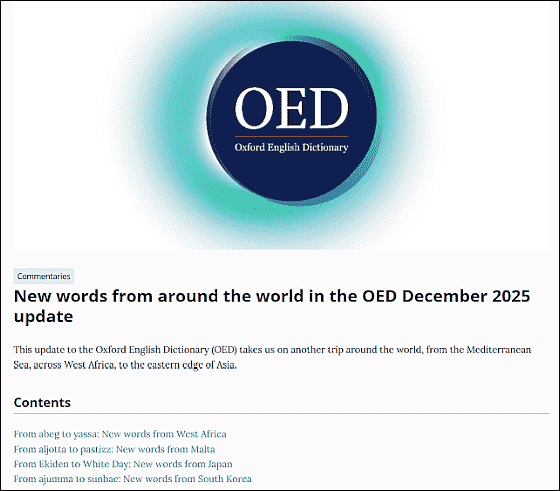
OED Online は,3ヶ月に一度アップデートされます.最新のアップデートは昨年12月のもので,西アフリカ,マルタ,日本,韓国という4つの地域からの借用語に焦点が当てられています.日本語からの借用語も11語含まれていました.
英語史や語彙論の観点から,それぞれのセクションを要約しつつ,コメントを加えたいと思います.まずは "From abeg to yassa: New words from West Africa" です.ナイジェリア,ガーナ,ガンビア,リベリア,シエラレオネといった国々からの借用語が紹介されています.例えば,ガーナの伝統的なダンス Adowa (1928) や,ナイジェリア英語の bend down (and) select (古着,または古着市場)などがエントリーされることになったとのことです.正直なところ私にとっては縁遠い語彙という印象が拭えません.しかし,これらの国々では英語が公用語やそれに準ずる言語として機能しており,独自の英語変種 (World Englishes) が豊かに育っているという事実を,再認識させられました.
次に "From aljotta to pastizz: New words from Malta" です.地中海の島国マルタの英語変種(Maltese English)からの語彙です.マルタ語 (Maltese) は,EU の公用語の中で唯一,セム語派 (Semitic) に属しながらラテン文字で表記される言語です.記事内に,次の記述があります.
Maltese is the only Semitic language written in the Latin alphabet and is the only Semitic and Afroasiatic language among the official languages of the European Union.
今回追加された pastizz (リコッタチーズや豆の入ったパイ)や aljotta (魚のスープ)などは,イタリア語やシチリア語の影響も色濃く反映しており,言語混交の歴史を感じさせます.マルタの言語事情については,「#2228. マルタの英語事情 (1)」 ([2015-06-03-1]) や「#2229. マルタの英語事情 (2)」 ([2015-06-04-1]) をご覧ください.
さて,hellog として最も注目すべきは,もちろん "From Ekiden to White Day: New words from Japan" のセクションです.今回 OED に追加された日本語由来の英単語は以下の11語です.
・ brush pen (筆ペン)
・ Ekiden (駅伝)
・ love hotel (ラブホテル)
・ mottainai (もったいない)
・ Naginata (なぎなた)
・ PechaKucha (ペチャクチャ)
・ senbei (煎餅)
・ senpai (先輩)
・ Washlet (ウォシュレット)
・ White Day (ホワイトデー)
・ yokai (妖怪)
まず love hotel ですが,日本の独特な文化的空間を表す語として,もっと早く OED に取り入れられもよかったのではないかと思っていますが,今回晴れて(?)の収録となりました.関連して「#142. 英語に借用された日本語の分布」 ([2009-09-16-1]) もご覧ください.商標である Washlet も同様に,日本のトイレ文化の象徴として世界に認知された証でしょう.
興味深いのは mottainai の品詞分類です.日本語では形容詞ですが,OED では間投詞(および名詞)として登録されています.環境問題の文脈で「なんてことだ,もったいない!」という文脈で使われることが多いのだと思われます.
煎餅大好き人間としては,個人的に senbei の追加には拍手を送りたいと思います.定義の中で "usually . . . served with green tea" (たいてい緑茶とともに出される)と,日本の茶の間文化まで記述されているのがナイスです.
一方,PechaKucha については,私は寡聞にして無知でした.どうやら,20枚のスライドを各20秒でプレゼンする形式を指すそうです.Naginata や Ekiden は正統派の借用語と言えますが,senpai はサブカルチャー経由の借用語として存在感を示しているようです.海外のアニメファンの間では「自分に気づいてほしい憧れの対象」という文脈で notice me, senpai のようなミームで使われています.意味・語用の変容が生じていますね.
最後に "From ajumma to sunbae: New words from South Korea" です.ここには ajumma が入りました.日本語の「おばちゃん」に相当する語ですが,パーマヘアやサンバイザーといったステレオタイプな特徴とともに記述されているのがユニークです.
世界各地から英語へと流れ込む語彙の流入はとどまることを知りません.次回の OED アップデートも楽しみです.
2015-06-04 Thu
■ #2229. マルタの英語事情 (2) [esl][new_englishes][diglossia][bilingualism][sociolinguistics][history][maltese][maltese_english]
昨日の記事 ([2015-06-03-1]) に引き続き,マルタの英語事情について.マルタは ESL国であるといっても,インドやナイジェリアのような典型的な ESL国とは異なり,いくつかの特異性をもっている.ヨーロッパに位置する珍しいESL国であること,ヨーロッパで唯一の土着変種の英語をもつことは昨日の記事で触れた通りだが,Mazzon (593) はそれらに加えて3点,マルタの言語事情の特異性を指摘している.とりわけイタリア語との diglossia の長い前史とマルタ語の成立史の解説が重要である.
There are various reasons for the peculiarity of the Maltese linguistic situation: 1) the size of the country, a small archipelago in the centre of the Mediterranean; 2) the composition of the population, which is ethnically and linguistically quite homogeneous; 3) its history previous to the British domination; throughout the centuries, Malta had undergone various invasions, its political history being intimately connected with that of Southern Italy. This link, together with the geographical vicinity to Italy, encouraged the adoption of Italian as a language of culture and, more generally, as an H variety in a well-established situation of diglossia. Italian has been for centuries a very prestigious language throughout Europe, since Italy has one of the best known literary traditions and some of the oldest European universities. Maltese is a language of uncertain origin; it was deeply "restructured" or "refounded" on Semitic lines during the Arab domination, between 870 and 1090 A.D. It has since then followed the same path as other spoken varieties of Arabic, losing almost all its inflections and moving towards analytical types; the close contact with Italian helped in this process, also contributing large numbers of vocabulary items.
現在のマルタ語と英語の2言語使用状況の背景には,シックな言語としての英語への親近感がある.世界の多くのESL地域において,英語に対する見方は必ずしも好意的とは限らないが,マルタでは状況が異なっている.ここには,国民の "integrative motivation" が関与しているという.
The role of this integrative motivation must always be kept in mind in the case of Malta, since the relative cultural vicinity and the process through which Malta became part of the Empire made this case somehow anomalous; many Maltese today simply deny they ever were just a "colony"; young people seem to partake in this feeling and often stress the point that the British never "invaded" Malta: they were invited. There is a widespread feeling that the British never really colonialized the country, they just "came to help"; the connection of the Maltese people with Britain is still quite strong, not only through the British tourists: in many shops and some private houses, alongside the symbols of Catholicism, portraits of the British Royal Family are proudly displayed on the walls. (Mazzon 597)
確かに,マルタはESL地域のなかでは特異な存在のようである.マルタの言語(英語)事情は,社会歴史言語学的に興味深い事例である.
・ Mazzon, Gabriella. "A Chapter in the Worldwide Spread of English: Malta." History of Englishes: New Methods and Interpretations in Historical Linguistics. Ed. Matti Rissanen, Ossi Ihalainen, Terttu Nevalainen, and Irma Taavitsainen. Berlin: Mouton de Gruyter, 1992. 592--601.
2015-06-03 Wed
■ #2228. マルタの英語事情 (1) [esl][new_englishes][bilingualism][diglossia][language_planning][sociolinguistics][history][maltese][maltese_english]
マルタ共和国 (Republic of Malta) は,「#177. ENL, ESL, EFL の地域のリスト」 ([2009-10-21-1]),「#215. ENS, ESL 地域の英語化した年代」 ([2009-11-28-1]) で触れたように,ヨーロッパ内では珍しい ESL (English as a Second Language) の国である.同じく,ヨーロッパでは珍しく英連邦に所属している国でもあり (cf. 「#1676. The Commonwealth of Nations」 ([2013-11-28-1])),さらにヨーロッパで唯一といってよいが,土着変種の英語が話されている国でもある.マルタと英語との緊密な関わりには,1814年に大英帝国に併合されたという歴史的背景がある (cf. 「#777. 英語史略年表」 ([2011-06-13-1])).地理的にも歴史的にも,世界の他の ESL 地域とは異なる性質をもっている国として注目に値するが,マルタの英語事情についての詳しい報告はあまり見当たらない.関連する論文を1つ読む機会があったので,それに基づいてマルタの英語事情を略述したい.
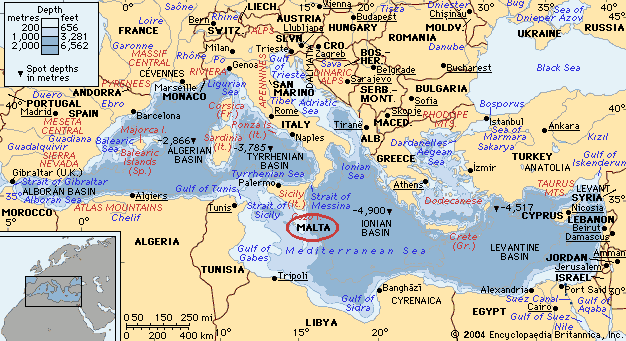 | 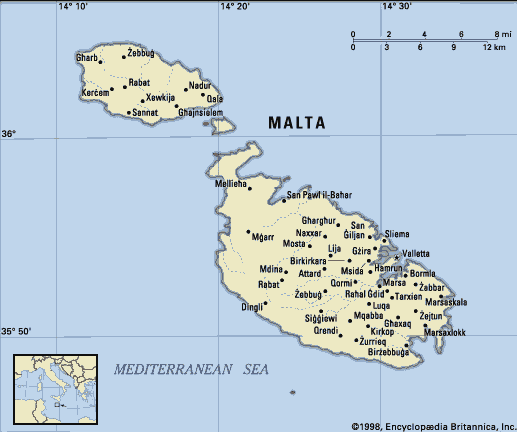 |
マルタは地中海に浮かぶ島嶼国で,幾多の文明の通り道であり,地政学的にも要衝であった.Ethnologue の Malta によると,国民42万人のほとんどが母語としてマルタ語 (Maltese) を話し,かつもう1つの公用語である英語も使いこなす2言語使用者である.マルタ語は,アラビア語のモロッコ口語変種を基盤とするが,イタリア語や英語との接触の歴史を通じて,語彙の借用や音韻論・統語論の被ってきた著しい変化に特徴づけられる.この島国にとって,異なる複数の言語の並存は歴史を通じて通常のことであり,現在のマルタ語と英語との広い2言語使用状況もそのような歴史的文脈のなかに位置づける必要がある.
1814年にイギリスに割譲される以前は,この国において社会的に威信ある言語は,数世紀にわたりイタリア語だった.法律や政治など公的な状況で用いられる「高位の」言語 (H[igh Variety]) はイタリア語であり,それ以外の日常的な用途で用いられる「低位の」言語 (L[ow Variety]) としてのマルタ語に対立していた.社会言語学的には,固定的な diglossia が敷かれていたといえる.19世紀に高位の言語がイタリア語から英語へと徐々に切り替わるなかで,一時は triglossia の状況を呈したが,その後,英語とマルタ語の diglossia の構造へと移行した.しかし,20世紀にかけてマルタ語が社会的機能を増し,現在までに diglossia は解消された.現在の2言語使用は,固定的な diglossia ではなく,社会的に条件付けられた bilingualism へと移行したといえるだろう(diglossia の解消に関する一般的な問題については,「#1487. diglossia に対する批判」 ([2013-05-23-1]) を参照).
現在,マルタからの移民は,英語への親近感を武器に,カナダやオーストラリアなどへ向かうものが多い.新しい中流階級のエリート層は,上流階級のエリート層が文化語としてイタリア語への愛着を示すのに対して,英語の使用を好む.マルタ語自体の価値の相対的上昇とクールな言語としての英語の位置づけにより,マルタの言語史は新たな段階に入ったといえる.Mazzon (598) は,次のように現代のマルタの言語状況を総括する.
[S]ince the year 1950, the most important steps in language policy have been in the direction of the promotion of Maltese and of the extension of its use to a number of domains, while English has been more and more widely learnt and used for its importance and prestige as an international language, but also as a "fashionable, chic" language used in social gatherings and as a status symbol . . . .
・ Mazzon, Gabriella. "A Chapter in the Worldwide Spread of English: Malta." History of Englishes: New Methods and Interpretations in Historical Linguistics. Ed. Matti Rissanen, Ossi Ihalainen, Terttu Nevalainen, and Irma Taavitsainen. Berlin: Mouton de Gruyter, 1992. 592--601.
Powered by WinChalow1.0rc4 based on chalow